
Heavy manufacturing facilities—including primary steel rolling mills, aluminum extrusion plants, automotive stamping works, and heavy gray iron foundries—represent the most brutal operating environments for material handling equipment. Historically dominated by massive internal combustion diesel forklifts (7.0 to 16.0 metric tons), plant directors are under intensifying pressure to eliminate toxic indoor diesel soot, mitigate carbon emissions, and reduce exorbitant engine maintenance. However, surviving in heavy industrial bays requires overcoming intense radiant heat (ambient temperatures exceeding 60°C near furnace slag), dense airborne conductive iron dust, and violent mechanical impacts from transporting red-hot steel billets and coils. Specialized Lithium Iron Phosphate (LiFePO4) systems engineered with multi-tier thermal barriers and hermetic sealing have emerged as the definitive powertrain solution for heavy industry in 2026.
1. Heavy Industrial Operational Pressures & Health Mandates
In hot-metal handling and steel processing, forklifts operate around the clock transporting heavy structural beams, hot-rolled steel coils, and molten ingot ladles. Operating combustion forklifts inside enclosed foundry bays creates severe occupational health hazards:
- Severe Indoor Air Degradation: Diesel exhaust contains concentrated nitrogen oxides (NOx) and fine particulates that combine with furnace fumes, pushing indoor air quality beyond legal OSHA Permissible Exposure Limits (PEL).
- High Thermal Radiation: Forklifts operating within 5 meters of cooling steel coils (glowing at 400°C to 600°C) absorb massive thermal radiation, frequently overheating diesel cooling systems and causing hydraulic fluid breakdown.
- Conductive Metal Particulates: Grinding sparks, shot-blasting dust, and microscopic airborne iron shavings infiltrate unsealed electrical cabinets, creating catastrophic short-circuit flashovers.
| Environmental Stress Factor | Conventional Diesel Forklift | Standard Lead-Acid Battery | Zospower Steel-Mill Grade LiFePO4 |
|---|---|---|---|
| Ambient Heat Tolerance | Radiator boil-overs @ > 45°C ambient | Accelerated plate corrosion; boils dry | Aerogel heat shield + active cooling |
| Conductive Iron Dust Ingress | Clogs air filters every 48 hours | Short-circuits inter-cell lead links | IP67 hermetically sealed enclosure |
| Extreme Mechanical Shock | Cracks engine mounts & oil pans | Fractures plastic cell jars & sheds paste | 12mm armored steel bay; 25G shock rated |
| Continuous Full-Shift Torque | Slow throttle lag under 12T load | Severe voltage collapse (-12V drop) | Relentless instant torque (100% to 10% SOC) |
| Maintenance Requirements | Heavy (DPF regeneration, oil, injectors) | Hazardous watering near hot furnaces | Zero maintenance; 100% solid-state |
2. The Heat & Dust Barrier: Why Lead-Acid Fails in Metal Plants
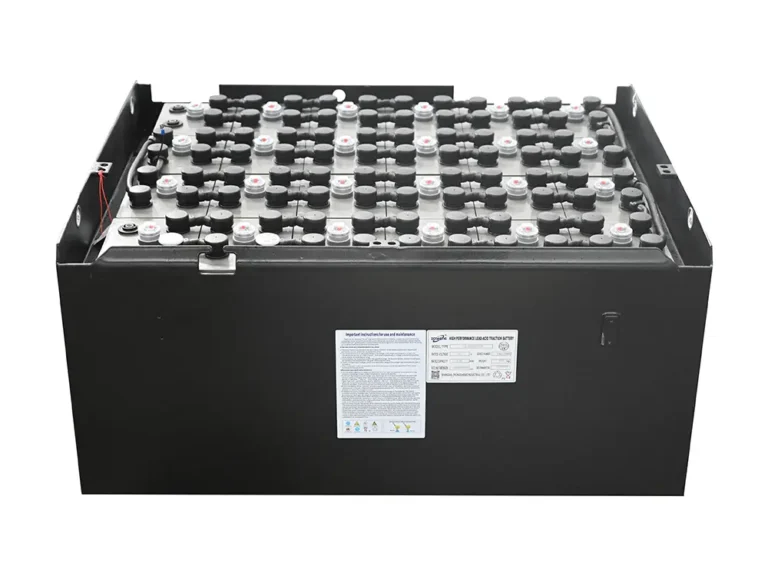
While flooded lead-acid batteries are commonplace in light dry-goods distribution, deploying them inside steel mills or heavy fabrication shops guarantees rapid destruction:
- Thermal Runaway and Acid Evaporation: Arrhenius’ Law dictates that for every 10°C rise above 25°C, chemical reaction rates double. Inside a 55°C rolling mill, flooded lead-acid batteries boil off distilled water within days, leading to dry plate sulfation, grid expansion, and catastrophic thermal destruction within 9 to 12 months.
- Conductive Iron Dust Bridging: Airborne magnetic iron dust settles onto open lead busbars and exposed battery terminals. Combined with acid condensation from charging off-gassing (Hydrogen Ventilation Guide), this creates conductive sludge that triggers persistent ground faults (Insulation Resistance & Ground Fault Guide).
- Severe Plate Shedding from Rough Floors: Steel mill floor plates and sunken rail-track crossings subject forklifts to constant 15G–25G mechanical hammering, vibrating active lead dioxide paste out of fragile grid lattices.
3. Zospower LiFePO4 Engineering for Heavy Steel Operations
To survive where standard batteries fail, Zospower engineers heavy-duty 80V, 96V, and 120V high-capacity traction packs tailored for heavy forklift brands including Kalmar, Hyster, Linde Heavy Trucks, and Konecranes:
- Aerospace-Grade Aerogel Thermal Radiation Shield: The exterior steel enclosure is lined with composite vacuum aerogel thermal insulation blankets having an ultra-low thermal conductivity of < 0.018 W/m·K. This shields core cells from ambient furnace heat spikes up to 75°C.
- Hermetic IP67 / NEMA 4X Metal-Dust Proofing: Continuous fluorosilicone gaskets, MIL-spec multi-pin signal connectors, and heavy-duty sealed power lugs ensure that fine airborne iron dust, carbon black, and abrasive grit cannot enter the battery bay.
- Solid Cast Steel Ballast & Reinforced Cell Fixturing: Precision-machined solid steel ballast blocks are welded into the chassis frame, matching OEM counterweight requirements for heavy lifting (Hyster Heavy Retrofit Specs) while internal spring-loaded compression plates isolate cells from 25G shock loads.
- High-Current Active Cell Balancing: Advanced bi-directional active balancing maintains cell voltage parity within 15 mV under continuous 500A coil-ramping maneuvers as detailed in our Cell Balancing Engineering Guide.
4. Staging-Bay Fast Charging: Eliminating Overhead Crane Swapping
In heavy industry, swapping a massive 4.5-ton lead-acid battery requires clearing production lanes and utilizing an overhead gantry crane—a high-risk procedure that takes 45 to 60 minutes and requires certified crane riggers.
Zospower eliminates battery swapping entirely through high-power opportunity charging. Compact, weather-sealed industrial fast chargers (30 kW to 60 kW) are installed directly adjacent to raw material coil yards and finished goods staging bays.
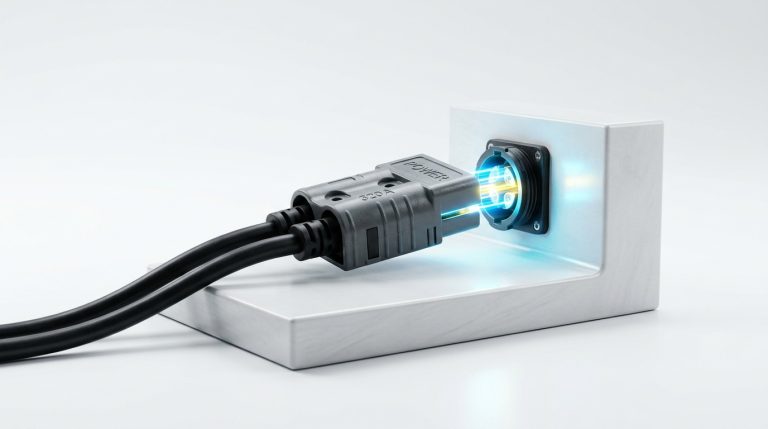
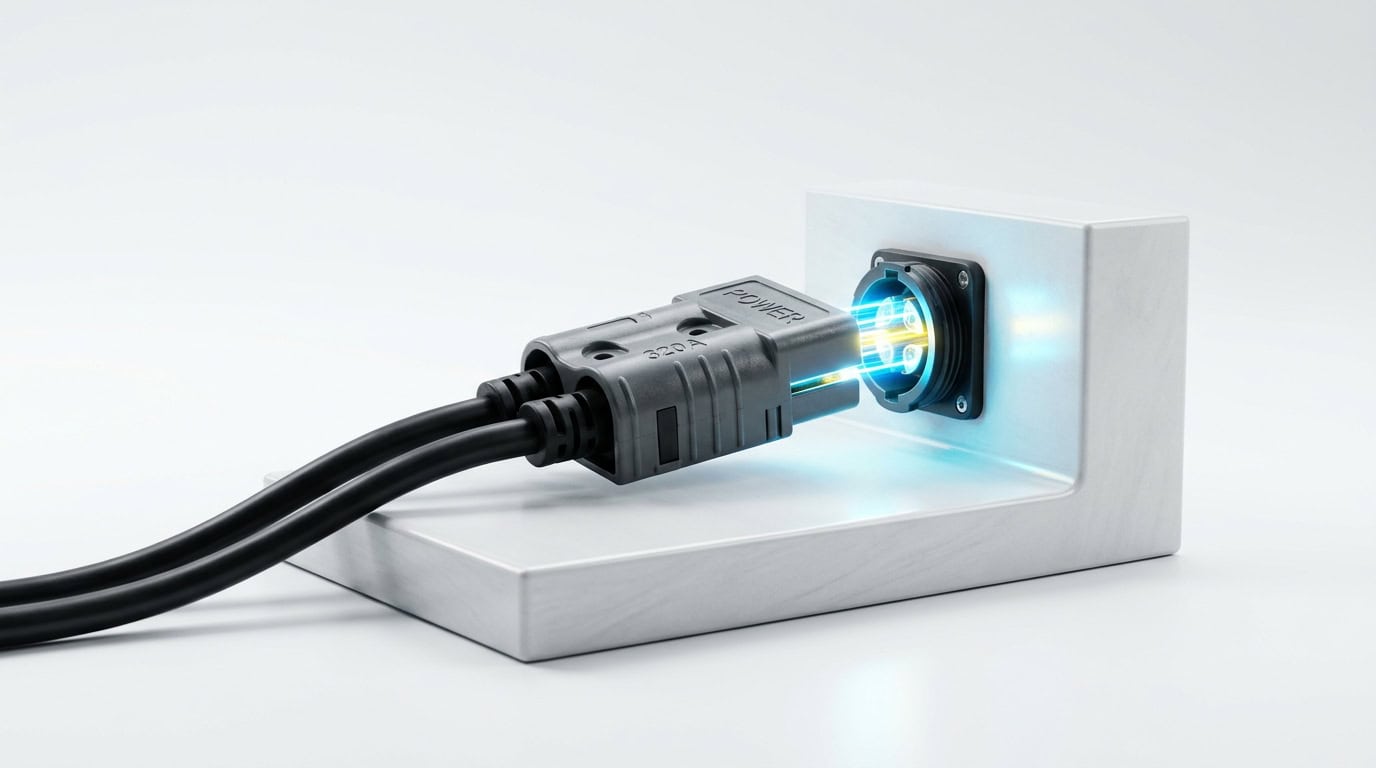
During operator shift turnovers (30 minutes) and mid-shift equipment inspections (15 minutes), the truck connects to a heavy-duty REMA DIN 640A or Anderson SBX plug. At a 1.0C charge rate, a 20-minute boost replenishes 30% to 35% state-of-charge, allowing heavy trucks to run 24/7/365 without ever leaving the production floor.
To avoid tripping primary substation breakers during concurrent charging, heavy manufacturing sites implement Dynamic Load Balancing (DLB) Fast Charging.
5. 5-Year Financial TCO: Heavy Diesel vs Zospower LiFePO4
Below is an audited 5-year financial breakdown for a primary steel processing facility operating a fleet of 10 heavy 12-ton capacity counterbalance forklifts across a rigorous three-shift schedule:
| 5-Year Expenditure Category (10 Heavy Forklifts) | Heavy Diesel Forklifts (12T) | Zospower Heavy LiFePO4 Electric (12T) | 5-Year Financial Benefit |
|---|---|---|---|
| Equipment & Charger Procurement | $1,500,000 | $1,950,000 (Higher Initial CapEx) | -$450,000 (Initial CapEx Premium) |
| Fuel vs Electricity (4,000 hrs/yr/truck) | $1,920,000 (High-consumption heavy diesel) | $480,000 (High-efficiency electric power) | +$1,440,000 Energy Savings |
| Engine Overhauls, Turbo & DPF Systems | $680,000 (Severe heat and dust wear) | $110,000 (Maintenance-free AC motor) | +$570,000 Maintenance Savings |
| Battery Swapping & Gantry Crane Labor | $0 | $0 (Zero swapping required) | $0 |
| Ventilation & Air Filtration Energy | $320,000 (Exhaust smoke air-scrubbing) | $0 (Zero tailpipe emissions) | +$320,000 Facility Air Quality Savings |
| Total 5-Year Operating Cost | $4,420,000 | $2,540,000 | +$1,880,000 Net Savings |
The financial analysis proves that despite an initial investment premium for heavy-duty electric trucks and fast chargers, a 10-unit heavy manufacturing fleet generates over $1.88 million in net operational savings over five years, reaching full capital payback within 15 to 18 months while eliminating thousands of tons of indoor carbon soot and hazardous DPM emissions.
6. Engineering Checklist for Heavy Plant Conversions
Plant engineering teams converting heavy internal combustion fleets to lithium should enforce this 4-point verification checklist:
- Audit Thermal Radiation Profiles: Map peak surface radiant temperatures across the primary driving routes (especially near reheat furnaces, ladle transfer pits, and cooling beds) to confirm aerogel insulation thickness.
- Ensure Pre-Charge Circuit Integrity: Verify that high-voltage battery packs incorporate heavy-duty pre-charge circuits to suppress inrush spikes during start-up as detailed in our Pre-Charge Resistor Circuit Guide.
- Verify Counterweight and Steering Axle Loads: Confirm with chassis manufacturers that custom lithium battery mass maintains front-to-rear axle load ratios within OEM stability envelopes under full 12-ton fork loads.
- Select High-Frequency Heavy Chargers: Pair the fleet with ruggedized, modular industrial chargers described in our Forklift Charger Selection Guide.
Power Your Heavy Industrial Fleet with Zospower Armored Lithium
Are furnace radiant heat, airborne metal dust, and soaring diesel maintenance draining your heavy manufacturing profitability? Zospower manufactures armored, high-temperature LiFePO4 battery systems tailored specifically for heavy counterbalance forklifts (7T to 16T+), steel coil handlers, and foundry vehicles.
Contact our heavy industrial applications engineering team today to review your thermal duty cycles, obtain custom CAD counterweight models, and calculate your plant TCO payback.