The Illusion of the “Cheap” Lead-Acid Battery
When procurement managers compare forklift battery quotes, lead-acid batteries initially appear far cheaper than lithium-ion alternatives. However, this upfront price tag obscures a massive hidden OpEx (Operating Expenditure): the relentless requirement for distilled water maintenance.
Why Do Lead-Acid Batteries Need Water?
During the charging cycle of a flooded lead-acid battery, a process called electrolysis occurs. The electrical current splits the water (H2O) in the electrolyte into hydrogen and oxygen gases, which vent out of the battery. If this lost water is not replaced with pure distilled water, the lead plates become exposed to the air. Exposed plates rapidly oxidize and permanently lose their capacity to hold a charge.
The True Cost of Battery Watering
Maintaining a multi-shift fleet of lead-acid batteries requires significant labor and infrastructure:
- Labor Costs: A technician must check and fill the batteries weekly. For a fleet of 50 forklifts, this equates to roughly 15 to 20 hours of dedicated maintenance labor every single week.
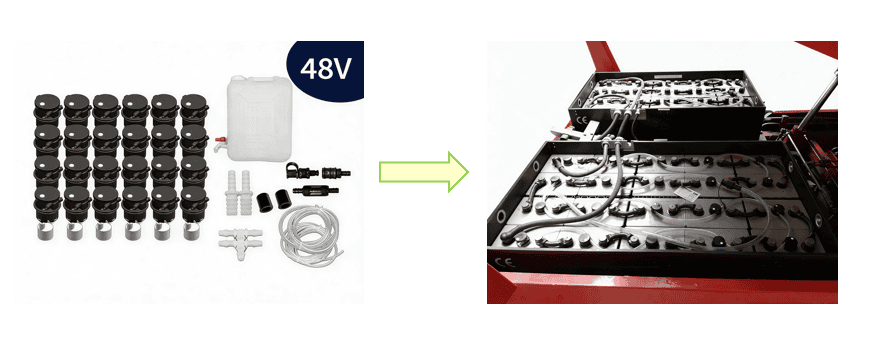
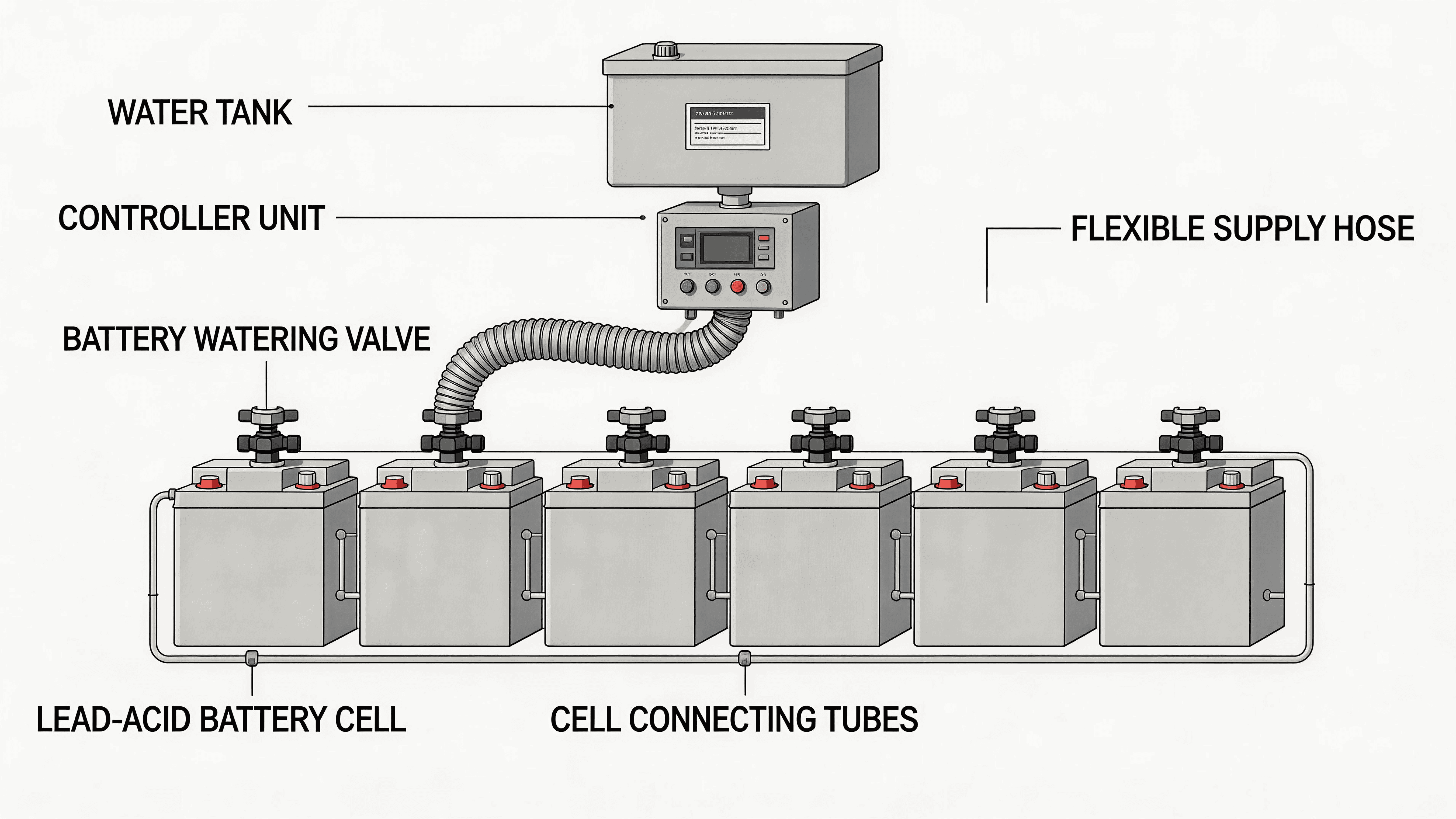
- Infrastructure: You must purchase, store, and manage hundreds of gallons of deionized or distilled water. Single-point watering systems (SPWS) require hoses, gravity tanks, and pressure regulators that frequently break or leak.
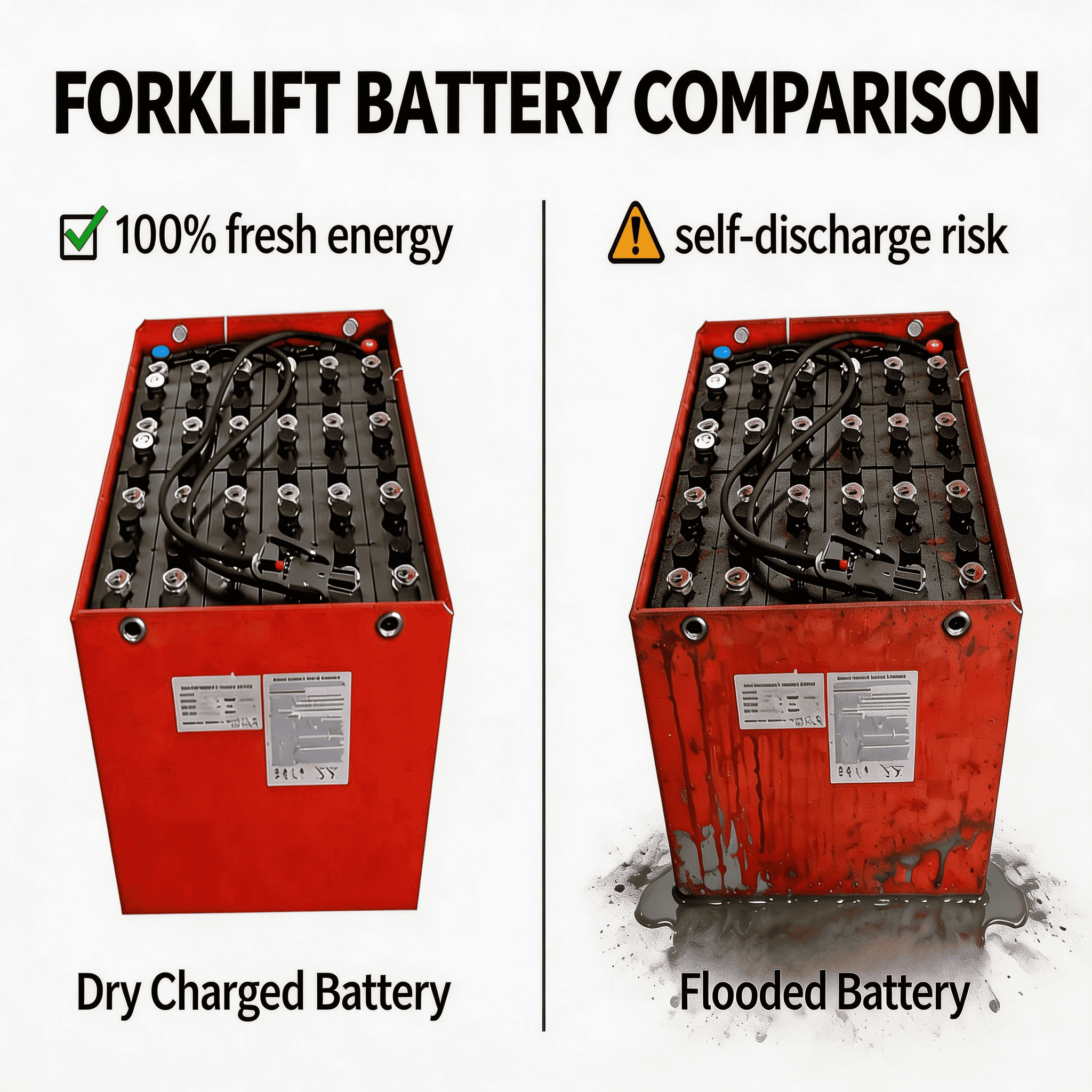
- Human Error: Overwatering causes highly corrosive sulfuric acid to boil over during charging, destroying the steel battery box and the forklift’s chassis. Underwatering permanently destroys the battery cells.
The Zero-Maintenance Lithium Solution
ZOSPOWER’s LiFePO4 batteries are completely sealed systems. There is no electrolyte to check, no water to add, and no toxic acid spills to neutralize. By eliminating the watering system entirely, warehouses not only recover thousands of dollars in annual labor costs but also eliminate the severe safety hazards associated with handling sulfuric acid.