Inside primary aluminum reduction smelters, Hall-Héroult electrolysis potlines, and heavy non-ferrous foundry casthouses, material handling operations face the most extreme combination of electromagnetic and thermal stresses in heavy metallurgy. Transporting 8-ton to 16-ton crucibles of liquid molten aluminum ($750^\circ\text{C}$ to $950^\circ\text{C}$), anode carbon blocks, and cast sows requires operating within potroom aisles carrying direct-current busbars energized up to 100,000A to 400,000A. These gargantuan currents generate static and low-frequency stray magnetic fields ranging from $10\text{ mT}$ to over $50\text{ mT}$ ($100\text{ Gauss}$ to $500\text{ Gauss}$). In conventional electric lift trucks, these immense fields saturate electromagnetic contactor coils, blind Hall-effect current sensors, induce destructive eddy currents in metal battery enclosures, and distort microcontroller clocks. Simultaneously, extreme infrared radiant heat flux ($>10\text{ kW/m}^2$) and abrasive fluoride/alumina dust rapidly destroy standard battery systems. This strategic industry analysis evaluates how tier-one aluminum smelters and metallurgical foundries are eliminating dangerous diesel forklifts in favor of magnetically shielded, heat-armored Batería de LiFePO4 systems engineered for 2026 heavy smelter potlines.
1. Severe Potroom Hazards: Mega-Amp Magnetic Fields & Extreme Heat Flux
Aluminum reduction potrooms present an operating theater defined by severe electromagnetic and thermal physical phenomena:
- High-Intensity DC Magnetic Fields ($B > 30\text{ mT}$): Primary electrolysis potlines connect hundreds of reduction pots in series carrying up to $400\text{ kA}$. By Ampère’s Law ($\oint B \cdot dl = \mu_0 I$), the resulting magnetic flux density ($B$) at vehicle aisle distances ($1.5\text{ m to }3.0\text{ m}$) reaches $30\text{ to }60\text{ mT}$. These fields magnetically saturate ferromagnetic cores in standard current transformers, lock mechanical contactor armatures in open or closed states, and cause severe Hall-effect sensor offset drift ($>40\%$ error), blinding standard BMS telemetry.
- Intense Radiant Heat Flux from Molten Metal: Liquid aluminum crucibles emit fierce infrared radiation. When a heavy forklift holds a 12-ton tapping crucible at a distance of 1.2 meters, chassis skin temperatures rapidly spike to $+85^\circ\text{C}$ to $+110^\circ\text{C}$. Unshielded lithium or lead-acid batteries suffer severe localized cell overheating, driving accelerated chemical degradation and risking thermal runaway.
- Abrasive & Corrosive Alumina/Fluoride Dust: Smelter atmospheres contain airborne synthetic cryolite ($Na_3AlF_6$) and metallurgical-grade alumina ($Al_2O_3$) dust. This sub-micron dust is intensely abrasive, wearing cylinder packings and penetrating non-sealed electrical enclosures to cause high-voltage tracking arc-overs.
2. Failure Modes of Legacy Powertrains in Aluminum Smelters
Traditional diesel and conventional lead-acid material handling equipment experience catastrophic failure modes inside electrolysis potrooms:
| Subsystem Component | Heavy IC Diesel Forklifts (10T to 20T) | Flooded Lead-Acid Electric Forklifts | ZOSPOWER Magnetically Shielded LiFePO4 |
|---|---|---|---|
| Magnetic Field Immunity | Alternator and starter solenoid armatures freeze mechanically; electronic diesel common-rail injectors fail from magnetic bias. | Magnetic fields exert Lorentz forces on internal lead plates; high stray currents boil electrolyte and corrode terminals. | Mu-metal / thick low-carbon silicon steel magnetic shielding ($<2 ext{ mT}$ internal); fluxgate & shunt current sensing immune to fields. |
| Radiant Heat Resilience | Radiator coolant boils instantly in potrooms ($>105^\circ\text{C}$); turbocharger oil seals bake and catch fire near crucibles. | Electrolyte temperature exceeds $65^\circ\text{C}$, causing plate sulfation, water dry-out, and battery tray thermal warping. | Multi-layer ceramic fiber aerogel heat shielding; active closed-loop thermal heat rejection and BMS thermal throttling. |
| Air Intake & Dust Ingress | Alumina dust chokes engine air filters within 8 operating hours, scouring cylinder liners and causing engine seizure. | Open cell vent caps allow cryolite dust ingress, neutralizing sulfuric acid and inducing violent internal cell shorts. | IP67 hermetically sealed enclosure; heavy robotically seam-welded steel armor with dual EPDM gaskets and Gore-Tex® breathers. |
| Fleet Availability & Smelter Safety | Diesel fuel spills near $900^\circ\text{C}$ molten metal represent catastrophic fire hazards; exhaust smoke fouls potroom scrubbers. | Requires continuous battery swapping outside potlines; high crane downtime and dangerous acid burns during swaps. | Continuous 1C fast opportunity charging during ladle skimming and crucible transfer; 24/7 non-stop potroom duty. |
3. ZOSPOWER Magnetic Shielding & Thermal Armor Engineering
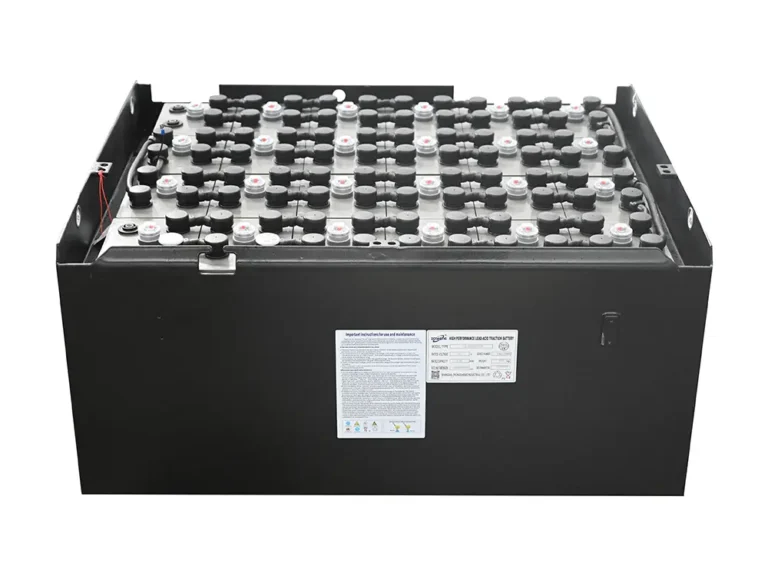
To operate reliably within $100\text{ kA}$ electrolysis potrooms, ZOSPOWER engineers dedicated 80V, 96V, and 120V high-tonnage lithium battery packs incorporating specialized electromagnetic and thermal defenses:

- Multi-Layer Mu-Metal & Silicon Steel Magnetic Flux Shunts: The interior of the heavy 12mm structural steel battery enclosure is lined with high-permeability Mu-metal ($80\%$ nickel-iron alloy, $\mu_r > 100,000$) and low-carbon electrical steel laminations. This magnetic flux diversion reduces an external $50\text{ mT}$ potroom magnetic field to less than $1.5\text{ mT}$ within the internal cell and electronics compartment, completely preventing sensor saturation.
- Magnetic-Immune Shunt Resistor Current Telemetry: Eliminates all open-loop Hall-effect current transducers. Current sensing is executed via ultra-precision Manganin alloy four-wire Kelvin shunts combined with differential isolated delta-sigma ($A/D$) modulators, delivering $\pm 0.5\%$ metering accuracy unaffected by $400\text{ kA}$ busbars.
- Ceramic Aerogel Thermal Barrier Armor ($1,000^\circ\text{C}$ Rated): The forward-facing wall of the battery pack (facing the crucible) is shielded with a 25 mm composite barrier comprising silica aerogel blanket insulation ($k < 0.018\text{ W/m}\cdot\text{K}$) clad in 316L stainless steel radiation reflection armor. Even under continuous $900^\circ\text{C}$ radiant heat flux, internal cell wall temperatures remain below $+38^\circ\text{C}$.
- Spring-Assisted Sealed High-Force Contactors: Main DC power contactors utilize high-strength dual magnetic blowout coils and high-force return springs ($F_{spring} > 45\text{ N}$) that overpower external potline magnetic pull, preventing contactor sticking or accidental dropouts during transit.
4. Five-Year Fleet TCO & Smelter Operational Financial Model
The financial justification for transitioning heavy potroom crucible-handling fleets to armored lithium power is audited below, based on an active primary aluminum reduction smelter operating 10 heavy counterbalance forklifts (12T to 16T capacity) across intensive 24/7/365 potroom shifts (7,500 operating hours/year per truck):
| Cost Component (10 Heavy Smelter Trucks, 5-Year Horizon) | Heavy IC Diesel Fleet | Flooded Lead-Acid Fleet (2 Packs/Truck) | ZOSPOWER Armored LiFePO4 Fleet |
|---|---|---|---|
| Fuel / Electrical Energy Cost | $1,710,000 (Diesel @ $3.80/gal, 3.0 gal/hr avg.) | $585,000 (Grid power @ $0.12/kWh, 68% efficiency) | $396,000 (Grid power @ $0.12/kWh, 96% efficiency) |
| Battery Replacement Capital | $0 (Heavy diesel powertrains) | $520,000 (20 heavy 80V packs destroyed by heat/fields) | $310,000 (10 armored LiFePO4 packs, 10-yr design life) |
| Alumina Abrasion & Heat Maintenance | $580,000 (Engine overhauls, air filters, radiator rots) | $390,000 (Terminal melting, plate sulfation, acid leaks) | $42,000 (Routine mechanical brake/hydraulic checks) |
| Battery Swapping & Fueling Downtime Labor | $120,000 (Fueling runs into hot potlines) | $315,000 (Overhead crane battery swapping labor) | $0 (Automated 1C opportunity charging during skimming) |
| Potline Tapping Delays (SMED Bottlenecks) | $250,000 (Engine heat stalls near hot crucibles) | $400,000 (Voltage drop hoist slowdowns & dead batteries) | $0 (Continuous full-torque hydraulic hoisting power) |
| Total 5-Year Lifecycle Cost | $2,660,000 | $2,210,000 | $748,000 |
| Net 5-Year Financial Savings | $1,912,000 SAVED | $1,462,000 SAVED | OPTIMUM BASELINE |
| Capital Payback Period | 8.8 Months | 10.4 Months | — |
5. Implementation Protocol for Primary Smelter Fleet Electrification
To execute a seamless potroom fleet conversion without interrupting continuous electrolytic reduction operations, smelter engineering directors should follow a structured three-phase protocol:
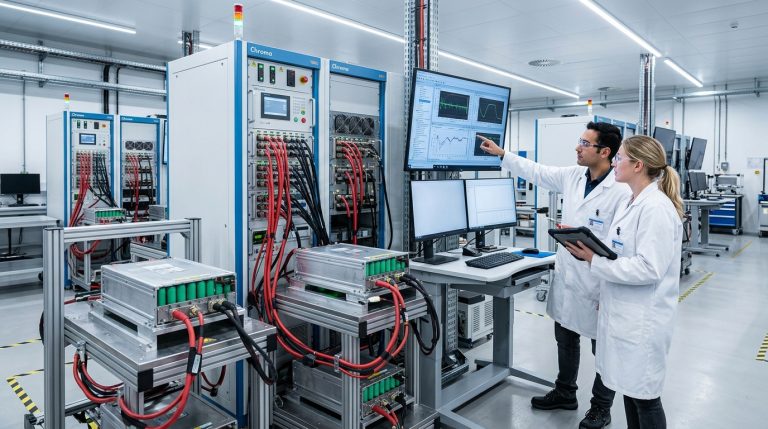
- Potline Stray Magnetic Field Mapping: Conduct a 3D Hall-probe Gaussmeter survey along all potroom transfer aisles, anode changing lanes, and crucible tapping bays. Identify peak magnetic flux vectors ($B_x, B_y, B_z$) to configure custom Mu-metal shielding orientations.
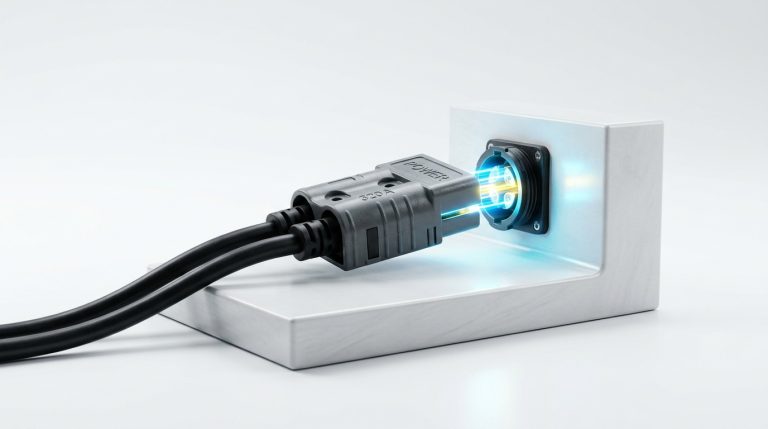
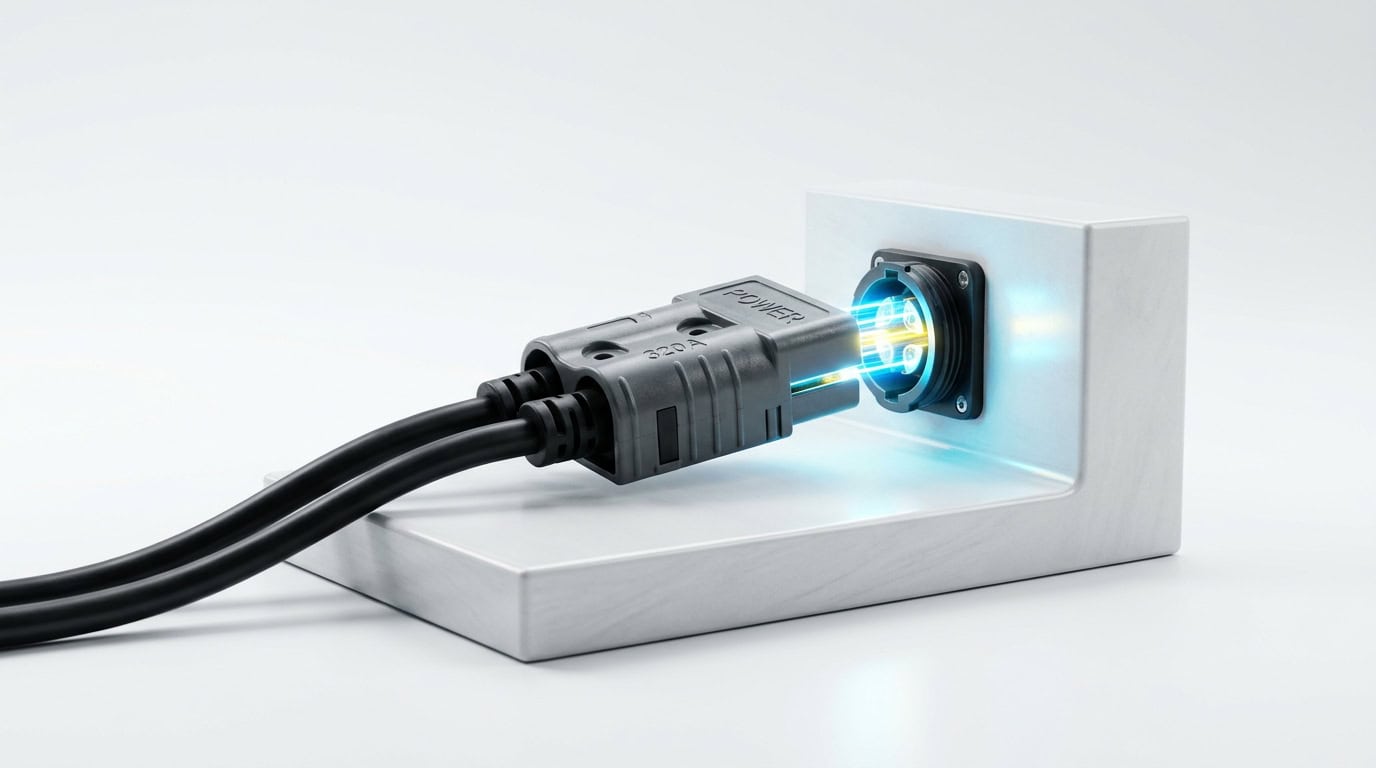
- Distributed Protected Charging Infrastructure: Install heavy-duty IP65 industrial fast chargers in casthouse staging bays or shielded sub-stations outside peak $50 ext{ mT}$ magnetic zones. Utilize high-current REMA DIN connectors with mechanical latches for fast 1C opportunity charging during crucible transfer cycles.
- Telematics & Insulation Monitoring Integration: Equip battery packs with shielded edge telematics gateways complying with our J1939 CAN-to-MQTT telemetry standards. Continuously stream cell temperatures, internal magnetic enclosure status, and chassis insulation resistance to plant SCADA, preempting thermal or electrical faults.
Powering Heavy Metallurgy with ZOSPOWER
ZOSPOWER manufactures custom-engineered, magnetically shielded LiFePO4 battery systems and heavy-current charging infrastructure specifically designed to withstand the mega-amp magnetic fields and extreme radiant temperatures of global primary aluminum smelters and metallurgical casthouses.
Contact our metallurgical drivetrain engineering team today to review potline Gauss survey data, evaluate thermal aerogel shielding specifications, and engineer custom heavy-tonnage lithium battery conversions for your fleet.