The regulatory landscape for industrial material handling batteries is undergoing the most profound legislative overhaul in decades. Under European Union Regulation (EU) 2023/1542—widely known as the EU Battery Regulation—all industrial traction batteries with a capacity exceeding 2 kWh entering the European Single Market face mandatory compliance milestones starting in 2026. From the digital tracking of mineral provenance via the Digital Battery Passport (DBP) to audited cradle-to-grave carbon footprint declarations, global fleet operators, OEMs, and equipment importers must overhaul procurement specifications to avoid severe customs interception and market exclusion.
1. Core Pillars of Regulation (EU) 2023/1542 for Industrial Forklifts
Unlike previous directives focused purely on end-of-life battery disposal, the new EU framework governs the complete industrial lifecycle. For material handling fleets deploying electric counterbalance trucks, reach trucks, and warehouse order pickers, four regulatory pillars apply directly:
- Digital Battery Passport (DBP): Mandatory electronic record accessible via an on-battery QR code, containing verified data on battery chemistry, manufacturing location, rated capacity, cycle life, state-of-certified health (SOC/SOH), and dismantle safety procedures.
- Carbon Footprint Declaration & Performance Classes: Independent third-party verification of total greenhouse gas emissions generated across raw material extraction, cell synthesis, module pack assembly, and international logistics (measured in kg CO2 equivalent per kWh of total lifetime energy output).
- Supply Chain Due Diligence: Mandatory OECD-aligned auditing of upstream supply chains to guarantee raw materials (cobalt, lithium, nickel, and natural graphite) are extracted without human rights abuses or catastrophic environmental pollution.
- Recycled Material Content Thresholds: Phased legal minimums for the percentage of active materials recovered from battery recycling included in new traction modules.
2. Inside the Digital Battery Passport: Technical Data Requirements
By 2026, every industrial traction battery operated or sold in the EU must bear an indelible QR code linked to a decentralized or cloud-based Digital Battery Passport. This data structure integrates directly with the battery’s internal electronic telemetry:
| Passport Data Field | Technical Content & Telematics Source | Compliance Significance |
|---|---|---|
| Static Technical Data | Cell chemistry (LiFePO4 / LFP), nominal voltage, rated Ah capacity, certified weight, temperature thresholds | Ensures mechanical and electrical compatibility with forklift counterweights and chassis bays |
| Dynamic Health Telematics | Cumulative throughput (Ah/MWh), total completed cycles, internal resistance increase, current State of Health (SOH) | Governed by the internal BMS Telematics & IoT System to verify degradation claims |
| Carbon Footprint Metric | Life-Cycle Assessment (LCA) score (kg CO2 eq/kWh), verified to PEF (Product Environmental Footprint) rules | Establishes eligibility under future maximum EU carbon footprint limits |
| End-of-Life & Safety Data | Extinguishing agents (Class D / water spray), dismantling guides, hazardous material breakdown | Ensures workplace safety under fire protection protocols like NFPA and CE directives |
Because dynamic health data—such as cumulative energy throughput and instantaneous SOH—must be accurately recorded without possibility of odometer tampering, industrial batteries must incorporate cryptographically secured BMS memory registers capable of interfacing with diagnostic scanners via standard CANopen or SAE J1939 protocols.
3. Why LiFePO4 Outperforms Lead-Acid in Lifecycle Carbon Audits
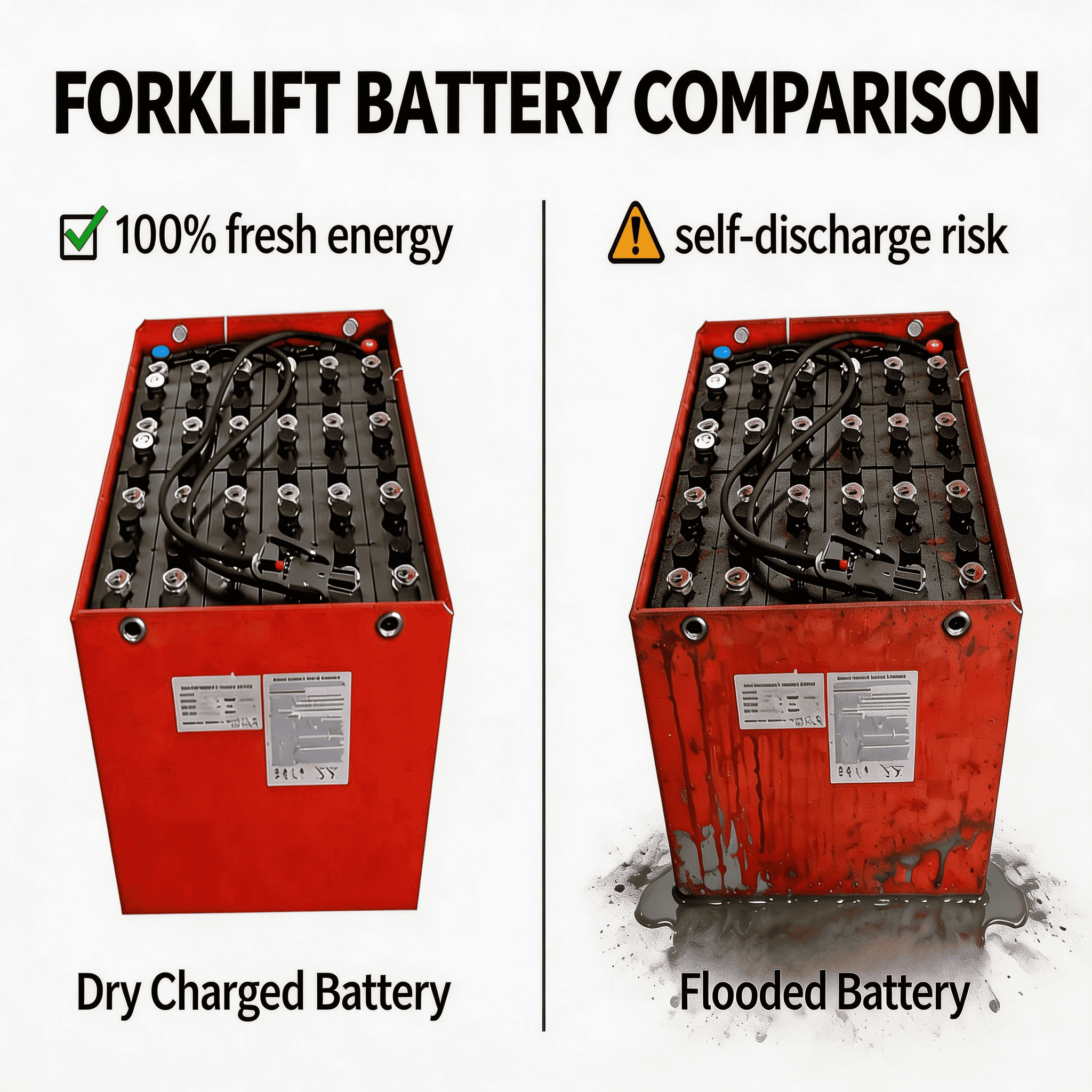
The carbon footprint declaration requirement imposes serious challenges on legacy battery chemistries. Although lead-acid batteries boast high domestic collection and recycling rates, the energy-intensive smelting of secondary lead produces substantial Scope 1 emissions. More critically, as demonstrated in our Cold Chain Electrification & ESG Analysis, lead-acid batteries operate at an electrical round-trip efficiency of only 70% to 75% under normal conditions (and below 55% in refrigerated environments).
In contrast, Zospower industrial Lithium Iron Phosphate (LiFePO4) systems achieve:
- Cobalt-Free & Nickel-Free Formulation: Eliminates the highest-risk human rights due diligence hurdles associated with artisanal cobalt mining in the DRC.
- 95%+ Wall-to-Work Energy Efficiency: Dramatically lowers Scope 2 electricity consumption over a 4,000+ cycle lifespan, lowering total lifetime carbon emissions per delivered kilowatt-hour by up to 38% compared to flooded lead-acid.
- Long Cycle Life Amortization: Spreading the manufacturing carbon footprint across 10+ years of operational service yields an industry-leading Product Environmental Footprint (PEF) rating.
4. European Fleet Compliance Roadmap: 2026 to 2030
Enterprise supply chain managers and material handling dealers must plan fleet renewals around specific EU enforcement gates:
- 2026 Milestone (Carbon Footprint & QR Labelling): Initial implementation of third-party verified carbon footprint declarations and permanent QR identification codes linking to preliminary digital technical passports.
- 2027 Milestone (Full Digital Battery Passport Activation): Public and authorized stakeholder access portals go live across all EU member states, requiring dynamic state-of-health tracking.
- 2028 Milestone (Carbon Footprint Performance Classes): Batteries are graded from Category A (lowest carbon) to Category G, influencing public procurement eligibility and corporate ESG disclosures under the EU Corporate Sustainability Due Diligence Directive (CSDDD).
- 2030 Milestone (Maximum Carbon Caps & Mandatory Recycled Content): Enforcement of strict ceiling thresholds on lifecycle carbon emissions, alongside minimum mandatory recycled content: 16% cobalt, 85% lead, 6% lithium, and 6% nickel.
For operations currently running heavy multi-shift rotations, combining compliance with financial efficiency is crucial. Consult our guide on 3PL Multi-Shift Power Strategy: Eliminating Swap Rooms to see how single-pack opportunity charging supports these regulatory objectives.
5. Procurement Checklist for European Forklift Dealers & Importers
To avoid border rejections or catastrophic regulatory fines, European material handling equipment importers and facility directors should execute this 5-point verification checklist:
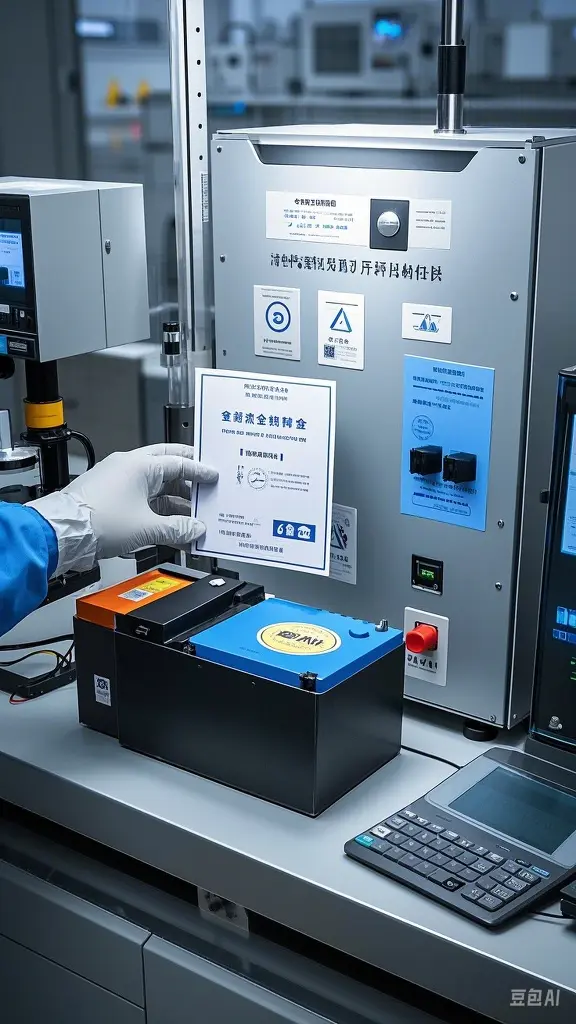
- Demand Third-Party Certified Life Cycle Assessment (LCA): Verify that the manufacturer provides ISO 14040 / 14044-compliant carbon footprint studies certified by reputable testing bodies (e.g., TÜV, SGS, or Bureau Veritas).
- Audit Comprehensive Safety Certifications: Confirm battery systems meet mandatory global safety standards including UL 2580, UN 38.3, and CE machinery/EMC directives as outlined in our Industrial Battery Safety & Compliance Guide.
- Ensure OEM Controller Compatibility: Confirm that the battery’s CAN bus outputs correctly integrate with European OEM chassis protocols, including Linde, Jungheinrich, and Toyota Material Handling.
- Verify QR Passport Cloud Redundancy: Ensure the manufacturer guarantees data hosting continuity for the 10-year required lifespan of the Digital Battery Passport.
- Pair with High-Efficiency Chargers: Complement low-carbon traction packs with resonant high-frequency chargers detailed in our Forklift Charger Selection Guide.
Ensure Your Forklift Fleet Meets 2026 EU Battery Regulations
Do your material handling traction batteries comply with impending EU Digital Battery Passport mandates and lifecycle carbon footprint declarations? Zospower manufactures certified, high-efficiency LiFePO4 battery packs equipped with telematics-enabled SOH tracking, full supply chain traceability, and CE/UL compliance.
Contact our European compliance engineering team today to review technical documentation, obtain certified LCA data sheets, and safeguard your European material handling supply chain.