Beyond the Tailpipe: The Real Carbon Footprint
Transitioning from internal combustion (IC) forklifts to electric fleets is the first step toward corporate sustainability. However, the environmental impact of your warehouse doesn’t stop there. The type of electric battery you choose—Lead-Acid vs. Lithium (LiFePO4)—has profound implications for your company’s ESG (Environmental, Social, and Governance) score.
The Toxicity of Lead-Acid
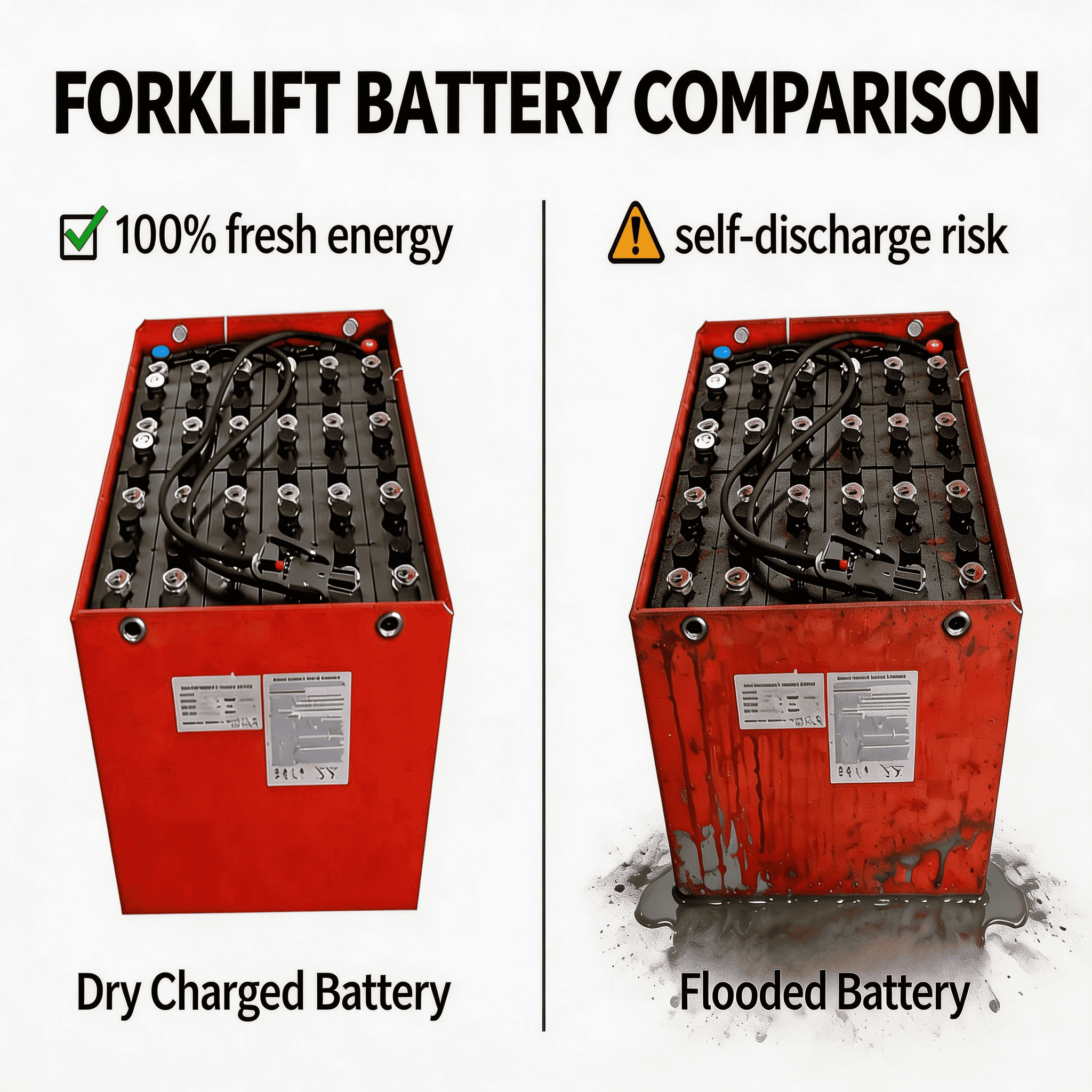
Lead-acid batteries are fundamentally built on two highly toxic substances: lead plates and sulfuric acid. During the routine watering and charging processes, these batteries vent toxic hydrogen sulfide gases into your warehouse. Worse, acid spills and boil-overs contaminate warehouse floors and, if improperly handled, local drainage systems. While lead-acid recycling rates are high, the smelting process to recycle the lead is incredibly energy-intensive and heavily polluting.
The Clean Energy of LiFePO4
ZOSPOWER’s Lithium Iron Phosphate (LiFePO4) chemistry is a massive leap forward in green logistics.
- Non-Toxic Materials: LiFePO4 contains no heavy metals (no lead, no cadmium, no cobalt). It is a clean, stable chemistry that will not leak acid or vent toxic gases into your facility.
- Energy Efficiency: Lead-acid batteries waste roughly 20% to 30% of the electricity used to charge them as heat. LiFePO4 boasts a 99% charge efficiency. This massive reduction in grid electricity consumption directly lowers your facility’s Scope 2 greenhouse gas emissions.
- Longer Lifespan, Less Waste: A single ZOSPOWER battery lasts up to 4,000 cycles, outliving three or four lead-acid batteries. This dramatically reduces the volume of industrial waste your company generates over a 10-year period.
Upgrade to ZOSPOWER and meet your corporate sustainability goals while improving operational efficiency.