
The exponential global expansion of automotive lithium-ion cell manufacturing has elevated industrial cleanliness and atmospheric control to unprecedented levels. Inside modern battery Gigafactories—encompassing electrode slurry mixing, high-speed cathode/anode roll calendering, pouch/prismatic cell winding, and electrolyte injection—material handling vehicles operate under extreme cleanroom standards (ISO 14644-1 Class 6 to Class 8) and ultra-dry room atmospheric conditions (dew point down to $-40^\circ\text{C}$ to $-60^\circ\text{C}$, equivalent to relative humidity $RH < 0.5\%$). In these hyper-controlled environments, any conventional combustion exhaust, hydraulic fluid micro-misting, lead-acid acid fumes, tire rubber carbon black shedding, or electrostatic discharge (ESD) exceeding 100V can contaminate active electrode chemistries, cause internal micro-dendrite pinholes, and destroy multi-million-dollar battery cell batches. This strategic industry analysis details how tier-one Gigafactory operators are standardizing on zero-emission, cleanroom-certified LiFePO4-powered automated guided vehicles (AGVs), autonomous mobile robots (AMRs), and specialized electric reach trucks engineered for 2026 gigawatt-scale production.
1. The Extreme Gigafactory Environment: Ultra-Dry Air, Particulates & ESD Hazards
Unlike standard electronics assembly or pharmaceutical packaging, battery cell dry rooms present a unique combination of extreme physical, chemical, and electrical constraints:
- Ultra-Low Dew Point Atmospheric Mechanics ($-40^\circ\text{C}$ to $-60^\circ\text{C}$): Lithium hexafluorophosphate ($LiPF_6$) electrolyte salts react violently with ambient moisture to produce toxic, corrosive hydrofluoric acid ($HF$):
$$LiPF_6 + H_2O \rightarrow LiF + POF_3 + 2\ HF$$
Even trace moisture causes cathode delamination, cell gassing, and catastrophic capacity degradation. In this intensely dry air, standard synthetic polymers, rubber drive tires, and moving mechanical linkages generate static electric potentials exceeding $15,000\text{ V}$ within seconds of motion. - Airborne Particulate Contamination (ISO Class 6 / VDA 19 Standards): Calendered aluminum (cathode) and copper (anode) electrode rolls weigh between 1.5 tons and 3.5 tons. A single conductive airborne metal particle ($>20\ \mu\text{m}$) or hydraulic oil aerosol droplet settling on an unrolled separator membrane will puncture the $9\ \mu\text{m}$ to $12\ \mu\text{m}$ polyolefin separator, causing internal hard shorts during first formation charging.
- Heavy Payload Micro-Positioning & AGV Continuous Duty: Transporting slitted mother rolls to vacuum baking ovens requires continuous 24/7 automated fleet dispatching. Automated guided vehicles (AGVs) carrying heavy parent rolls require deterministic micron-level dock positioning at uncoiler shafts, demanding zero hydraulic leaks and high-frequency automated opportunity charging.
2. The Disqualification of Legacy Material Handling Fleets
Traditional forklift technologies are strictly prohibited inside lithium cell dry rooms and electrode manufacturing bays:
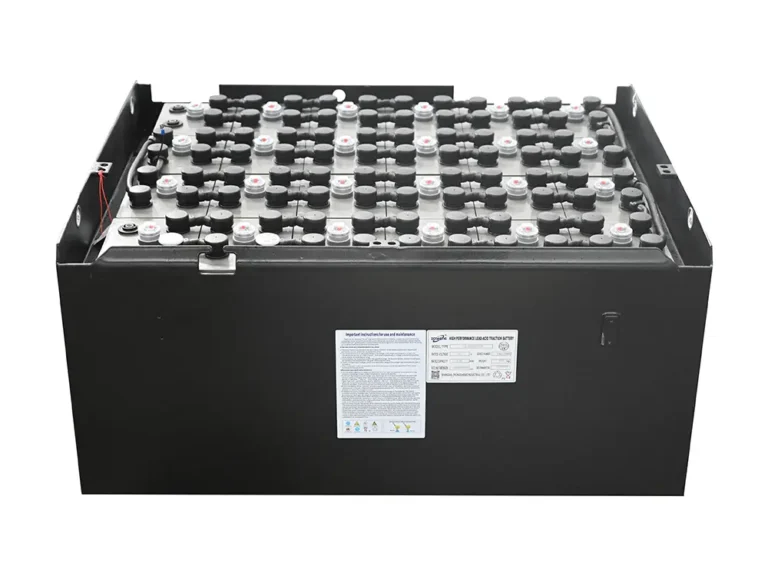
| Subsystem Parameter | Грузовики с двигателями внутреннего сгорания (дизельные/на сжиженном газе) | Conventional Lead-Acid Electric Forklifts | ZOSPOWER Cleanroom LiFePO4 AGV/Truck Powertrain |
|---|---|---|---|
| Exhaust Emissions & Outgassing | Strictly banned; $CO, CO_2, NO_x$, and carbon soot immediately destroy dry room dehumidification silica beds. | Emits sulfuric acid vapor and hydrogen gas ($H_2$); acid aerosols contaminate chemical electrode slurries. | 100% zero emissions, zero off-gassing, hermetically sealed cells compliant with ISO 14644-1 Class 6 cleanrooms. |
| Tire Shedding & Particulates | Black carbon-rubber tires leave conductive black scuff tracks across cleanroom floors, shedding airborne debris. | Standard rubber tires shed conductive particles; exposed mechanical brake shoe dust contaminates air filtration. | Non-marking, anti-static polyurethane/Vulkollan® ESD tires ($R_v < 10^6\ \Omega$); regenerative electric braking eliminates brake dust. |
| Hydraulic Fluid Misting Risk | Open hydraulic breather caps and high-pressure hose weeping create aerosol droplets that foul active materials. | Hydraulic leaks require immediate dry room shutdowns and hazardous solvent remediation. | Food-grade/synthetic non-toxic esters or electro-mechanical linear actuators; integrated burst safety anti-drop valves. |
| Electrostatic Discharge (ESD) Mitigation | Ungrounded exhaust pipes build up static charges exceeding 20 kV, risking explosive ignition of NMP solvents. | Acid-crusted battery terminals form high-impedance ground loops, failing plant ESD ground continuity audits. | Continuous chassis ESD grounding harness, conductive drag chains, and fully shielded 360° EMC shielded cabling. |
| Charging Automation & Uptime | Manual fuel dispensing prohibited in controlled production bays. | Requires 8-hour charging + battery swapping bays outside dry rooms, creating severe airlock traffic bottlenecks. | Automated high-rate floor-pad or side-contact wireless/copper 1C-2C opportunity charging; zero battery swapping. |
3. ZOSPOWER Cleanroom & Dry Room Battery Engineering
ZOSPOWER engineers dedicated 24V, 48V, and 80V Аккумулятор LiFePO4 modules specifically tailored for automated material handling equipment inside global Gigafactories (Northvolt, CATL, LG Energy Solution, Panasonic, and Tesla suppliers):

- Stainless Steel AISI 304 / 316 Enclosures: Enclosures are fabricated from mirror-polished or passivated stainless steel with continuous sanitary TIG seam welding. The smooth non-shedding exterior prevents particle entrapment, facilitates alcohol wipe-down sterilization, and generates zero airborne paint flakes.
- Anti-Static Conductive Grounding Network: The battery chassis is integrated with conductive copper ground shunts bonding all internal module frames directly to the vehicle’s ESD grounding shoes. Static charge generated during high-speed rolling on epoxy floors is safely dissipated to copper floor grids before chassis voltage exceeds $50\text{ V}$.
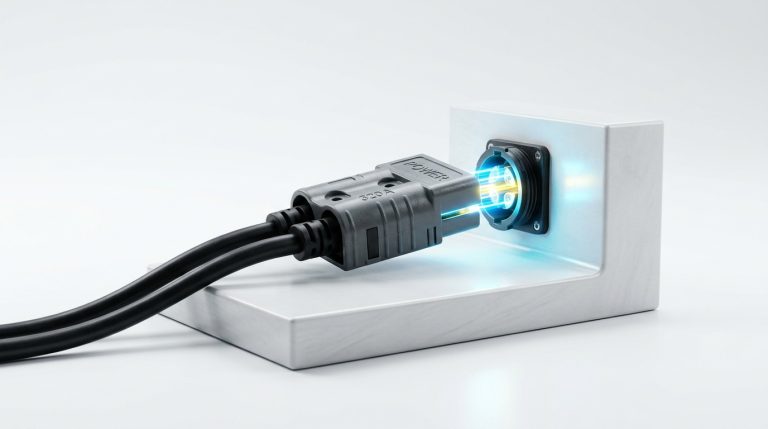
- Automated High-Current Opportunity Charging Contacts: Equipped with spring-loaded copper-beryllium or silver-graphite side-charging contact plates. When an AGV docks at a coil drop-off station, the vehicle charges at 1C to 2C (100A to 300A) for 60 to 180 seconds, maintaining a continuous 50% to 85% state-of-charge (SOC) across 24/7 operations without human intervention.
- Hermetic IP67 Gas-Tight Cell Sealing: High-grade EPDM seals and high-efficiency Gore-Tex® membrane filters prevent any internal gas outgassing while keeping dry-room atmospheric desiccants from drying out internal potting compounds. Primary electrical isolation is managed by solid-state PDU architectures that generate zero contact arcing.
4. Five-Year Fleet TCO & Operational Financial Model
The financial impact of operating an automated, cleanroom-certified LiFePO4 AGV/forklift fleet inside a 20 GWh cell production facility is audited below, based on an active deployment of 24 automated vehicles (16 heavy roll AGVs + 8 reach trucks) operating 24/7/365:
| Cost Component (24 Cleanroom AGVs/Trucks, 5-Year Horizon) | Flooded Lead-Acid Fleet (2 Packs/Vehicle) | ZOSPOWER Automated Opportunity LiFePO4 Fleet |
|---|---|---|
| Electricity / Charging Energy | $684,000 (Charging efficiency: 68%) | $484,000 (Charging efficiency: 96%, regen braking) |
| Battery Replacement Capital | $768,000 (48 lead-acid packs replaced at Yr 2.5) | $432,000 (24 LiFePO4 packs, 10-year design life) |
| Cleanroom Airlock Transit & Swapping Labor | $540,000 (Moving trucks out of dry room for swaps) | $0 (100% automated in-room opportunity charging) |
| Dry Room Dehumidification Load Penalty | $280,000 (Excessive airlock door opening moisture ingress) | $0 (Vehicles never exit the dry room envelope) |
| Cell Batch Contamination Scrap Risk | $650,000 (Lead acid vapor & brake dust scrap events) | $0 (Zero particulate shedding, certified cleanroom) |
| Общая сумма эксплуатационных расходов за 5 лет | $2,922,000 | $916,000 |
| Чистая финансовая экономия за 5 лет | — | $2,006,000 SAVED |
| Срок окупаемости капитала | — | 8.4 Months |
5. Implementation Roadmap for Battery Gigafactory Material Handling
To successfully deploy automated, cleanroom-grade logistics across lithium battery manufacturing facilities, engineering directors should follow a structured three-phase commissioning protocol:
- Zonal Cleanliness & Dew Point Auditing: Define vehicle specifications across the factory: Slurry/Calendering zones require ISO Class 7 and ESD floor continuity; Winding/Assembly dry rooms require $-50^\circ\text{C}$ dew point ratings and stainless steel non-shedding battery casings.
- Opportunity Charging Dock Strategy: Integrate ultra-low-profile automated charging pads directly into coil buffer zones and slitter unloader stations, eliminating travel time to charging bays and maintaining continuous 24/7 material flow.
- Fleet Telematics & Cleanroom Environmental Monitoring: Connect vehicle BMS and vehicle controllers to the factory Manufacturing Execution System (MES) via industrial Wi-Fi or 5G private networks. Continuously log battery SOC, cell temperatures, insulation resistance, and ESD ground continuity in compliance with VDA 6.3 automotive quality standards.
Powering Next-Generation Gigafactories with ZOSPOWER
ZOSPOWER provides ultra-reliable, cleanroom-certified LiFePO4 battery systems and automated opportunity charging hardware engineered specifically for AGVs, AMRs, and electric forklifts operating inside advanced lithium-ion battery Gigafactories worldwide.
Contact our cleanroom powertrain engineering team today to review vehicle mechanical drawings, dry room environmental requirements, and custom battery integration specifications.