Mega-breweries, beverage bottling plants, and high-throughput distribution depots represent one of the fastest-paced and physically abusive operating arenas for industrial lift trucks. Fleet operators handle dense, volatile unit loads—from stacked pallets of stainless steel beer kegs (50L DIN kegs weighing 62 kg each) to double-pallet handlers carrying thousands of glass bottles. These operations present a unique matrix of mechanical hazards: high center of gravity (CoG) with fluid sloshing dynamics, floor slabs continuously lubricated by beer froth, water, and acidic Clean-In-Place (CIP) rinse effluents, and intense cyclic vibration from floor expansion joints. This engineering analysis explores how heavy-duty 80V LiFePO4 power architectures, dynamic low-CoG ballast integration, and sealed hermetic power electronics drive safety, operational velocity, and 5-year fleet total cost of ownership (TCO) in 2026.
1. The Triple Mechanical Hazard Matrix of Brewery Logistics
Unlike dry ambient consumer goods warehousing, beverage bottling lines generate complex physical and chemical loads that quickly compromise standard materials handling equipment:
- Fluid Sloshing Inertia & Lateral Stability Triangle: A multi-pallet handler moving four pallets of full kegs (total payload $\ge 3,500\text{ kg}$) experiences severe dynamic liquid sloshing. When cornering or braking abruptly, the liquid free-surface wave induces lateral transient momentum ($F_{\text{slosh}} \ge 8.5\text{ kN}$), shifting the dynamic Center of Gravity outside the truck’s stability triangle and threatening rollover.
- Slippery, Chemically Aggressive Flooring: Bottling floors are subjected to continuous washdowns containing peracetic acid, phosphoric acid descalers, and caustic soda sanitizers. Traction coefficients on wet epoxy floor coatings drop dramatically ($\mu_{\text{wet}} \le 0.22$), triggering drive-wheel slip during high-torque acceleration and causing rapid tire wear.
- Severe Repetitive Joint Impact Shocks: Moving 4-tonne loads across dock levellers, floor drainage trench grates, and brewery apron expansion joints generates continuous vertical shock pulses exceeding 15G to 22G, loosening lead-acid inter-cell terminal burn-bars and cracking battery cell jars.
Internal combustion (LPG/Diesel) forklifts are strictly banned inside modern canning and bottling halls due to carbon monoxide (CO), nitrogen dioxide ($NO_x$), and soot particles that contaminate beverage can seams. While lead-acid batteries have served as the legacy alternative, sulfuric acid ($H_2SO_4$) mist outgassing and lead corrosion terminals pose critical non-compliance risks under strict HACCP and IFS food safety audits.
2. Low-CoG Solid-Steel Ballast & Sealed IP67 Packaging
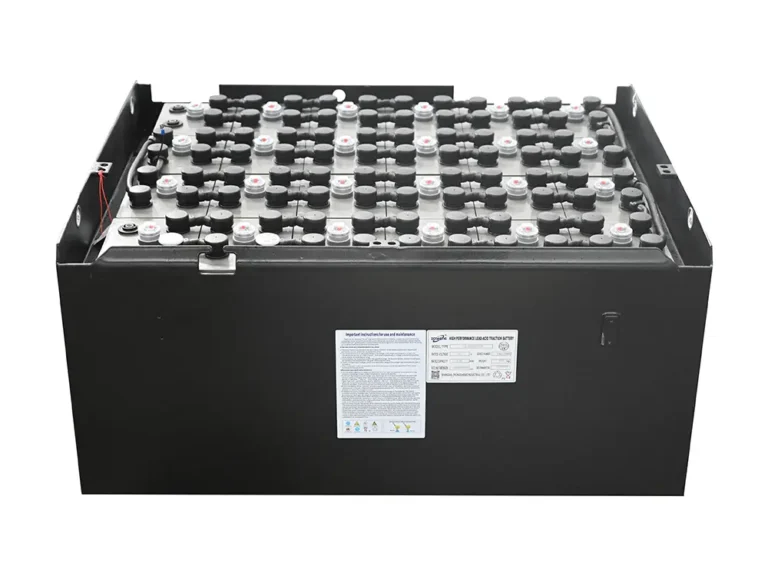
To maximize vehicle stability during multi-keg handling while resisting corrosive chemical washdown, ZOSPOWER designs custom brewery-grade battery power packs:
| Design Metric | Conventional Brewery Lead-Acid | ZOSPOWER Brewery-Spec LiFePO4 System |
|---|---|---|
| Chassis Ballast Architecture | Hollow lead-plate tray (uncalibrated CoG) | Laser-cut monolithic solid steel baseplate (lowers truck CoG by 115 mm) |
| Ingress Protection (IP Rating) | Vented open caps (IP20; acid mist escape) | IP67 Hermetically Sealed with dual EPDM compression seals |
| Corrosion Protection Coating | Standard commercial enamel paint | ISO 12944 C5-I Industrial Heavy-Duty Epoxy (impervious to CIP caustic/acid) |
| Shock & Vibration Damping | None (rigid lead cells crack under 10G) | Multi-axis wire-rope isolators + structural polyurethane potting (>30G survival) |
| High-Current Sustained Discharge | Drops to <66V under 350A double-clamp lift | Maintains >78.6V under 450A continuous peak draw |
3. Mathematical Mechanics: Dynamic Fluid Sloshing & Tipping Resistance
When handling multi-pallet keg loads, the free-surface fluid oscillation can be modeled using the equivalent Housner mechanical pendulum analog. The lateral overturning moment $M_{\text{overturn}}$ during an emergency steering correction with lateral acceleration $a_y$ is:
$$M_{\text{overturn}} = M_{\text{truck}} \cdot a_y \cdot h_{\text{truck\_cg}} + M_{\text{payload}} \cdot a_y \cdot h_{\text{payload\_cg}} + M_{\text{slosh}} \cdot g \cdot \Delta y_{\text{slosh}}$$
Where $\Delta y_{\text{slosh}}$ is the dynamic lateral center-of-mass displacement of the oscillating liquid beer inside the kegs:
$$\Delta y_{\text{slosh}} \approx \frac{L_{\text{keg}}}{4} \cdot \left(\frac{a_y}{g}\right) \cdot \frac{\tanh(k \cdot h_{\text{fluid}})}{k \cdot h_{\text{fluid}}}$$
Under a 0.25G lateral maneuver ($a_y = 2.45\text{ m/s}^2$), fluid sloshing adds an extra 18% to 24% overturning torque on the vehicle’s drive steer axle. By integrating a monolithic 1,400 kg solid steel bottom plate into the ZOSPOWER lithium pack, the truck’s overall combined center of gravity is lowered by 115 mm. This increases the vehicle’s lateral tipping threshold velocity by 22.4%, virtually eliminating cornering rollover risks even when moving double-pallet keg arrays at maximum travel speed.
4. Multi-Shift Opportunity Charging During Bottling Production Breaks
High-speed bottling lines produce 60,000 cans or 36,000 bottles per hour, requiring non-stop pallet evacuation to cold storage or staging docks. Fleet downtime is unacceptable:
- Staggered Opportunity Charging Windows: Operators plug in during mandatory 15-minute hygiene washdown pauses, 30-minute shift handovers, and 45-minute lunch breaks. At a 1C fast charge rate (200A–300A), a 15-minute plug-in injects 25% to 30% state-of-charge (SoC) back into the pack.
- Elimination of Heavy Crane Battery Swaps: Swapping a 2-tonne wet lead-acid battery in a tight bottling hall requires dedicated gantry cranes, spill containment pans, and 20–30 minutes of lost production per shift. LiFePO4 opportunity charging enables true “one-truck, one-battery” 24/7 non-stop operations.
- Zero Voltage Drop During Hydraulic Clamping: Multi-keg clamp attachments require high sustained pressure (180–220 bar) to prevent kegs from shifting. ZOSPOWER lithium cells provide zero voltage sag, ensuring consistent hydraulic clamping force throughout the entire shift.
5. 5-Year Fleet Total Cost of Ownership: 25-Truck Brewery Fleet Economics
Comparative life-cycle cost analysis for a regional brewery running twenty-five 3.5-tonne electric forklifts across three 8-hour shifts:
| Life Cycle Cost Component (25 Trucks, 5 Years) | Lead-Acid (1-1-1 Dual Pack Swap System) | ZOSPOWER Heavy-Duty LiFePO4 System |
|---|---|---|
| Battery Packs & Charger Infrastructure CapEx | $390,000 (50 lead packs + 25 chargers + crane) | $520,000 (25 LiFePO4 packs + 12 fast chargers) |
| Daily Battery Swap Labor (3 Shifts × 365 Days) | $410,000 (dedicated swap room technician labor) | $0 (Opportunity charging at break stations) |
| Water Refilling & Acid Neutralization Maintenance | $145,000 (deionized water, cable terminal rot) | $8,000 (routine terminal inspections only) |
| Electricity Consumption (Charging Efficiency Delta) | $680,000 (70% charging round-trip efficiency) | $470,000 (94% round-trip efficiency) |
| Mid-Life Replacement Battery Packs (Yr 3) | $280,000 (sulfation degradation replacement) | $0 (LiFePO4 warranty > 4,000 cycles) |
| Total 5-Year Life Cycle Expenditure | $1,905,000 | $998,000 |
Total Net Fleet Savings: $907,000 USD across 25 trucks, delivering complete capital payback in under 8.6 months.
6. ZOSPOWER Engineering: Ruggedized Brewery Solutions
ZOSPOWER engineers heavy-duty lithium conversion packs for all global beverage fleet trucks—including Linde, Jungheinrich, Toyota, Still, Crown, and Hyster-Yale:
- Tailored Ballast Tuning: Precision-matched to factory counterweight requirements for multi-pallet handlers and rotators.
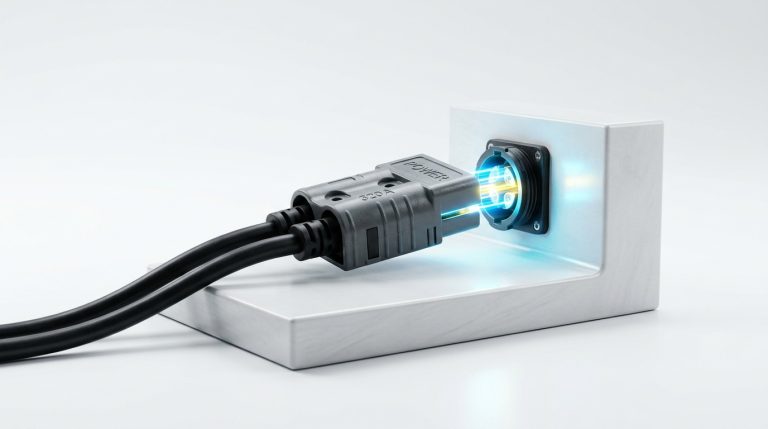
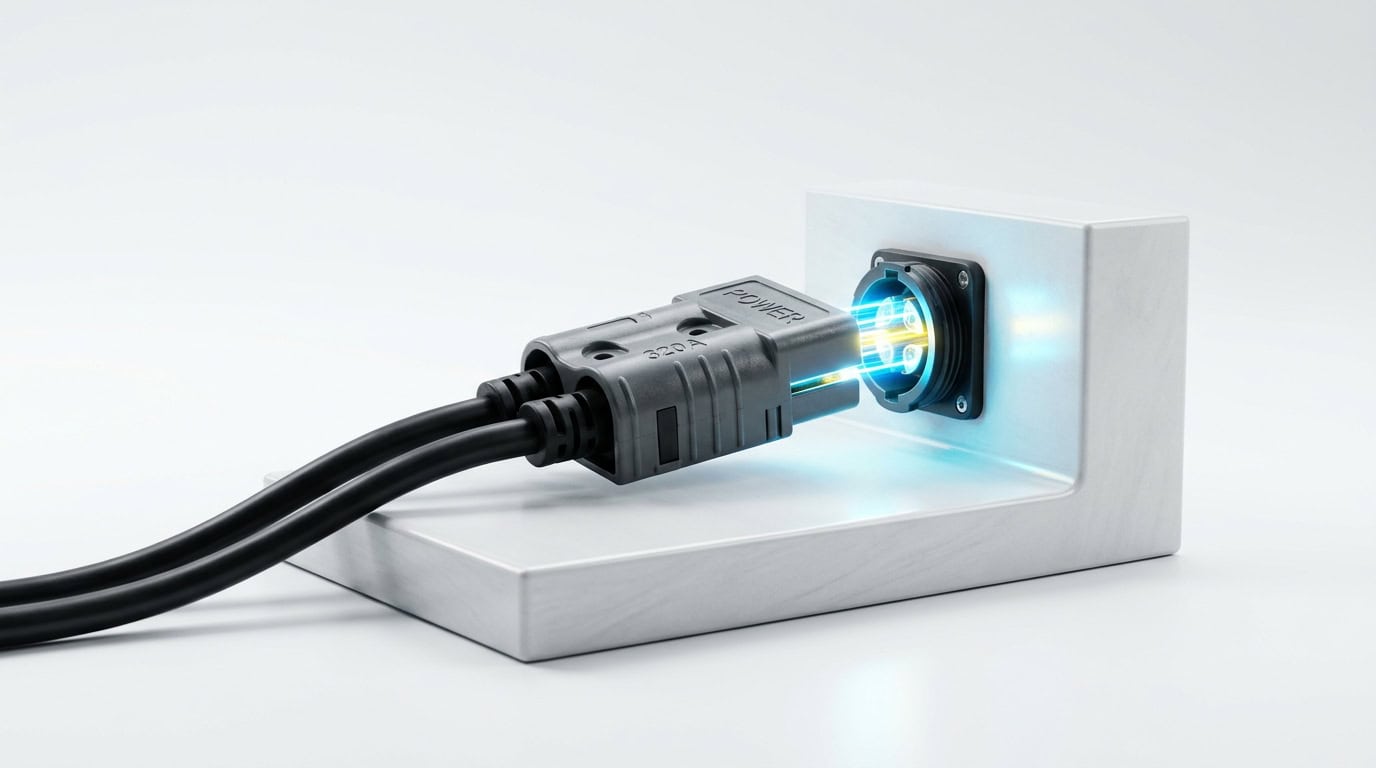
- Chemical-Resistant Connectors: High-amperage REMA DIN connectors with Viton chemical gaskets prevent caustic CIP liquid ingress.
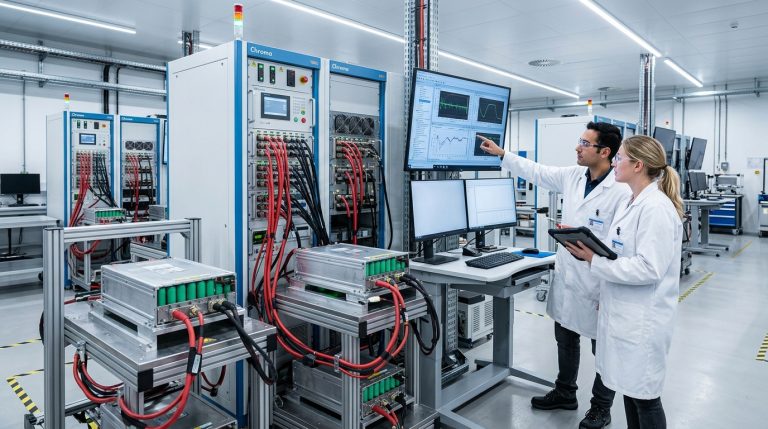
- CANopen / J1939 Telematics: Continuous cloud telemetry tracking battery SoC, cell temperature, and vibration shock telemetry.
Upgrade Your Brewery Fleet with ZOSPOWER
Eliminate dangerous battery swaps, prevent wet-floor tipover accidents, and cut energy bills. Consult with ZOSPOWER beverage industry electrification specialists to configure ruggedized IP67 lithium solutions tailored to your bottling operations.