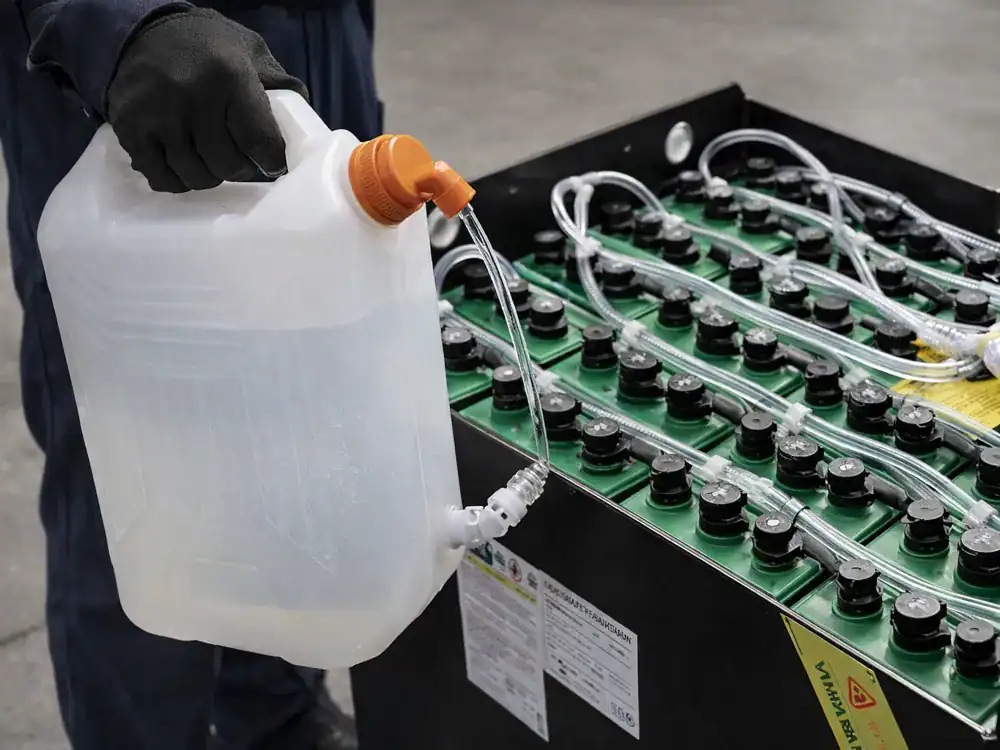
As baterias de chumbo-ácido são um elemento básico em várias indústrias, alimentando tudo, desde veículos a sistemas de reserva. No entanto, como todas as baterias, requerem uma manutenção adequada para garantir um desempenho e uma longevidade óptimos. Um aspeto crítico da manutenção das baterias de chumbo-ácido é o nível de água do eletrólito. À medida que estas baterias se descarregam e carregam, o conteúdo de água no eletrólito evapora-se gradualmente. É aqui que um sistema de rega de baterias de chumbo-ácido é uma solução prática e eficiente para manter as baterias a funcionar com o máximo desempenho.
Neste artigo, vamos explorar as benefícios significativos da utilização de um sistema de rega para baterias de chumbo-ácido e como este ajuda a manter o seu funcionamento ótimo.
Quais são os benefícios de um sistema de rega de baterias de chumbo-ácido?
Manutenção de níveis adequados de electrólitos
As baterias de chumbo-ácido dependem de uma mistura equilibrada de ácido sulfúrico e água no eletrólito para gerar energia. Com o tempo, a água evapora-se durante o processo de carga e descarga. Se não for reabastecido, o eletrólito torna-se mais concentrado, levando à redução da eficiência da bateria e a potenciais danos. Um sistema de rega assegura que o teor de água do eletrólito se mantém no nível correto, garantindo um desempenho consistente da bateria.
Aumentar a vida útil da bateria
Uma das principais causas de falha prematura da bateria é o esgotamento da água no eletrólito, o que leva a uma concentração excessiva de ácido. Isto provoca a corrosão das placas da bateria, o que afecta negativamente o desempenho e reduz o tempo de vida da bateria. Ao manter os níveis de água a zero, um sistema de rega ajuda a evitar este problema e garante que a bateria dura mais tempo.
Melhorar a eficiência do carregamento
Quando o eletrólito tem pouca água, aumenta a resistência interna, o que pode prejudicar a capacidade da bateria para carregar corretamente. O processo de carregamento torna-se menos eficiente e pode demorar mais tempo a carregar a bateria. Um sistema de rega com manutenção adequada garante que o eletrólito se mantém nos níveis ideais, promovendo um carregamento eficiente e reduzindo o tempo total de carregamento.
Minimizar a manutenção manual
Verificar e manter o nível de água de cada célula individual da bateria pode consumir muito tempo, especialmente quando se gerem várias baterias. Um sistema de rega de baterias de chumbo-ácido automatiza este processo, reduzindo a necessidade de verificações manuais regulares. Pode ser concebido para encher todas as células simultaneamente, assegurando níveis de água uniformes em todas as baterias.
Prevenir a secagem e os danos
Se o nível de água descer demasiado, a bateria pode secar, provocando danos irreversíveis nos componentes internos. Um sistema de rega ajuda a evitar esta situação, fornecendo um abastecimento contínuo de água, evitando assim que a bateria seque ou fique danificada.
Garantir a segurança
As baterias de chumbo-ácido podem libertar gás hidrogénio durante o processo de carregamento, que é inflamável em concentrações elevadas. Se o nível de eletrólito for demasiado baixo, o risco de sobreaquecimento e a acumulação de gás hidrogénio aumentam, criando um potencial risco de segurança. Um sistema de rega ajuda a evitar níveis baixos de água e mantém o ambiente interno adequado para um funcionamento seguro da bateria.
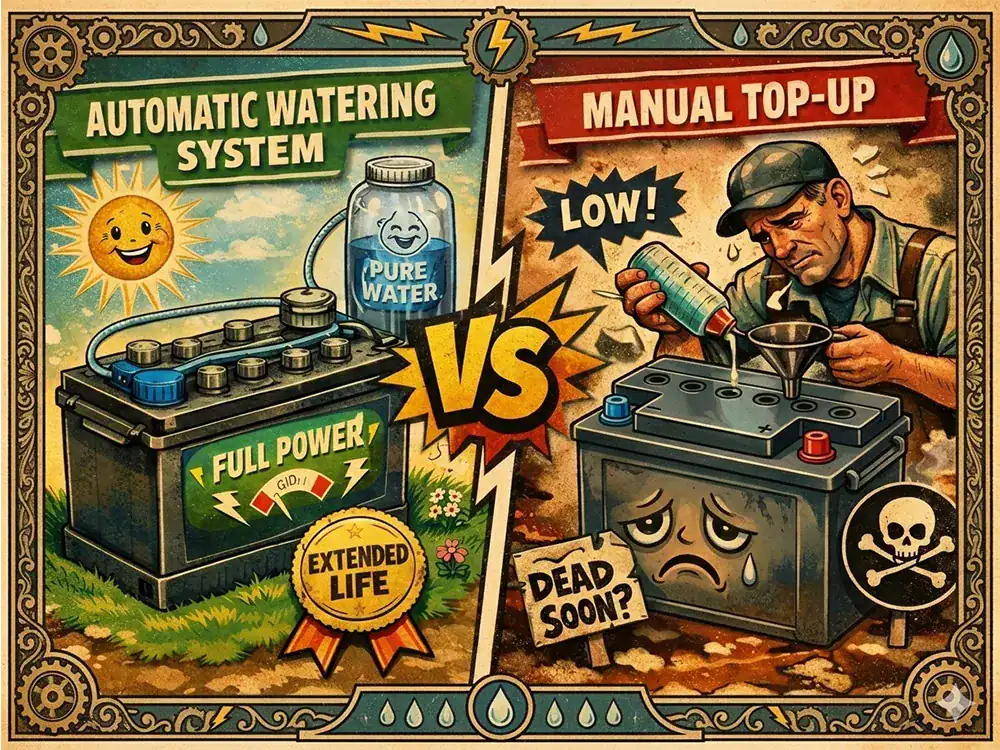
Como utilizar um sistema de rega para baterias de chumbo-ácido:
- Identificar o tipo de sistema de rega
Determinar se precisa de um automático ou manual sistema de rega com base no número de baterias que gere e nas suas preferências de manutenção. - Instalar o sistema de rega
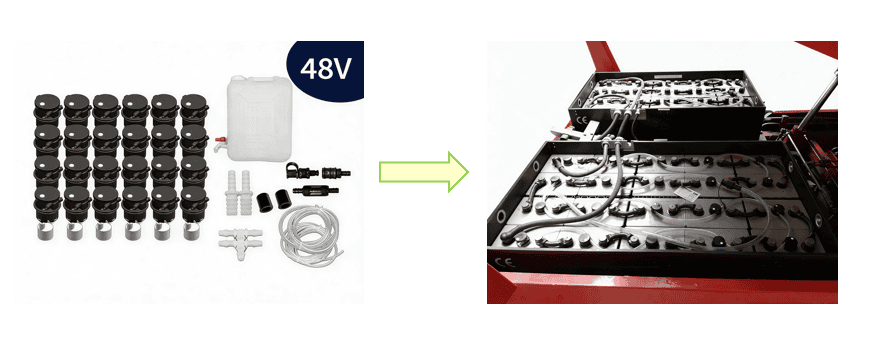
Siga as diretrizes do fabricante para instalar o sistema. Normalmente, um sistema de rega é composto por tubos e portas de enchimento para cada célula individual da bateria. Certifique-se de que o sistema está ligado de forma segura e que todos os componentes estão a funcionar corretamente. - Verificar regularmente o sistema de rega
Mesmo com um sistema automático, é importante monitorizar periodicamente o sistema para garantir que está a encher corretamente o eletrólito e que não há fugas ou avarias. - Utilizar água purificada
Utilize sempre água purificada ou destilada para encher o sistema. A água da torneira contém minerais que podem danificar a bateria e reduzir o seu desempenho. - Monitorizar a tensão da bateria e o ciclo de rega
Certifique-se de que a bateria está carregada e que o sistema de rega é corretamente acionado com base no ciclo de utilização da bateria. Alguns sistemas têm sensores para monitorizar o nível de eletrólito da bateria e ativar o processo de rega em conformidade. - Realizar inspecções regulares
Embora o sistema de rega automatize grande parte da manutenção, deve ainda assim inspecionar os terminais da bateria e outras partes do sistema para evitar a corrosão e garantir que tudo está a funcionar da melhor forma.
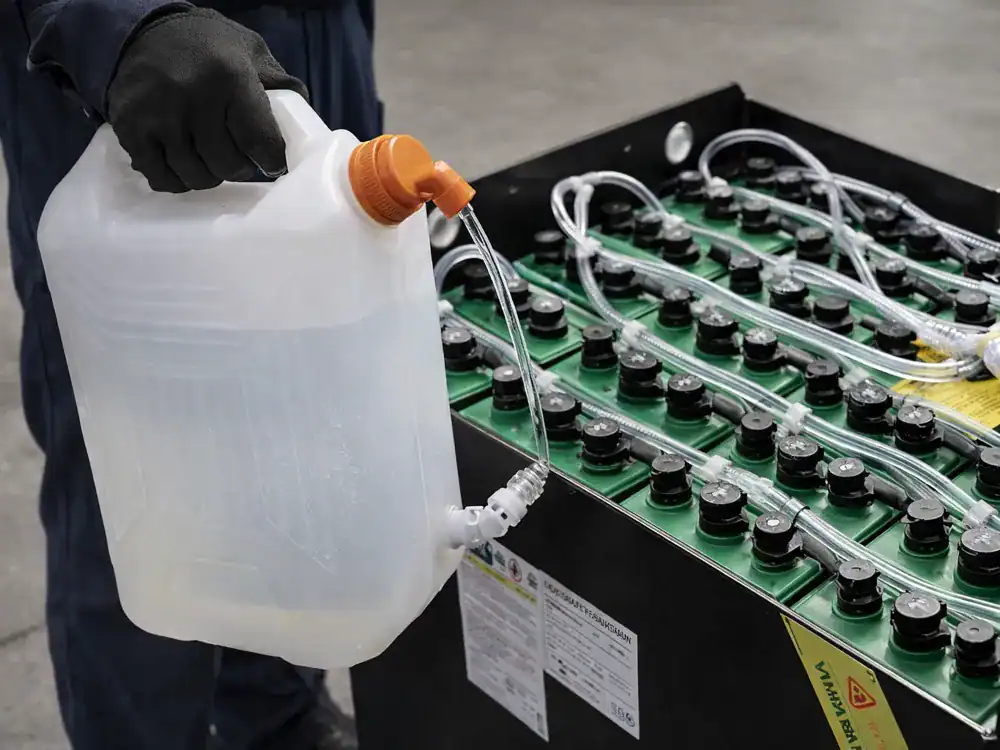
Incorporação de um sistema de rega de baterias de chumbo-ácido na sua rotina de manutenção de baterias pode proporcionar inúmeros benefícios, incluindo o prolongamento da vida útil, melhor desempenho, redução da manutenção manual e maior segurança. Ao automatizar o processo de reabastecimento de água, garante que as suas baterias funcionam no seu máximo, minimizando os riscos de falha prematura e tempo de inatividade. Quer esteja a gerir uma frota de veículos ou um sistema de energia de reserva, um sistema de rega é um investimento que vale a pena para qualquer utilizador de baterias de chumbo-ácido.