Raw timber forestry processing and industrial sawmill operations represent one of the most mechanically punishing and thermally hazardous frontiers in material handling. High-capacity counterbalance forklifts (10 to 18 metric tons) and specialized log-grapple loaders navigate unpaved rutted mud yards, dynamic cantilevered off-center tree trunk payloads, continuous hydraulic shock pulses, and thick airborne plumes of combustible cellulose sawdust and wet tannic tree bark fibers. Traditionally dominated by heavy diesel powerplants, sawmills worldwide are confronting escalating diesel consumption, chronic radiator fouling, catastrophic engine bay fire hazards, and rigorous corporate decarbonization mandates. By 2026, heavy-duty rough-terrain electric timber forklifts powered by ruggedized lithium iron phosphate (LiFePO4) battery systems are proving their operational superiority across North American, Scandinavian, and European timber hubs. This engineering white paper analyzes severe environmental containment, ingress filtration, high-torque permanent magnet drivetrains, mast hydraulic energy harvesting, and the lifecycle total cost of ownership (TCO) transformation governing modern wood processing yards.
| 動作パラメータ | 16-Ton Tier-4 Final Diesel Timber Loader | 16-Ton High-Voltage LiFePO4 Electric Timber Forklift | Sawmill Operations Impact |
|---|---|---|---|
| Hourly Fuel / Energy Cost | 18 to 26 Liters/hr ($28.00–$40.00/hr) | 22 to 32 kWh/hr ($3.30–$4.80/hr) | 85%–88% direct operating energy cost reduction |
| Airborne Radiator Fouling & Overheating | Chronic sawdust ingestion; requires twice-daily radiator blowouts | Hermetic IP67 liquid cooling loop with auto-reversing fan purging | Eliminates engine thermal derating & seized engine pistons |
| Combustion Fire Risk (Cellulose on Exhaust) | DPF and turbocharger reach 550°C–650°C; severe timber fire hazard | Maximum surface temperature <65°C throughout electrical drivetrain | Eliminates facility wood dust ignition & slashes insurance premiums |
| Low-End Torque Delivery | Sluggish torque converter lag over unpaved mud and steep ramps | Instantaneous peak torque (0 rpm) via dual PMSM drive units | Effortless breakout torque with heavy 14-ton unpeeled log bundles |
| Cold-Weather Sub-Zero Performance | Gelled diesel fuel, block heaters required, difficult cold cranks at -25°C | Integrated high-voltage PTC internal core pre-heaters | Instant full-power startup in Scandinavian & Canadian winter logging |
1. The Sawmill Hazard Matrix: Airborne Bark, Dust Fire Risks & Dynamic Shocks
Unlike indoor finished-goods logistics, sawmill yards combine brutal environmental and mechanical stressors that destroy conventional drivetrains within 36 months:
- Airborne Cellulose & Bark Debris Clogging: Debarking drums, high-speed bandsaws, and wood chippers generate relentless airborne clouds of sawdust and stringy tree bark. In diesel machines, cooling radiator fans suck this debris into fine aluminum radiator fins, creating a compacted flammable blanket. Water coolant temperatures spike above 115°C, forcing frequent emergency shutdowns and pneumatic blast-cleaning.
- Catastrophic Timber Fire Hazards (NFPA 664 Compliance): Diesel Particulate Filters (DPFs) during active regeneration cycles and turbocharger exhaust manifolds operate at temperatures between 500°C and 680°C. Cellulose wood dust ignites spontaneously at just 260°C (500°F). Stray wood slivers contacting hot diesel exhaust components have triggered multi-million-dollar sawmill fires worldwide. NFPA 664 standards increasingly demand the elimination of open high-temperature ignition sources in wood processing zones.
- Severe Dynamic Dynamic Mast Shock: Handling 12-meter-long unprocessed hardwood logs over cratered gravel roads creates intense pendulum sway and torsional chassis twisting. Dropping a 6-metric-ton log bundle into a sorting bunk delivers immediate 15G to 22G shock pulses through the steer axle, mast trunnions, and battery retention bays.
2. Ruggedized LiFePO4 Traction Architecture: IP67 Hermetic Ingress Protection
To operate reliably in outdoor lumber yards subjected to torrential rains, freezing sleet, and fine bark particulate, the high-voltage energy storage system must achieve absolute environmental isolation:
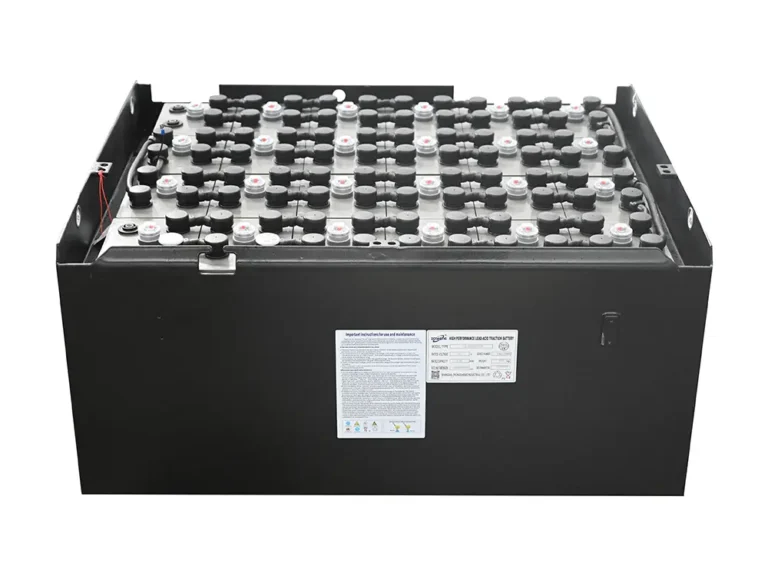
- Hermetically Sealed IP67 / IP69K Heavy Steel Armor: ZosPower heavy-timber battery enclosures are engineered from 6mm structural mild steel reinforced with internal tubular gussets. Heavy continuous seam-welds and closed-cell EPDM perimeter gaskets prevent the ingress of acidic, tannic-acid-rich wet sawdust slurry and pressurized 100-bar washdown sprays.
- Tannic Acid & Chemical Corrosion Resistance: Green, freshly cut timber exuded tannins and organic acids (gallic and ellagic acid) that rapidly corrode standard zinc coatings and aluminum alloys. Battery housings receive a triple-coat marine epoxy primer topped with an aliphatic polyurethane barrier tested under 1,500 hours of salt and acid fog exposure (ISO 12944 C5-I Industrial classification).
- Low-Thermal Signature Drivetrain: In electric timber forklifts, power electronic inverters, traction motors, and the battery pack operate below 65°C under full load. By completely eliminating exhaust pipes, hot manifolds, and regeneration cycles, the risk of airborne sawdust ignition drops to absolute zero, dramatically reducing property insurance deductibles for timber processing mills.
3. High-Torque Dual PMSM Drivetrain vs. Unpaved Rutted Logging Yards
Navigating 18-ton loaded forklifts across unpaved clay and gravel log yards demands immense instantaneous tractive effort. Diesel engines with hydrodynamic torque converters waste substantial energy as fluid heat when attempting to climb deep ruts from a standstill:
Modern electric timber trucks integrate twin Permanent Magnet Synchronous Motors (PMSMs) coupled directly to heavy-duty planetary hub reduction axles:
- Zero-RPM Maximum Breakout Torque: Dual PMSM drives deliver 100% rated torque (over 2,800 Nm at the motor shaft; multiplying to >42,000 Nm at the wheel rims) starting from zero wheel velocity. When pushing heavy log grapples into dense tree stacks or crawling out of spring-thaw mud hollows, the electric drivetrain provides continuous, smooth tractive adhesion without wheel spin or transmission clutch slipping.
- Electronic Torque Vectoring & Differential Traction Control: High-speed CAN bus motor controllers dynamically adjust wheel torque 500 times per second ($500\text{ Hz}$). If an inner drive wheel loses traction on wet bark, torque is instantaneously shunted to the high-traction wheel, preserving vehicle steering authority and preventing yard rutting.
- Proportional Regenerative Braking: Decelerating a 32-ton combined mass (truck plus log load) down a 12% yard incline regenerates up to 120 kW of electrical power directly back into the LiFePO4 pack. This recaptures up to 25% of gross kinetic energy while sparing mechanical friction brake shoes from severe overheating and frequent replacement.
4. All-Weather Thermal Conditioning: Conquering -30°C Boreal Winter Logging
In high-latitude timber centers across Canada, Sweden, Finland, and the US Pacific Northwest, winter temperatures regularly plunge below -25°C (-13°F). While lead-acid batteries lose over 55% of their effective capacity and conventional lithium batteries refuse charge below 0°C due to lithium plating hazards, heavy-duty timber packs incorporate intelligent multi-stage heating:
- High-Voltage Internal PTC Glycol Heating: ZosPower heavy packs feature an internal 4 kW to 8 kW high-voltage PTC heater embedded within the closed liquid thermal circuit. Coolant channels run beneath every cell module, warming the cell cores from -30°C to +15°C within 35 minutes using grid power during pre-shift staging.
- Self-Sustaining Duty-Cycle Warmth: During active high-load operation (grapple lifting and continuous hauling), cell internal impedance generates natural Joule heat ($I^2 R$). High-efficiency vacuum insulation panels (VIP) lining the battery armor retain this heat, maintaining the core electrolyte in its optimal efficiency window (+20°C to +32°C) without auxiliary heater battery draw.
- Debris-Purging Reversing Radiator Fans: Hot coolant from the hydraulic system and drive inverters passes through a dedicated external radiator. Every 20 minutes, the brushless DC fan automatically reverses direction for 30 seconds at maximum velocity, violently blowing accumulated sawdust and wood fibers outward and ensuring uncompromised heat rejection.
5. Five-Year TCO Financial Model: 16-Ton Diesel vs. LiFePO4 Electric Timber Truck
Operating a heavy timber forklift over a standard double-shift sawmill schedule (4,000 operational hours annually) reveals dramatic economic divergence between fossil fuel combustion and lithium electrification:
| Cost Category (5 Years / 20,000 Operating Hours) | 16-Ton Diesel Timber Forklift | 16-Ton ZosPower LiFePO4 Electric Forklift | Cumulative Financial Savings |
|---|---|---|---|
| Fuel / Electricity Expenditure | $640,000 (at $1.60/L, 20 L/hr) | $108,000 (at $0.18/kWh, 30 kWh/hr) | $532,000 Saved |
| Routine Powertrain Maintenance & Filters | $125,000 (oil, DPF, fuel filters, turbos) | $28,000 (coolant flush, gearbox fluid) | $97,000 Saved |
| Friction Brake Replacement (Wet Drums/Discs) | $45,000 (replaced every 3,000 hours) | $12,000 (regen braking takes 85% load) | $33,000 Saved |
| Radiator Debris Cleaning & Downtime Loss | $38,000 (labor & idle production loss) | $4,000 (automated reversing fan purging) | $34,000 Saved |
| Initial Capital Acquisition (CapEx) | $220,000 | $310,000 (includes battery & 160kW charger) | ($90,000 Initial Premium) |
| Net 5-Year Total Cost of Ownership | $1,068,000 | $462,000 | $606,000 Net Savings |
The upfront CapEx premium of $90,000 is fully amortized within 9.8 months of double-shift sawmill operation. Over the complete five-year evaluation lifecycle, a single 16-ton electric timber loader puts over $600,000 directly back onto the sawmill’s bottom line, while slashing corporate carbon emissions by over 1,050 metric tons of CO2 equivalent.
Electrify Your Forestry and Timber Handling Operations with ZOSPOWER
Are high diesel bills, sawdust-clogged radiators, and winter cold-cranking failures impacting your sawmill throughput? ZosPower engineers heavy-duty, high-voltage (96V to 600V) lithium iron phosphate (LiFePO4) power systems specifically customized for extreme rough-terrain timber handlers, log stackers, and heavy industrial lumber forklifts.
Contact our industrial heavy vehicle engineering team today to receive bespoke electrical integration schematics, continuous duty-cycle run-time simulations, and turnkey outdoor fast-charging infrastructure proposals.