Modern fast-fashion distribution centers, automated garment fulfillment hubs, and spinning textile mills operate under intensive material handling pressures driven by massive SKU proliferation, high-density narrow-aisle racking, and zero-tolerance fabric contamination standards. In these high-throughput environments, cotton, synthetic polyester, and wool processing releases pervasive airborne textile lint and fly fibers. Governed by NFPA 654 and OSHA combustible dust regulations, loose textile lint possesses exceptionally low flash points and rapid flame propagation rates. Hot diesel exhaust pipes, arcing open-frame electrical contactors, and corrosive lead-acid battery off-gassing present catastrophic facility fire hazards and irreparable fabric soot damage. In 2026, premier global apparel and textile conglomerates are accelerating the transition to sealed high-voltage LiFePO4 electric forklift fleets. This comprehensive industry analysis evaluates lint ingress mitigation, narrow-aisle opportunity charging, and apparel fulfillment fleet economics.
1. Severe Operational & Fire Risks in Textile & Garment Logistics
Textile mills and high-bay apparel warehouses introduce unique environmental and mechanical challenges that destroy conventional forklifts:
- High-Speed Textile Lint Accumulation (Flash Fire Hazard): Spinning, weaving, and high-velocity carton packing release microscopic cellulose and synthetic lint fibers. Lint accumulates rapidly across motor cooling fans, hydraulic reservoirs, and electrical cabinets. When exposed to surface temperatures exceeding 180°C (such as unshielded diesel engine manifolds or overheated resistors), lint ignites instantly into flash fires.
- Fabric Soot & Acid Vapor Contamination: Finished garments and rolls of raw silk or dyed cotton are acutely vulnerable to localized air pollution. Internal combustion diesel soot particles and sulfuric acid droplets vented during lead-acid charging stain fabrics, causing catastrophic inventory write-offs.
- Very Narrow Aisle (VNA) Man-Up Operations: Modern apparel hubs maximize cubic volume using 1.6-meter to 1.8-meter narrow aisles with racking heights reaching 12 to 16 meters. Mast lifting must remain continuous, smooth, and free from hydraulic voltage sag that causes mast sway at high elevations.
- Triple-Shift E-Commerce Fulfillment Peaks: Peak retail seasons demand 24/7 continuous truck availability. Sluggish battery swapping routines, crane room congestion, and afternoon voltage decline severely choke warehouse order dispatch rates.
2. Specialized LiFePO4 Engineering for Textile & Apparel Facilities
To eliminate lint ignition risks and optimize narrow-aisle operations, Zospower engineers specialized clean-room grade industrial battery systems:
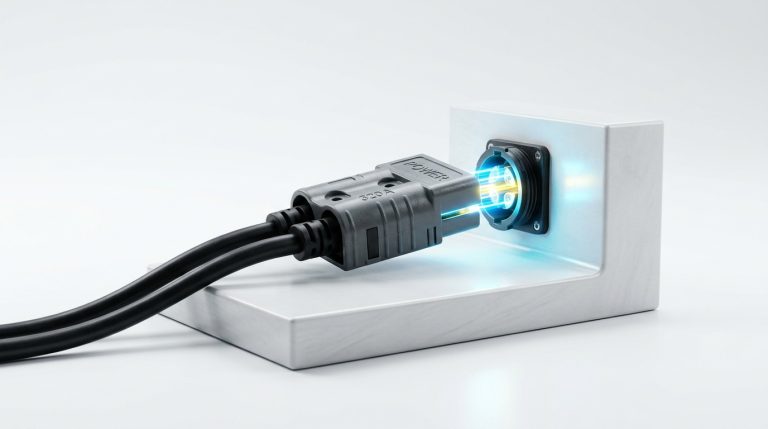
- IP65/IP67 Dust-Tight Hermetic Enclosures: Heavy-gauge robotic laser-welded steel battery casings feature continuous EPDM rubber seals and sealed REMA DIN connectors, entirely preventing combustible cotton lint from contacting internal electrical cells and busbars per NFPA 654.
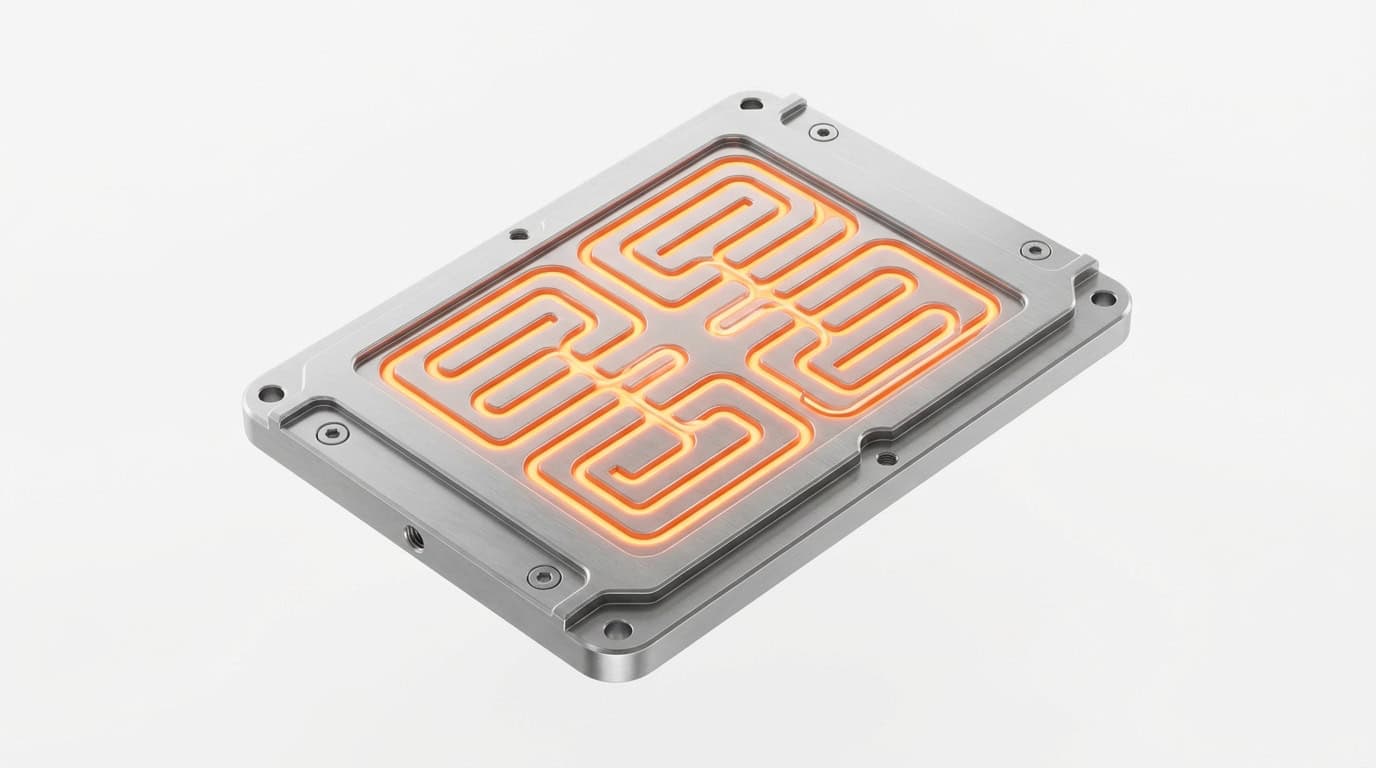
- Ultra-Low Surface Temperature Operating Profile (<45°C): Utilizing low-impedance prismatic LiFePO4 cells ($R_i < 0.3 ext{ m}\Omega$) and laminated flexible copper busbars, the entire battery assembly operates with minimal internal Joule heating. Even under sustained multi-shift duty, external tray temperatures remain safely below 45°C—vastly below lint flash points.
- Hermetically Sealed Gas-Filled Contactors: Zospower utilizes ceramic-brazed, hydrogen-pressurized DC contactors that quench breaking arcs in under 2 milliseconds inside an airtight vacuum capsule, guaranteeing zero spark emissions in lint-laden air.
- Integrated Dock-Side Fast Opportunity Charging (1.0C): High-efficiency IP54 industrial chargers installed directly at aisle staging ends enable operators to charge during mandatory 15-minute breaks, eliminating dedicated battery change-out rooms and hazardous crane lifts.
3. 車両運用比較:ディーゼル/鉛蓄電池 対 Zospower LiFePO4
The operational, safety, and hygiene parameters across textile warehouse forklifts are contrasted below:
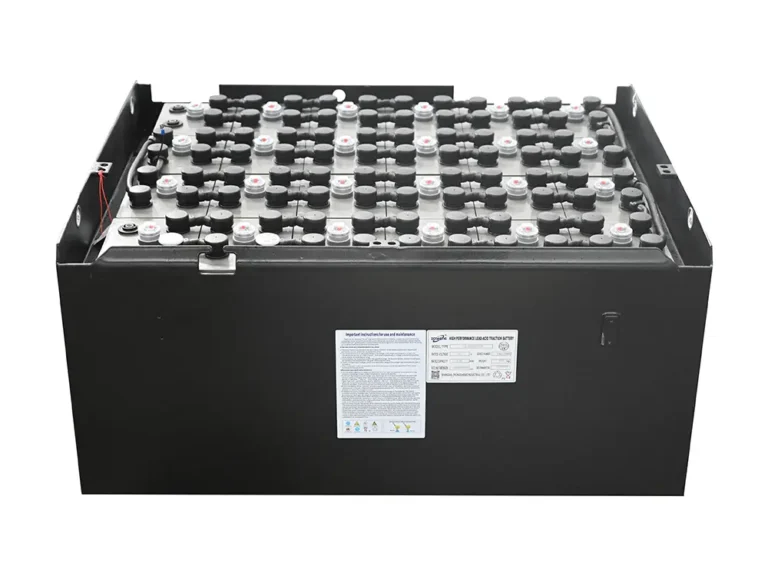
| 動作パラメータ | Legacy Diesel Forklift (Textile Spec) | Conventional Lead-Acid (48V / 700Ah) | Zospower Clean LiFePO4 (48V / 800Ah) |
|---|---|---|---|
| Airborne Lint Fire Hazard | Severe: Exhaust manifolds ignite cotton lint | Moderate: Open arcing contactors & acid mist | Zero: 100% spark-free sealed system; surface < 45°C |
| Fabric Contamination Risk | High: Black carbon soot stains white apparel | Moderate: Sulfuric acid vapor & acid boil-over | Zero: Clean, emission-free, dry chemistry |
| Narrow-Aisle Mast Lift Speed | Rough throttle control; high acoustic noise | Drops 25% by mid-shift (voltage sag) | 100% constant mast speed until 5% SOC |
| 複数シフト体制における運用準備態勢 | Outdoor fuel storage and refueling runs | 1日あたり2~3回のバッテリー交換が必要(クレーン室) | 24/7 continuous duty via dockside fast charging |
| Weekly Maintenance Burden | Radiators clog with lint daily; high downtime | 毎週の水やり、均し、洗浄 | メンテナンス不要、密閉型ソリッドステートシステム |
| Energy Round-Trip Efficiency | 28% – 32% (severe thermal losses) | 68% – 72% (resistive heat loss during charge) | 94% – 96% direct electrical efficiency |
4. Financial TCO Audit: 16-Truck Apparel Fulfillment Center (5-Year Model)
To evaluate the financial impact, the audit below examines a large apparel e-commerce distribution hub operating 16 reach trucks and order pickers across three shifts (6,000 operational hours per truck/year):
| 財務コストの分類 | Lead-Acid Fleet (48 Packs + Battery Room) | Zospower LiFePO4 Fleet (16 Packs + Chargers) | 5-Year Net Facility Savings |
|---|---|---|---|
| Battery Assets & Charging Infrastructure | $580,000 (48 packs + change cranes) | $720,000 (16 packs + 8 high-rate chargers) | -$140,000 (higher upfront CAPEX) |
| 過去5年間の電力消費量 | $640,000 (low charging efficiency + heat loss) | $445,000 (high-efficiency fast charging) | +$195,000 |
| Battery Swapping & Watering Labor | $360,000 (3 dedicated battery room crew) | $0(休憩中のオペレーターへの機会報酬) | +$360,000 |
| 再利用された工場の床面積 | 3,200 sq. ft. battery changing room | Converted into high-density garment staging | +$320,000 in fulfillment value |
| Garment Inventory Staining Write-Offs | $180,000 (acid vapor & battery spill damage) | $0 (100% clean sealed chemistry) | +$180,000 |
| 3年目のバッテリー交換 | $450,000 (complete lead-acid fleet swap) | $0(LiFePO4の保証期間は8年以上) | +$450,000 |
| 5年間のライフサイクルコスト合計 | $2,210,000 | $1,165,000 | +$1,365,000 Total Net Savings |
The financial audit proves that converting a 16-truck apparel distribution center to Zospower LiFePO4 systems unlocks over $1.36 million in net operational cash savings across 5 years, delivering full capital payback in just 11.5 months while permanently eliminating textile lint fire risks and inventory staining liabilities.
5. Implementation Roadmap: Deploying Clean Electric Power in Apparel Logistics
Transitioning garment fulfillment facilities to lithium power requires disciplined facility planning:
- In-Aisle Charging Island Placement: Install 150A to 200A fast chargers at the end-caps of primary picking aisles, allowing reach trucks to plug in during shift handovers without traveling to a distant battery room.
- High-Bay Mast Lift Voltage Stability Profiling: Verify that battery discharge voltage remains stable (>48.0V) under full-height (12m) hydraulic hoist surges to eliminate mast vibration and pallet tipping risks.
- Quarterly Lint Ingress & Thermal Audits: Inspect battery enclosure perimeter seals and use thermal imaging to verify that electrical connection points maintain surface temperatures below 45°C.
- BMS Cloud Telematics Integration: Connect battery management units to cloud IoT dashboards to track fleet energy consumption and coordinate charging schedules with facility peak-demand billing tariffs.
For more detailed technical insights on clean material handling and battery electrical safety, explore our engineering guides on DC Contactors & Arc Suppression Design, パイロヒューズと直流ヒューズの連携, 、および BMS Insulation Monitoring & Ground Fault Detection.
Modernize Your Apparel Warehouse Fleet with Zospower LiFePO4
Eliminate airborne lint fire hazards, protect delicate garments from acid staining, and achieve 24/7 continuous order fulfillment. Zospower manufactures custom 24V, 48V, and 80V LiFePO4電池 systems with IP65 dust-tight hermetic sealing, cool-running architectures (<45°C), and in-aisle fast opportunity charging designed for the apparel and textile industry.