
Inside primary protein processing plants, pelagic seafood blast freezers, and industrial cold-storage logistics hubs, material handling equipment operates within the most brutal thermal and chemical envelope in the food supply chain. Maintaining commercial deep-freeze rooms at continuous temperatures between $-28^\circ\text{C}$ and $-35^\circ\text{C}$ (with cryogenic spiral freezers reaching $-40^\circ\text{C}$) pushes mechanical and electrical systems to the verge of failure. When forklifts transition continuously between sub-zero freezer vaults and ambient $+25^\circ\text{C}$ dock staging bays, rapid thermal cycling induces severe atmospheric moisture condensation (“sweating”), flooding electrical connectors and causing dendritic tracking shorts. Simultaneously, industrial refrigeration relying on anhydrous ammonia ($NH_3$, governed by OSHA 29 CFR 1910.119 and IIAR standards) introduces corrosive, alkaline atmospheric vapors that destroy standard copper wiring and attack lead-acid battery terminals. This strategic industry analysis evaluates how global meat and seafood logistics operators are replacing failing lead-acid and combustion forklifts with Arctic-grade, hermetically sealed LiFePO4電池 systems equipped with autonomous multi-zone thermal conditioning for 2026 cold chain compliance.
1. Deep-Freeze Logistics Realities: Cryogenic Temperatures & Ammonia Vapor Stress
Deep-freeze protein warehousing presents unique electro-chemical, thermodynamic, and mechanical challenges that overwhelm conventional material handling equipment:
- Electrochemical Sluggishness & Capacity Drop: At $-30^\circ\text{C}$, the ionic conductivity of conventional liquid battery electrolytes drops by over 80%, while internal charge-transfer resistance ($R_{ct}$) spikes exponentially:
$$R_{ct}(T) = R_0 \cdot \exp\left(\frac{E_a}{R \cdot T}\right)$$
In unconditioned lead-acid batteries, this manifests as an immediate 45% to 55% usable capacity loss, accompanied by severe voltage sag that causes reach truck lift carriages to stall under rated 2.5-ton pallets. - The “Freezer Sweating” Condensation Cycle: Moving a cold-soaked forklift ($-30^\circ\text{C}$) into an ambient loading dock (+20°C, 70% RH) causes warm, humid air to condense instantly across icy metal surfaces. Moisture penetrates non-sealed electrical enclosures, forming conductive water pools. When the vehicle re-enters the freezer, this water expands as it freezes, cracking plastic connector housings, destroying cable seals, and causing high-voltage isolation faults under ISO 6469-1 insulation safety standards.
- Anhydrous Ammonia ($NH_3$) Corrosive Exposure: Large industrial cold stores utilize centralized ammonia refrigeration. Trace ammonia vapor combined with condensation water forms ammonium hydroxide ($NH_4OH$, $pH > 11.5$), an intensely alkaline solution that rapidly corrodes bare copper busbars, strips galvanized chassis coatings, and embrittles standard rubber elastomer seals.
2. Failure Modes of Legacy Powertrains in -35°C Protein Facilities
Conventional diesel, LPG, and flooded lead-acid forklifts exhibit severe operational and regulatory disqualifications in deep-freeze food facilities:
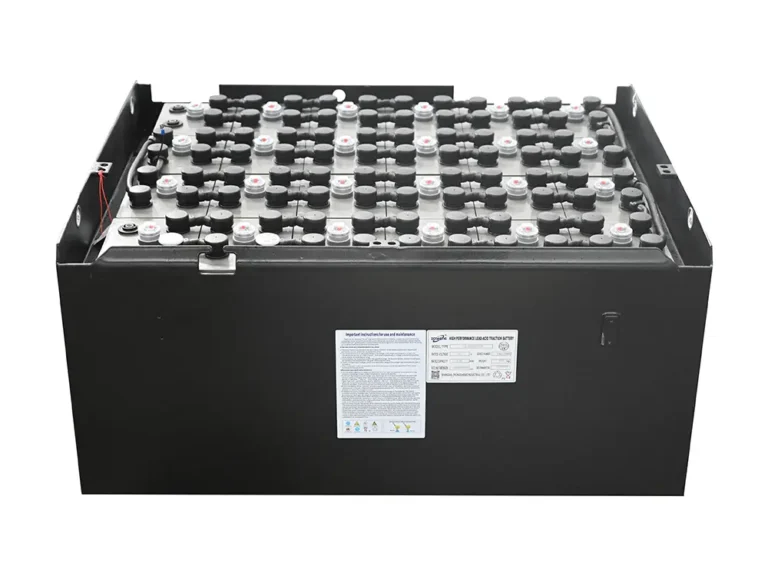
| サブシステムの構成要素 | 内燃機関(ディーゼル/LPG)トラック | 浸水した鉛蓄電池式電動フォークリフト | ZOSPOWER Arctic-Grade Sealed LiFePO4 |
|---|---|---|---|
| Low-Temp Capacity Retention | Diesel fuel waxes and gels at $-15^\circ\text{C}$; engine block heaters and high cranking amps required. | Drops to <50% rated run-time at $-30^\circ\text{C}$; requires battery swapping every 3.5 to 4.0 hours. | Retains 95%+ rated run-time via closed-loop silicone matrix self-heating powered dynamically by charger or pack. |
| Moisture Ingress & Freeze Cycling | Exhaust condensation rusts mufflers; hydraulic oil emulsifies with water, freezing valves. | Water condenses inside battery steel trays, mixing with acid to form highly corrosive sludge; terminals freeze solid. | Full IP67 hermetic enclosure with CNC fluorosilicone dual gaskets and Gore-Tex® barometric equalizing vents. |
| Food Safety & Cleanliness (HACCP/FSMA) | Strictly banned in enclosed freezers; toxic $CO, NO_x$, and soot contaminate exposed meat and seafood. | Acid mist off-gassing ($H_2SO_4$) and hazardous battery watering bays violate FDA/USDA food hygiene mandates. | 100% zero emissions, zero off-gassing, non-toxic chemistry; food-grade epoxy powder-coated armor steel casing. |
| Battery Swapping Labor & Airlock Losses | Fuel storage tanks cannot be operated inside temperature-controlled envelopes. | Requires continuous battery swapping outside the freezer, opening airlock doors and driving huge refrigeration loads. | Fast 1C opportunity charging inside insulated buffer zones or heated charging bays; zero battery swapping. |
3. ZOSPOWER Arctic-Grade LiFePO4 Engineering Specifications
ZOSPOWER engineers dedicated 24V, 48V, and 80V Arctic-grade lithium battery systems engineered specifically to withstand continuous $-35^\circ\text{C}$ freezing and aggressive sanitization cycles:

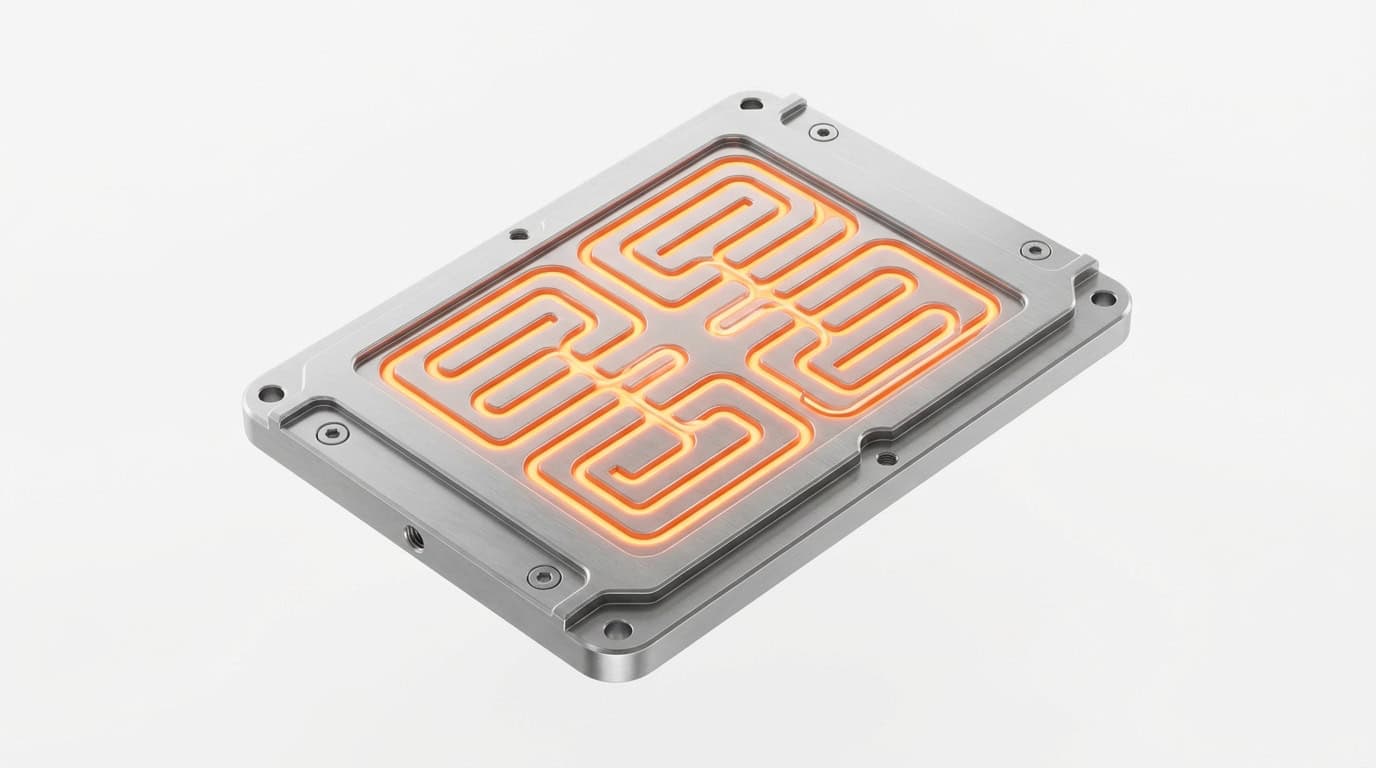
- Autonomous Multi-Zone PTC Thermal Conditioning: Integrated multi-layer silicone PTC heating blankets envelop individual cell clusters. When connected to a fast charger or when pack temperature falls below $+5^\circ\text{C}$, the BMS automatically initiates pre-heating. High-current charging is strictly locked out until core cell temperatures reach $+5^\circ\text{C}$, completely preventing catastrophic low-temperature lithium plating.
- IP67 Fully Hermetic & Pressure-Equalized Enclosure: Heavy 8mm to 10mm structural steel enclosures feature continuous robotic seam welding and dual-channel fluorosilicone O-ring sealing. High-flow waterproof Gore-Tex® membrane breathers allow instantaneous air pressure equalization during rapid $-35^\circ\text{C} \leftrightarrow +25^\circ\text{C}$ temperature swings, preventing internal vacuum formation that pulls in humid air.
- Conformal Potted Electronics & Nickel-Plated Copper Busbars: The BMS circuit board is vacuum-encapsulated in UL94-V0 polyurethane elastomeric gel, providing total immunity to condensation dew. High-current inter-cell busbars are manufactured from oxygen-free copper with $15\ \mu\text{m}$ electro-nickel plating, resisting alkaline ammonia vapor corrosion.
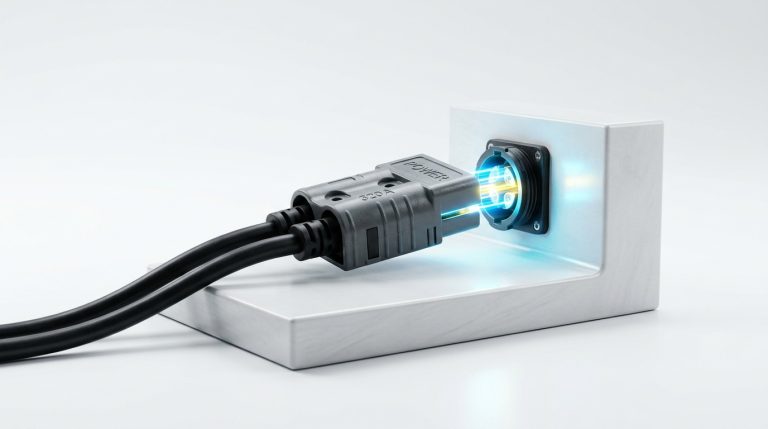
- High-Rate Opportunity Charging via REMA DIN Connectors: Fitted with heavy-duty REMA DIN connectors featuring internal microswitches and silver-plated contacts. Fleets utilize 15-minute operator break intervals to charge at 1C (up to 250A), eliminating centralized battery charging rooms.
4. Five-Year Fleet TCO & Cold Chain Financial Model
The financial justification for transitioning cold chain deep-freeze material handling to Arctic-grade LiFePO4 is audited below, based on an active commercial seafood and meat cold storage distribution center operating 16 heavy electric reach trucks and counterbalance forklifts (2.0T to 3.5T capacity) across continuous three-shift 24/7 operations (7,500 operating hours/year per truck):
| Cost Component (16 Deep-Freeze Trucks, 5-Year Horizon) | Flooded Lead-Acid Fleet (3 Packs/Truck for 24/7) | ZOSPOWER Arctic LiFePO4 Fleet (1 Pack/Truck) |
|---|---|---|
| 充電にかかる電気代 | $648,000 (Charging efficiency: 65% in sub-zero ambient) | $432,000 (Charging efficiency: 95%, regen braking recovery) |
| Battery Capital (Initial + 2.5-Year Replacements) | $768,000 (48 lead-acid packs due to 3-pack rotation) | $352,000 (16 Arctic LiFePO4 packs, 10-year design life) |
| Battery Swapping & Hoist Labor Costs | $480,000 (Continuous 3-shift swapping, 6 swaps/truck/day) | $0 (Automated 1C opportunity charging during break periods) |
| Freezer Refrigeration Infiltration Load Penalty | $240,000 (Air exchange load from swapping airlock traffic) | $0 (Trucks charge inside buffer zone; zero extra airlock traffic) |
| Moisture Corrosion & Contactor Maintenance | $288,000 (Acid cleaning, frozen cable harness repairs) | $32,000 (Routine mechanical brake/hydraulic lubrication) |
| 5年間のライフサイクルコスト合計 | $2,424,000 | $816,000 |
| 5年間の純財務的節約額 | — | $1,608,000 SAVED |
| 投資回収期間 | — | 9.1 Months |
5. Implementation Protocol for Deep-Freeze Fleet Electrification
To successfully execute a deep-freeze fleet conversion without disrupting protein dispatch schedules, cold chain logistics directors should follow a structured three-phase commissioning protocol:
- Thermal Envelope & Dew Point Auditing: Map temperature gradients and relative humidity levels between blast freezers ($-35^\circ\text{C}$), holding vaults ($-25^\circ\text{C}$), and ambient docks (+18°C). Specify IP67 enclosures and Gore-Tex® membrane ratings matched to facility condensation profiles.
- Buffer Zone Opportunity Charging Placement: Eliminate dangerous battery rooms. Install distributed high-frequency fast chargers (80V 200A) within insulated vestibules or dehumidified buffer anterooms (+2°C to +5°C), allowing trucks to opportunity-charge during mandatory 15-minute driver rest breaks.
- CAN-bus Telematics & Insulation Monitoring: Connect vehicle BMS telematics to plant supervisory SCADA via SAE J1939 CAN protocol. Continuously log real-time cell temperatures, internal heating blanket status, and high-voltage insulation resistance ($ ext{k}\Omega/\text{V}$), preempting condensation faults before vehicles re-enter sub-zero vaults.
Conquer the Deep Freeze with ZOSPOWER
Operating reliably in $-35^\circ\text{C}$ blast freezers requires uncompromising engineering—from active battery thermal conditioning to hermetically sealed electrical power distribution.
Contact our cold chain electrification engineering team today to review vehicle dimensional drawings, evaluate thermal conditioning power requirements, and configure custom Arctic-grade LiFePO4 battery packages for your fleet.