Navigating the Technical Language of Forklift Power
Whether you are transitioning a fleet from lead-acid to lithium-ion, negotiating Battery-as-a-Service (BaaS) contracts, or calculating the Total Cost of Ownership (TCO) for new warehouse equipment, understanding the exact terminology is critical. This comprehensive glossary defines the core technical, electrical, and operational terms used in the industrial motive power sector.
A-E: Core Electrical and Battery Metrics
- Ah (Ampere-Hour): A unit of electrical charge representing the capacity of a battery. For example, a 500Ah battery can theoretically deliver 500 amps for one hour, or 50 amps for 10 hours.
- BMS (Battery Management System): The “brain” of a lithium-ion battery. A sophisticated electronic system that monitors cell voltage, temperature, and current, ensuring the battery operates within safe parameters (preventing overcharge, over-discharge, and thermal runaway).
- CAN Bus (Controller Area Network): A robust vehicle bus standard designed to allow microcontrollers and devices to communicate with each other’s applications without a host computer. In modern forklifts, the battery’s BMS communicates directly with the forklift’s VCU (Vehicle Control Unit) via CAN bus.
- CapEx (Capital Expenditure): The upfront cost required to purchase physical assets, such as a new lithium-ion forklift battery or high-frequency charger.
- DoD (Depth of Discharge): The percentage of the battery’s capacity that has been discharged relative to its overall capacity. Lead-acid batteries should typically not exceed 80% DoD, while LiFePO4 batteries can safely handle 100% DoD.
F-O: Operational and Charging Frameworks
- High-Frequency Charger: An advanced, microprocessor-controlled battery charger that uses high-frequency switching to efficiently convert AC to DC power. They are lighter, smaller, and highly energy-efficient (up to 94%) compared to traditional SCR chargers.
- IC to EV Conversion: The engineering process of retrofitting a traditional Internal Combustion (IC) engine forklift (diesel or propane) into an Electric Vehicle (EV) by replacing the engine with electric traction motors and a heavy-duty lithium battery pack.
- LiFePO4 (Lithium Iron Phosphate): The safest and most robust lithium-ion chemistry used in industrial forklifts. It offers exceptional thermal stability, a long cycle life (4,000+ cycles), and contains no toxic heavy metals like cobalt.
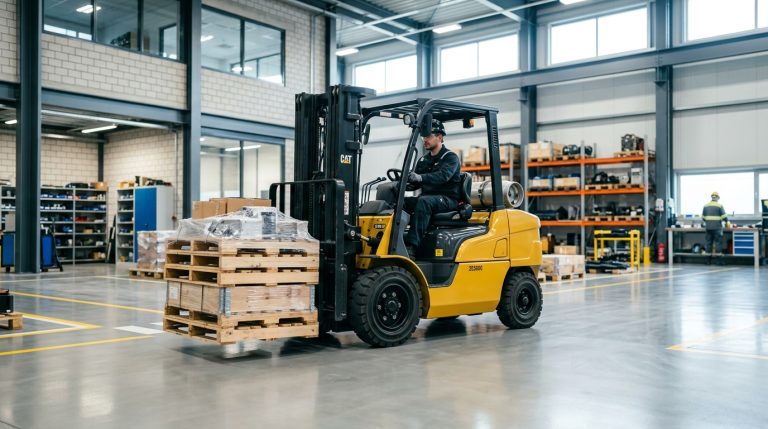
- Minimum Service Weight: The specific weight required by the forklift manufacturer for the battery compartment. Because the battery acts as the primary counterweight for the forklift, lithium batteries (which are naturally lighter than lead-acid) must be built into custom heavy-duty steel ballast boxes to meet this weight requirement.
- Opportunity Charging: The practice of plugging the forklift battery into a charger during short intervals (such as a 15-minute coffee break or a 30-minute lunch) rather than waiting for the battery to be fully depleted. This is highly effective with lithium-ion batteries and eliminates the need for battery swapping.
- OpEx (Operating Expenditure): The ongoing costs of running a business or fleet, such as electricity, maintenance, and battery leasing fees (BaaS).
P-Z: Advanced Safety and Compliance
- TCO (Total Cost of Ownership): A financial estimate intended to help buyers and owners determine the direct and indirect costs of a product over its lifespan. For forklift batteries, TCO includes the purchase price, electricity costs, watering/maintenance labor, and battery replacement frequency.
- Thermal Runaway: A dangerous chain reaction within a battery cell where an increase in temperature changes the conditions in a way that causes a further increase in temperature. This is a common risk in Lithium Cobalt (NMC) batteries, but is virtually eliminated in ZOSPOWER’s LiFePO4 chemistry.
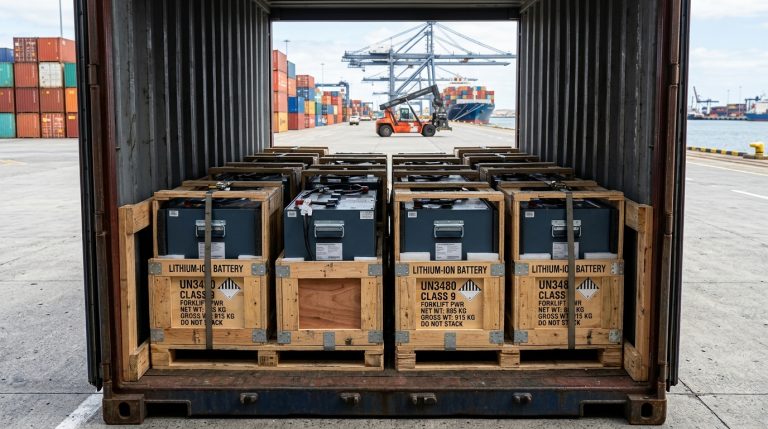
- UN38.3: The United Nations standard that lithium batteries must pass to be certified for safe transport. It includes rigorous testing for altitude, thermal shock, vibration, mechanical impact, and overcharge.
Power Your Fleet with ZOSPOWER
Understanding these terms is the first step toward optimizing your material handling operations. At ZOSPOWER, we engineer world-class LiFePO4 solutions and smart high-frequency chargers that maximize your fleet’s uptime while minimizing TCO. Contact our engineering team today to discuss your specific motive power requirements.