In pharmaceutical manufacturing, sterile compounding suites, biopharma vaccine filling lines, and semiconductor cleanrooms, material handling equipment operates under the most stringent contamination control protocols on earth. Governed by current Good Manufacturing Practice (cGMP), EU GMP Annex 1 (Sterile Medicinal Products), and ISO 14644-1 Class 3 to Class 7 cleanroom classifications, facilities must eliminate all airborne particulates, volatile organic chemical residues, and biological harboring points. Traditional flooded lead-acid batteries are strictly barred from classified areas due to corrosive sulfuric acid aerosol, volatile hydrogen outgassing, and microbial risks from liquid electrolyte handling. Custom-engineered, hermetically sealed Lithium Iron Phosphate (LiFePO4) power systems—encased in 316L electropolished stainless steel—have emerged as the definitive standard enabling automated, zero-emission cleanroom logistics in 2026.
1. Cleanroom Classification & GMP Annex 1 Contamination Thresholds
Modern commercial biopharmaceutical facilities are divided into strict zoned barrier cleanrooms:
- Grade A (Class 100 / ISO 5): Critical high-risk operational zones for aseptic operations, sterile filling, and stopper bowl feeding (maximum allowable ≥ 0.5 μm particulates: 3,520 per cubic meter).
- Grade B: Background environment for Grade A aseptic preparation and sterile staging corridors.
- Grade C & D: Clean areas for less critical processing stages, sterile gowning airlocks, and packaging buffer zones.
Historically, transporting bulk sterile active pharmaceutical ingredients (APIs), sterile single-use bioreactor bags, and finished glass vial trays relied on manual 316 stainless steel hand-pallet jacks, causing severe ergonomic injury risks to operators wearing multi-layer cleanroom bunny suits. Motorizing this transport requires meeting strict airborne particle emission and chemical compatibility criteria:
| Cleanroom Engineering Metric | Flooded Lead-Acid Battery | Zospower Cleanroom-Grade LiFePO4 | Biopharma GMP Compliance |
|---|---|---|---|
| Aerosol & Chemical Emissions | Severe (Sulfuric acid mist & H2 gas) | Zero emissions (Laser-welded hermetic cells) | 100% compliant with EU GMP Annex 1 sterile rules |
| Enclosure Construction Material | Painted carbon steel (Flakes and sheds paint) | 316L electropolished stainless steel (Ra < 0.4 μm) | Zero particulate shedding; prevents bio-film harboring |
| Vaporized Hydrogen Peroxide (VHP) Resistance | Fails (Acid ruins seals; copper corrodes) | Hermetic silicone gaskets survive 500+ VHP cycles | Withstands routine gaseous bio-decontamination |
| Charging Protocol | Requires external non-classified battery room | Opportunity fast-charge in staging airlocks | Eliminates crossing contamination zone airlocks |
| IP Ingress Protection Rating | IP23 (Open ventilated top vents) | IP67 / IP69K high-pressure washdown | Withstands daily CIP/SIP chemical sterilization washdowns |
2. The Bio-Contamination Trap: Why Lead-Acid is Banned from Cleanrooms
Deploying conventional lead-acid battery packs anywhere near pharmaceutical manufacturing corridors triggers immediate regulatory non-conformance audits by the FDA, EMA, or WHO:
- Sulfuric Acid Aerosol Deposition: As documented in our safety research on Forklift Battery Charging & Hydrogen Ventilation, the gassing phase during bulk lead-acid charging releases sub-micron sulfuric acid droplets. If sucked into HVAC cleanroom laminar flow plenums, acid mist corrodes HEPA filter sealants and precipitates onto sterile vials.
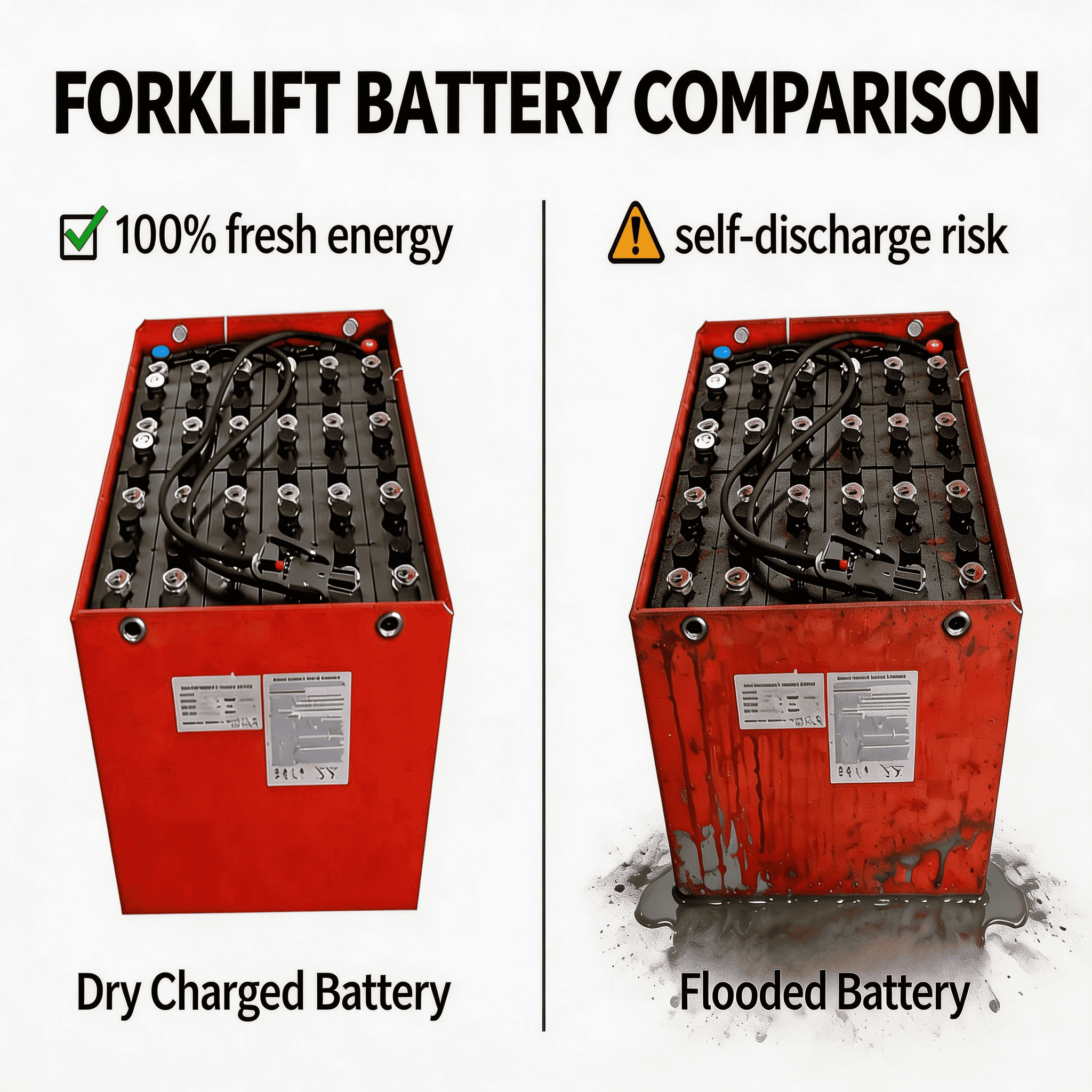
- Microbial Harborage in Battery Trays: Lead-acid batteries require weekly manual watering. Residual liquid electrolyte, split water, and open lead posts create a moist, warm breeding ground for bacterial biofilms and fungal mold spores.
- Paint Flaking and Particulate Generation: Standard painted steel battery trays crack and shed paint flakes under heavy use. A single shedding paint chip generates tens of thousands of viable and non-viable particulates, instantly violating ISO 14644 cleanroom limits.
3. Zospower LiFePO4 Engineering for Sterile Cleanroom Environments
To support electric pallet trucks, stainless steel stackers, and autonomous mobile robots (Cleanroom AGV Power Systems), Zospower manufactures specialized cleanroom-certified 24V, 48V, and 80V LiFePO4 systems:
- 316L Pharmaceutical-Grade Electropolished Enclosure: Fabricated from seamless 316L stainless steel with fully ground and polished radius welds. Surfaces achieve a surface roughness finish of Ra < 0.4 μm (16 μin), providing an ultra-smooth, mirror-like finish that prevents microbial adhesion.
- IP69K High-Pressure Sanitary Washdown: Sealed with medical-grade continuous fluorosilicone gaskets, the battery casing withstands aggressive washdown procedures utilizing 80°C hot water jets at 100 bar (1,450 psi) alongside disinfectant agents (Spor-Klenz, Vesphene, isopropyl alcohol, and sodium hypochlorite).
- VHP Cycle Resistance: All external connectors, cable grommets, and pressure relief diaphragms are constructed from fluoropolymer compounds impervious to microscopic pitting during automated Vaporized Hydrogen Peroxide (VHP) room sterilization cycles.
- Solid-State Non-Sparking Interconnects: Utilizing internal active cell balancing (Active Cell Balancing Engineering Guide) and solid-state pre-charge circuits (Pre-Charge Resistor Circuit Guide), electrical switching occurs without external spark generation.
4. Airlock Opportunity Charging: Eliminating Zone Cross-Contamination
In sterile manufacturing, crossing from a Grade D grey zone into a Grade B clean core requires extensive de-gowning, material misting showers, and time-consuming pass-through airlock protocols. Moving material handling equipment out of classified areas simply to swap or charge a battery introduces extreme cross-contamination risks.
Zospower enables sealed in-situ opportunity charging within material airlocks or buffer staging corridors. Cleanroom trucks plug into stainless steel wall-mounted DC fast chargers during 15-minute operator shift handovers.
Because LiFePO4 releases zero gas and generates no external heat, vehicles remain permanently stationed within their designated hygiene zones, eliminating 100% of the airlock decontamination cycles previously required by lead-acid trucks.
5. Financial Payback: Contamination Risk Mitigation & Operational Uptime
In biopharmaceutical manufacturing, the economic metric of highest importance is batch risk mitigation. A single discarded commercial batch of sterile biologic product due to particulate or acid contamination can result in losses exceeding $2,000,000 to $5,000,000.
Below is an audited 5-year financial comparison for a sterile formulation facility operating a cleanroom fleet of 8 motorized electric pallet trucks and stackers:
| 5-Year Expenditure Category (8 Cleanroom Trucks) | Lead-Acid Electric (External Swapping) | Zospower 316L Cleanroom LiFePO4 | Biopharma Financial Impact |
|---|---|---|---|
| Equipment & Charger Procurement | $160,000 (16 lead packs + 8 chargers) | $210,000 (8 LiFePO4 + 4 cleanroom chargers) | -$50,000 (Initial Investment Premium) |
| Airlock Decontamination & Swapping Labor | $292,000 (45 min/day transfer labor @ $50/hr) | $0 (Remains permanently inside cleanroom) | +$292,000 Labor Savings |
| Cleanroom HEPA Filter & HVAC Scrubbing | $125,000 (Acid aerosol neutralization) | $0 (Zero chemical emissions) | +$125,000 HVAC Maintenance Savings |
| Risk of Batch Scrap from Particle Non-Compliance | High risk ($350,000 actuarial provision) | Negligible (< 0.01% risk) | +$350,000 Quality Assurance Savings |
| Total 5-Year Operating Cost | $927,000 | $210,000 | +$717,000 Net Savings |
The financial model confirms that by eliminating cross-zone material transfer labor, protecting HVAC filter banks, and insuring against catastrophic batch recalls, a cleanroom lithium fleet yields over $717,000 in net operational value over five years, reaching full capital payback within 8 to 11 months.
6. Engineering Checklist for Pharmaceutical Fleet Certification
Pharmaceutical facility engineers and validation managers should execute this 4-step commissioning protocol:
- Verify 316L Mill Test Certificates (MTC): Confirm raw stainless steel certification for low carbon 316L alloy and verify surface roughness profiling (Ra < 0.4 μm) with a calibrated surface profilometer.
- Execute IQ/OQ Validation Protocol: Perform Installation Qualification (IQ) and Operational Qualification (OQ) protocols, validating that no off-gassing occurs under 1C fast charge cycles.
- Audit Dielectric Insulation Health: Verify floating DC bus isolation exceeds 1,000 Ω/V under high-humidity cleanroom conditions as detailed in our Insulation Resistance & Ground Fault Guide.
- Integrate with Telematics Cloud: Utilize our BMS Telematics & IoT Fleet System to maintain electronic batch records and automated audit trails compliant with FDA 21 CFR Part 11.
Upgrade Your Sterile Pharma Facility with Zospower 316L Cleanroom Lithium
Are lead-acid contamination risks, airlock swapping bottlenecks, and strict GMP cleanroom audits challenging your pharmaceutical material handling? Zospower manufactures custom-engineered, 316L electropolished LiFePO4 battery systems tailored specifically for sterile cleanrooms, biopharma production, and semiconductor manufacturing.
Contact our pharmaceutical validation engineering team today to review your GMP hygiene requirements, obtain full 316L material certification dossiers, and calculate your batch risk savings.