
Global maritime container terminals and intermodal inland ports are entering a pivotal phase of environmental transformation. Driven by the International Maritime Organization (IMO) 2050 Net-Zero Strategy, European Green Port directives (Fit for 55), and stringent regional mandates—such as the California Air Resources Board (CARB) Zero-Emission Cargo Handling Equipment (CHE) regulation—terminal operators must eliminate diesel emissions across their yard fleets. Terminal tractors (yard hostlers/mules) and empty container handlers (ECHs) represent the primary culprits of airside diesel fuel burn and black carbon soot. Transitioning these mission-critical heavy assets to high-capacity Lithium Iron Phosphate (LiFePO4) systems has emerged as the definitive engineering solution for maritime decarbonization in 2026.
1. Port Operational Pressures & IMO 2050 Decarbonization Mandates
Container terminal operations operate under fierce vessel turnaround pressures. Mega container vessels (exceeding 20,000 TEU) incur demurrage penalties measured in tens of thousands of dollars per hour of berthing delay. Consequently, quayside ship-to-shore (STS) cranes require a relentless, uninterrupted conveyor belt of terminal tractors shuttling container chassis between berth and stacking blocks.
However, the environmental footprint of conventional diesel port equipment is enormous:
- High Idling Fuel Inefficiency: Conventional diesel terminal tractors spend up to 45% to 55% of their working hours idling under quayside cranes or queuing at interchange gates, wasting thousands of gallons of diesel fuel annually while generating concentrated toxic emissions.
- CARB & EU Zero-Emission Deadlines: Regulatory bodies are mandating 100% zero-emission cargo handling equipment phase-ins, requiring global port operators (e.g., APM Terminals, DP World, and Hutchison Ports) to submit verified fleet decarbonization roadmaps.
- Marine Salt-Air Corrosion: Beyond emissions, terminal equipment operates directly within ISO 12944 C5-M extreme marine corrosive environments, requiring ruggedized electrical enclosures to prevent catastrophic salt-spray breakdown.
| Performance Parameter | Conventional Diesel Terminal Tractor | Zospower Maritime Heavy-Duty LiFePO4 | Port Terminal Impact |
|---|---|---|---|
| Idling Energy Consumption | Severe (Burns 0.8–1.2 gal/hr diesel) | Zero energy loss when stationary | Eliminates 50% of wasted yard fuel expenditure |
| Torque Response & Acceleration | Sluggish turbodiesel spool-up under 40T load | Instant peak torque (1,200–2,500 Nm) | 15% to 20% faster container yard cycles |
| Marine Atmosphere Resilience | Radiator and exhaust corrosion | C5-M epoxy powder coating + IP67 hermetic seals | Withstands relentless ocean salt mist and humid air |
| Maintenance Downtime | Heavy (Engine oil, DPF, turbos, transmissions) | Minimal (Solid-state inverter & AC motor) | Lowers scheduled maintenance costs by over 70% |
| Energy Recovery Down Ramps | Wasted as friction brake heat | Regenerative absorption back into cells | Reclaims 15% energy during downhill ramp descent |
2. The Heavy-Duty Barrier: Why Lead-Acid Fails in Ports
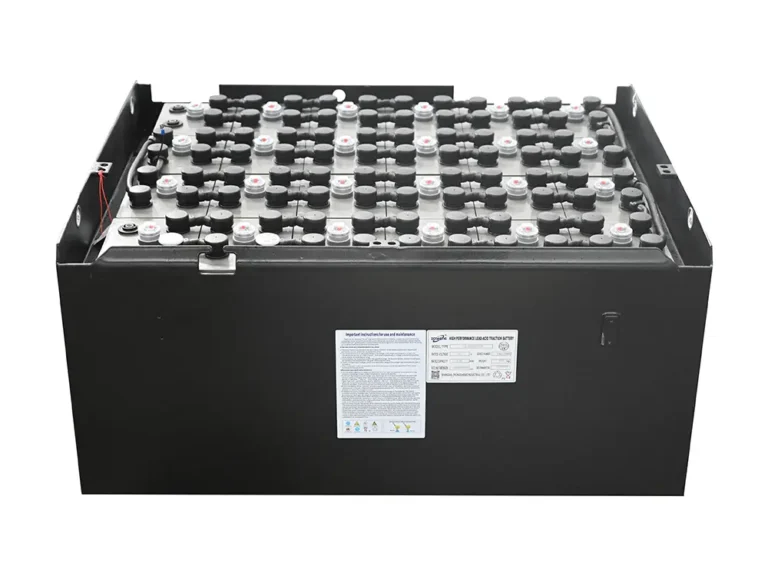
While light indoor warehouse trucks occasionally deploy lead-acid batteries, applying lead-acid chemistry to port container handling equipment is physically impossible:
- Severe Voltage Sag Under 50-Ton GCWR: Shuttling a laden 40-foot refrigerated container weighing up to 45 metric tons up steep terminal overpass ramps demands sustained discharge spikes between 400A and 800A. As analyzed in our guide on Heavy-Duty Port Forklift Battery Engineering, lead-acid internal resistance causes severe voltage collapse, causing yard tractors to stall mid-ramp.
- Slow 8-Hour Charging Cycle: Terminal operations run around the clock (24/7/365). Pulling tractors out of active vessel discharge queues for 8-hour battery cooldowns would require doubling or tripling fleet size.
- Corrosive Acid Leaks Near Harbor Water: Acid spills from vibrating lead-acid packs risk entering port stormwater runoff drains, violating international MARPOL maritime environmental treaties.
3. Zospower LiFePO4 Engineering for Terminal Tractors & Empty Handlers
To withstand the punishing demands of port operations, Zospower engineers customized high-voltage (80V, 96V, and high-voltage DC platforms up to 350V–600V) LiFePO4 systems tailored for leading port equipment manufacturers including Kalmar, Terberg, Capacity, Ottawa, and Hyster:
- ISO 12944 C5-M Extreme Marine Anti-Corrosion: Battery enclosures feature hot-dip zinc-rich epoxy primers topped with marine-grade polyurethane coatings, nickel-plated copper busbars, and 316 stainless steel fasteners to guarantee 10+ years of rust-free maritime service.
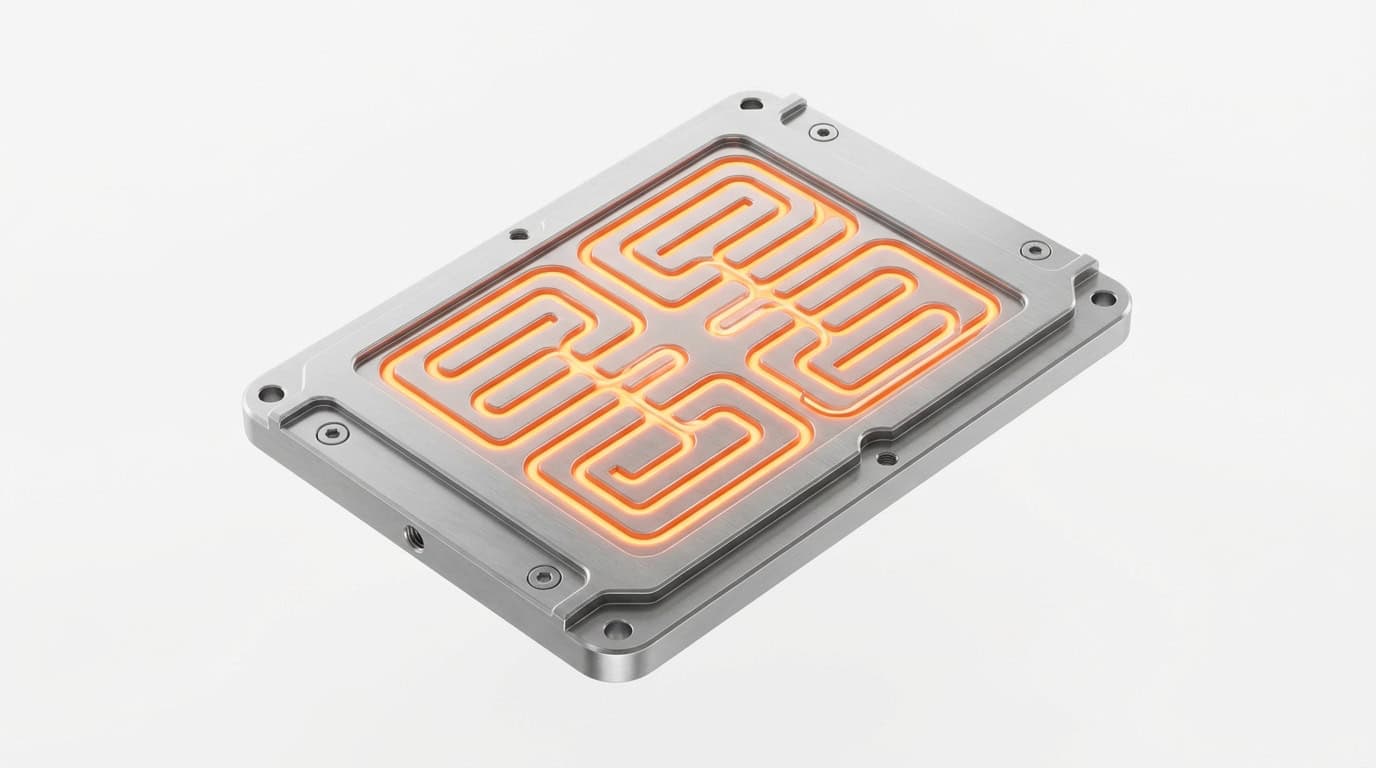
- High-Rate Liquid or Direct Thermal Conditioning: Advanced thermal management maintains optimal cell temperatures between 20°C and 35°C, whether operating in tropical Middle Eastern port humidity (50°C) or freezing North Sea winters (-25°C), derived from our proven Cold Storage Thermal Engineering.
- Fast Inrush Current Suppression & Soft-Start: High-voltage port architectures integrate precision pre-charge suppression circuits to eliminate destructive contactor arcing during inverter bus capacitor energization as documented in our electrical engineering specifications.
- Heavy Ballast Counterweight Integration: On empty container handlers (capable of stacking 20ft/40ft boxes up to 8 containers high), Zospower packs integrate precision-machined solid steel counterweights to match OEM roll-stability profiles.
4. Automated Opportunity Charging: Powering 24/7 Berth Operations
The operational triumph of port electrification relies on high-power opportunity charging. Instead of central battery change rooms, high-power DC fast charging dispensers (150 kW to 300 kW) are positioned at terminal gate waiting areas, twistlock station break points, and quayside staging lanes.
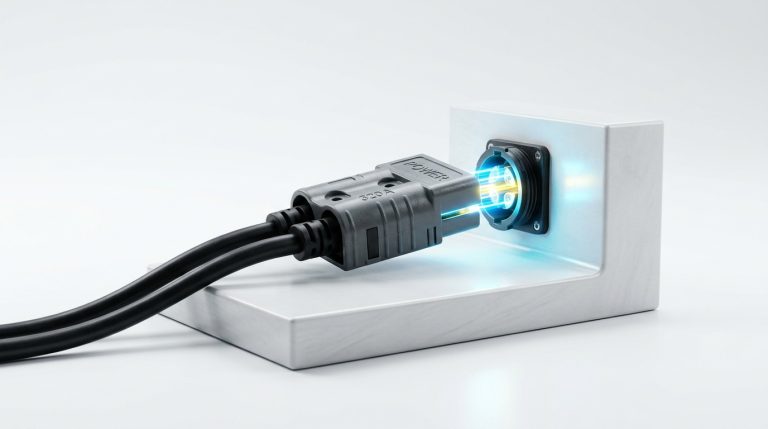
During driver shift turnovers (30 minutes) or natural crane sequencing pauses (15 minutes), the terminal tractor connects to a high-speed pantograph or heavy-duty CCS2 / REMA plug. At a 1.0C to 1.5C charging rate, a 20-minute boost replenishes 30% to 40% state-of-charge, enabling unbroken 24-hour operation with a single onboard battery pack.
To manage power constraints across vast terminal grids, terminal operators implement Équilibrage dynamique de la charge (DLB) et recharge rapide to shave peak substation demand alongside facility microgrids.
5. 5-Year Financial TCO: Diesel Terminal Tractor vs Zospower LiFePO4
For terminal finance directors, electrifying yard tractors yields massive bottom-line savings over a 5-year operational lifecycle for a standard yard fleet of 20 terminal tractors:
| 5-Year Expenditure Category (20 Terminal Tractors) | Conventional Diesel Fleet | Zospower LiFePO4 Electric Fleet | 5-Year Net Benefit |
|---|---|---|---|
| Vehicle Procurement & Charging Infrastructure | $2,400,000 | $3,300,000 (Higher Initial CapEx) | -$900,000 (Initial Investment Premium) |
| Fuel vs Electricity (4,500 hrs/yr/tractor) | $3,240,000 (Ultra-low sulfur diesel @ port) | $890,000 (Industrial off-peak electric rate) | +$2,350,000 Fuel Savings |
| Engine Overhauls, DEF, DPF & Transmission | $1,120,000 (High-hour severe diesel wear) | $220,000 (AC electric drive maintenance) | +$900,000 Maintenance Savings |
| Carbon Offset & Port Emissions Penalties | $180,000 (Mandatory emissions offsets) | $0 (Zero tailpipe emissions) | +$180,000 Compliance Savings |
| Coût d'exploitation total sur 5 ans | $6,940,000 | $4,410,000 | +$2,530,000 Net Savings |
As the audited numbers prove, despite a higher upfront capital investment in electric vehicles and chargers, a 20-unit terminal tractor fleet generates over $2.53 million in audited net operational savings over five years, reaching full capital payback within 18 to 22 months while eliminating thousands of tons of maritime Scope 1 carbon emissions.
6. Engineering Protocol for Port Fleet Conversions
Maritime equipment directors planning port electrification should enforce this 4-point commissioning checklist:
- Verify C5-M Anti-Corrosion Salt Spray Certification: Ensure the complete battery enclosure and cable gland assembly has passed 1,440 hours of neutral salt spray testing (ASTM B117 / ISO 9227).
- Audit BMS CAN Protocol Handshake: Ensure the battery’s CAN bus outputs correctly integrate with OEM drive controllers (such as Dana TM4, Curtis, or Danfoss) via our Système de gestion de flotte BMS : télématique et Internet des objets (IoT).
- Integrate Regenerative Downhill Braking: Harness kinetic recovery when descending wharf ramps as outlined in our Regenerative Braking & Energy Recovery Guide.
- Deploy Heavy-Duty Pre-Charge Circuits: Protect main DC contactors from large inverter capacitive inrush currents during initial key-on sequences.
Decarbonize Your Maritime Container Fleet with Zospower High-Voltage Lithium
Are diesel fuel consumption, high idling maintenance, and stringent port zero-emission mandates impacting your terminal operations? Zospower engineers heavy-duty, marine-grade Batterie LiFePO4 systems tailored specifically for terminal tractors, empty container handlers, and heavy industrial port forklifts.
Contact our maritime electrification engineering team today to review your quay-to-yard duty cycles, obtain custom CAD enclosure models, and calculate complete terminal TCO payback.