Les batteries plomb-acide restent l'une des solutions de stockage d'énergie les plus utilisées dans les applications industrielles et commerciales. Qu'il s'agisse de chariots élévateurs à fourche, de véhicules électriques, de systèmes d'alimentation de secours ou de stockage d'énergie renouvelable, ces batteries jouent un rôle crucial dans l'alimentation des opérations quotidiennes.
Toutefois, par rapport à certaines technologies de batteries plus récentes, les batteries au plomb-acide nécessitent un entretien régulier pour garantir des performances fiables. L'un des aspects les plus importants de cette maintenance est le suivant le maintien d'un niveau correct d'eau électrolytique à l'intérieur des cellules de la batterie.
Traditionnellement, les techniciens s'appuient sur des méthodes d'arrosage manuelles, qui peuvent prendre du temps et être sujettes à l'erreur humaine. Un remplissage excessif ou insuffisant et des calendriers d'entretien incohérents entraînent souvent une réduction des performances de la batterie, voire une défaillance prématurée.
Pour relever ces défis, de nombreuses entreprises adoptent aujourd'hui les technologies de l'information et de la communication (TIC). systèmes d'arrosage automatique des batteries. Ces systèmes constituent un moyen plus sûr, plus rapide et plus précis d'entretenir les batteries au plomb-acide.
Dans cet article, nous examinerons le fonctionnement des systèmes de recharge automatique en eau et les principaux avantages qu'ils offrent pour améliorer les performances des batteries, prolonger leur durée de vie et réduire les coûts d'exploitation.
Le rôle de l'eau dans les batteries plomb-acide
Avant d'aborder les avantages des systèmes d'arrosage automatique, il est important de comprendre pourquoi l'eau est nécessaire dans les batteries plomb-acide.
Une batterie plomb-acide génère de l'électricité par une réaction chimique entre les plaques de plomb et l'électrolyte d'acide sulfurique. Au cours du processus de charge et de décharge, l'eau contenue dans l'électrolyte se décompose progressivement en hydrogène et en oxygène. Ce processus conduit à la perte d'eau au fil du temps.
Si le niveau d'eau descend trop bas, les problèmes suivants peuvent survenir :
- Les plaques de la batterie sont exposées à l'air
- La concentration de l'électrolyte augmente excessivement
- La production de chaleur augmente pendant la charge
- La sulfatation commence à endommager les plaques
Lorsque les plaques internes sont exposées, les dommages peuvent devenir permanents. C'est pourquoi les le maintien d'un niveau d'eau adéquat est essentiel pour la santé et la longévité de la batterie.
L'arrosage régulier est donc un élément essentiel de l'entretien des batteries au plomb.
Qu'est-ce qu'un système d'arrosage automatique par batterie ?
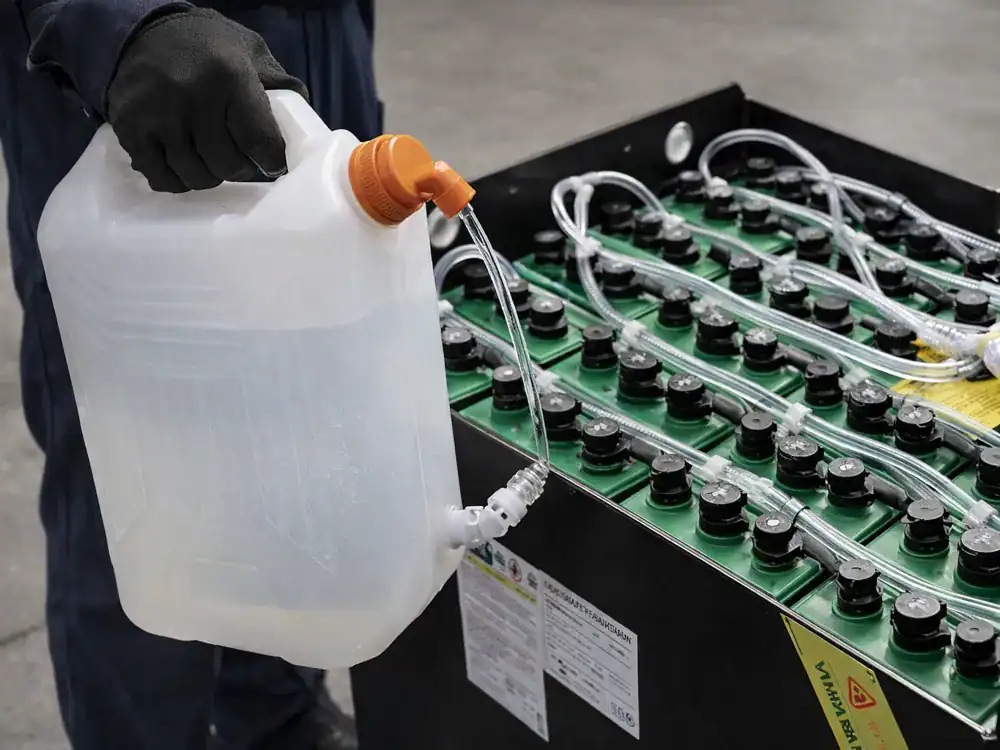
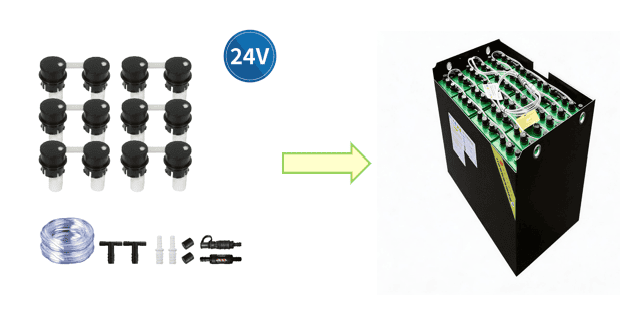
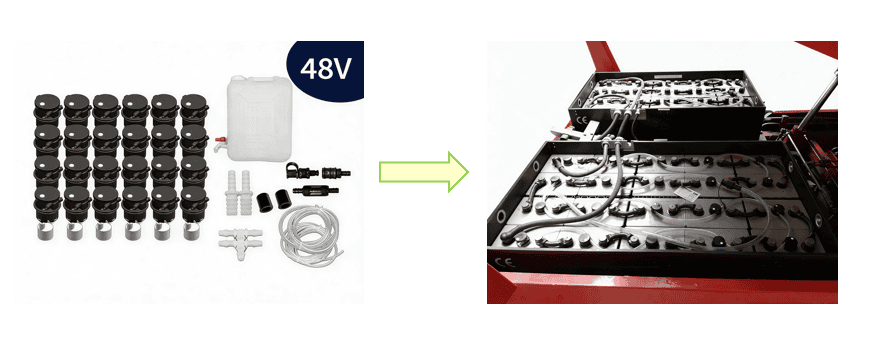
Un système d'arrosage automatique des batteries est un dispositif conçu pour maintenir automatiquement et avec précision le niveau d'eau correct dans les éléments des batteries plomb-acide.
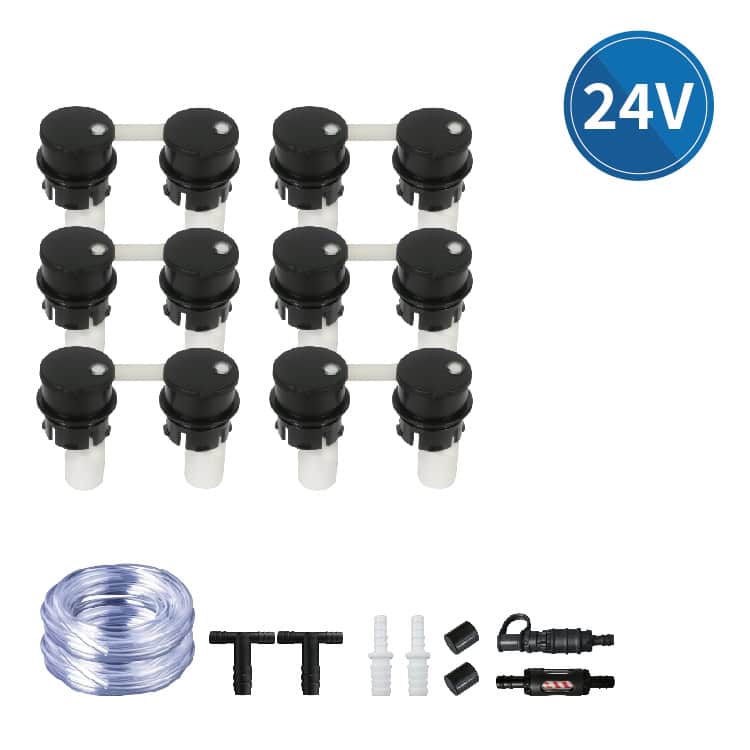
Le système se compose généralement de plusieurs éléments clés :
- Vannes d'eau installées sur chaque élément de la batterie
- Tubes de connexion entre les cellules
- Une ligne d'alimentation en eau centralisée
- Un indicateur de débit ou un filtre
Chaque vanne contient un mécanisme de flotteur précis qui contrôle le niveau d'eau. Lorsque l'électrolyte atteint le niveau optimal, la valve arrête automatiquement l'écoulement de l'eau.
Cette conception garantit que chaque cellule de la batterie reçoit la quantité exacte d'eau distillée, éliminant ainsi les risques liés au remplissage manuel.
Dans la plupart des systèmes, les opérateurs n'ont qu'à connecter une ligne d'alimentation en eau et à laisser le système distribuer l'eau de façon homogène dans tous les éléments de la batterie.
Pourquoi choisir les systèmes d'arrosage automatique ?
1. Prolonger la durée de vie des piles
L'un des principaux avantages d'un système d'arrosage automatique est sa capacité à protéger la structure interne de la batterie.
Les batteries plomb-acide sont très sensibles aux niveaux d'électrolyte. Lorsque le niveau d'eau est trop bas, les plaques de la batterie sont exposées et commencent à se dégrader rapidement. D'autre part, un remplissage excessif peut provoquer un débordement de l'électrolyte, ce qui peut entraîner une corrosion ou une fuite d'acide.
Les systèmes d'arrosage automatique maintiennent des niveaux d'électrolytes constants et précis, Ce qui permet d'éviter à la fois le sous-remplissage et le sur-remplissage.
En garantissant des conditions adéquates à l'intérieur de la batterie, ces systèmes aident :
- Réduire la sulfatation
- Prévenir l'endommagement des plaques
- Maintenir des réactions chimiques stables
Par conséquent, les batteries peuvent fonctionner plus efficacement et durer beaucoup plus longtemps.
2. Améliorer l'efficacité de la maintenance
L'arrosage manuel des batteries peut prendre beaucoup de temps, en particulier dans les installations qui exploitent de grands parcs de batteries.
Par exemple, les entrepôts et les centres logistiques gèrent souvent des dizaines, voire des centaines de batteries de chariots élévateurs. Chaque batterie peut contenir plusieurs cellules qui doivent être inspectées et arrosées individuellement.
Avec les méthodes traditionnelles, les techniciens doivent :
- Ouvrir chaque couvercle de pile
- Vérifier le niveau d'électrolyte
- Ajouter l'eau distillée avec précaution
- Répéter le processus pour chaque cellule
Ce processus peut prendre beaucoup de temps et de travail.
Avec un système d'arrosage automatique, la maintenance devient beaucoup plus simple. Les opérateurs peuvent remplir un bloc-batterie entier par l'intermédiaire d'un système d'arrosage automatique. point de connexion unique, permettant à l'eau de se répartir uniformément dans toutes les cellules.
Cela réduit considérablement le temps de maintenance et permet aux techniciens de se concentrer sur d'autres tâches essentielles.
3. Garantir des niveaux d'eau exacts
L'erreur humaine est l'un des problèmes les plus courants dans l'entretien manuel des batteries.
Dans de nombreux cas, les batteries sont endommagées non pas parce qu'elles ont été négligées, mais parce qu'elles ont été arrosage incorrect.
Les erreurs les plus courantes sont les suivantes :
- Remplissage excessif des cellules
- Ajout d'eau au mauvais moment du cycle de charge
- Remplissage inégal entre les cellules
Les systèmes d'arrosage automatique éliminent ces problèmes en utilisant technologie des vannes de précision. Chaque vanne arrête l'écoulement de l'eau lorsque le niveau correct est atteint.
Cela garantit que chaque cellule maintient le niveau d'électrolyte approprié, assurant une performance et une stabilité optimales de la batterie.
4. Améliorer la sécurité sur le lieu de travail
Les batteries plomb-acide contiennent de l'acide sulfurique, qui peut être dangereux s'il n'est pas manipulé correctement.
L'arrosage manuel augmente le risque de :
- Éclaboussures d'acide
- Déversements d'électrolytes
- Exposition à des produits chimiques corrosifs
Les systèmes d'arrosage automatique réduisent considérablement ces risques en minimisant le contact direct avec les éléments de la batterie.
Comme le processus d'arrosage est contrôlé et enfermé dans le système, les techniciens n'ont pas besoin d'ouvrir chaque cellule individuellement. Cela permet de créer une un environnement de travail plus sûr, surtout dans les installations où les batteries sont entretenues fréquemment.
5. Réduction des coûts de maintenance à long terme
Bien que les systèmes d'arrosage automatique nécessitent un investissement initial, ils permettent souvent de des économies significatives au fil du temps.
Un mauvais entretien des batteries est l'une des principales causes de leur défaillance prématurée. Le remplacement des batteries industrielles au plomb peut s'avérer extrêmement coûteux.
En maintenant des niveaux d'eau optimaux, les systèmes automatiques contribuent à prévenir :
- Dommages aux plaques
- Surchauffe de la batterie
- Capacité réduite
- Remplacement anticipé de la batterie
En outre, la réduction des besoins en main-d'œuvre et l'accélération des procédures de maintenance permettent de diminuer encore les coûts d'exploitation.
Pour de nombreuses entreprises, le système s'amortit rapidement grâce aux éléments suivants prolongation de la durée de vie de la batterie et réduction des frais d'entretien.
Applications typiques des systèmes d'arrosage automatique
Les systèmes d'arrosage automatique des batteries sont largement utilisés dans les industries où les batteries au plomb-acide sont utilisées en continu.
Les applications les plus courantes sont les suivantes
Batteries pour chariots élévateurs
Les entrepôts et les installations logistiques font largement appel à des chariots élévateurs électriques alimentés par de grandes batteries plomb-acide. Les systèmes d'arrosage automatique simplifient la maintenance et permettent aux flottes de fonctionner efficacement.
Véhicules industriels électriques
Les équipements tels que les laveuses de sols, les transpalettes et les véhicules d'assistance au sol des aéroports utilisent souvent des batteries au plomb-acide qui nécessitent un arrosage régulier.
Stockage des énergies renouvelables
Les systèmes de stockage d'énergie solaire et hors réseau utilisent souvent de grands parcs de batteries où le maintien des niveaux d'électrolyte est essentiel pour la stabilité du système.
Télécommunications Alimentation de secours
Les infrastructures de télécommunications ont besoin de batteries de secours fiables pour assurer un service ininterrompu en cas de coupure de courant. Une maintenance correcte des batteries est essentielle dans ces applications.
Conclusion
Les batteries plomb-acide continuent de jouer un rôle important dans les systèmes d'alimentation industriels du monde entier. Cependant, il est essentiel de maintenir des niveaux d'électrolyte appropriés pour garantir leur fiabilité, leur efficacité et leur durée de vie.
Les systèmes d'arrosage automatique des batteries constituent une solution moderne à l'un des aspects les plus fastidieux de la maintenance des batteries. En garantissant des niveaux d'eau précis, en améliorant l'efficacité de la maintenance, en renforçant la sécurité sur le lieu de travail et en réduisant les coûts à long terme, ces systèmes offrent des avantages significatifs aux entreprises qui dépendent des batteries au plomb.
Pour les entreprises qui exploitent de grands parcs de batteries ou des systèmes d'alimentation industriels, l'adoption d'une solution d'arrosage automatique n'est pas seulement une commodité - c'est un investissement intelligent dans la fiabilité opérationnelle à long terme.
Vous cherchez un système d'arrosage automatique fiable pour vos batteries plomb-acide ?
Nos solutions d'arrosage en batterie sont conçues pour offrir un contrôle précis de l'eau, des performances durables et une installation facile pour une large gamme d'applications industrielles.
Contactez-nous dès aujourd'hui pour savoir comment nos systèmes d'arrosage automatique des batteries peuvent améliorer l'efficacité et la durée de vie de vos batteries.