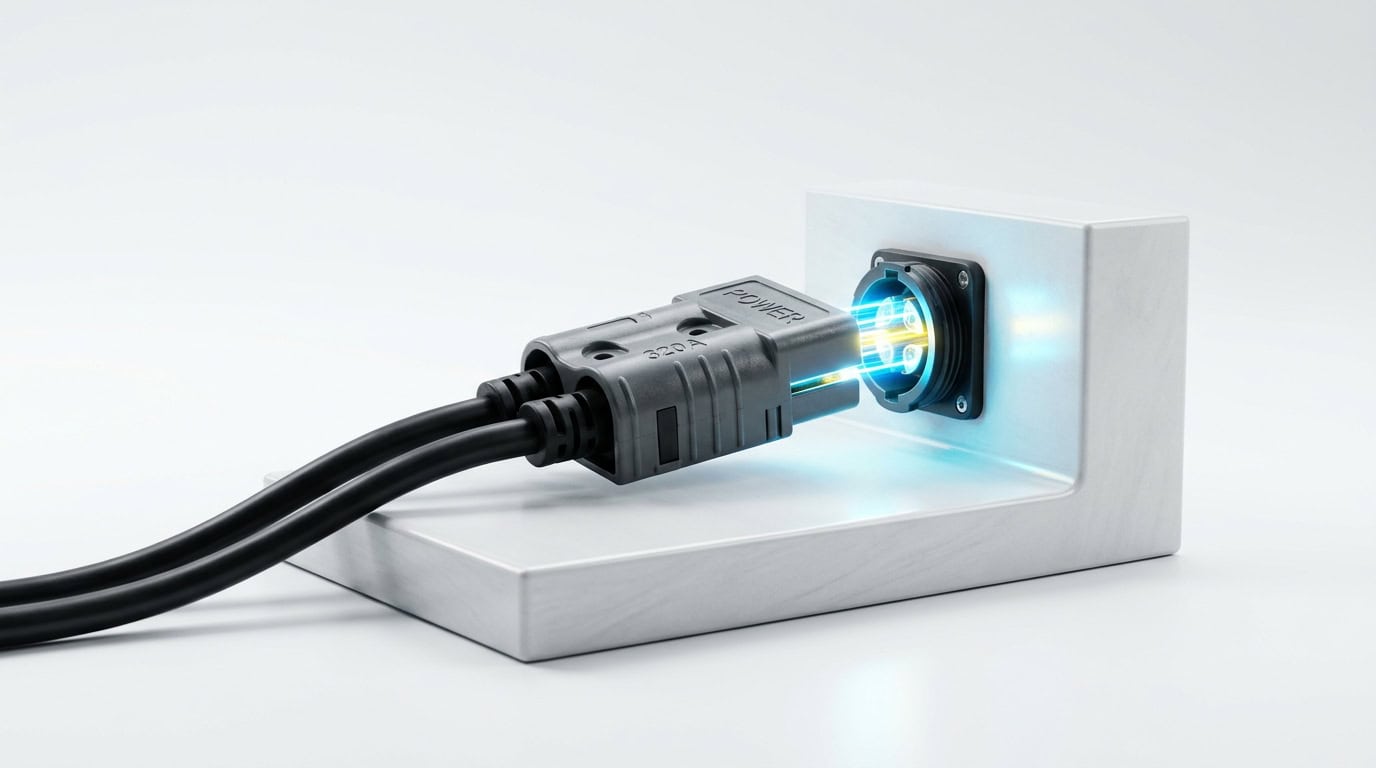
In high-power electric forklift and material handling operations, the battery connector is the vital electrical link transferring continuous currents from 160A to over 600A between the traction battery, vehicle motor controller, and high-rate industrial charger. Operating under constant cyclic mating, mechanical vibration, and peak hydraulic inrush currents, connector contact degradation is a primary root cause of localized thermal runaway, voltage sag, and catastrophic connector melt down. This engineering guide provides an exhaustive technical comparison between European REMA DIN 43589 / EN 1175 standards and American Anderson Power Products (APP) SB/SBX/SBE series, evaluating contact metallurgy, contact resistance physics, auxiliary pilot pin interlocks, and maintenance protocols essential for fleet safety.
1. High-Current Contact Interface Physics: Resistance, Constriction & Joule Heating
At current levels exceeding 200A, any microscopic imperfection in contact mating creates substantial thermal and electrical losses. Electrical contact resistance ($R_{contact}$) consists of two physical components:
- Constriction Resistance ($R_c$): True contact between two metallic surfaces occurs only at microscopic asperities (a-spots). When high-density current lines constrict to pass through these microscopic contact points, current constriction creates localized resistance governed by material hardness and contact normal force.
- Film / Oxide Resistance ($R_f$): Airborne contaminants, atmospheric humidity, and microscopic fretting corrosion produce non-conductive oxide layers on terminal surfaces. If the wiping action during connector insertion is inadequate, this oxide layer persists, multiplying electrical resistance.
Per Joule’s first law ($P = I^2 \cdot R$), a seemingly trivial contact resistance increase from 0.2 mΩ to 2.5 mΩ under a 350A continuous mast lift generates 306 Watts of concentrated heat inside a confined plastic housing. Left unaddressed, contact temperatures quickly surpass the heat distortion threshold of polycarbonate shells (120°C–140°C), fusing mating halves together and presenting severe arc flash hazards.
2. Standards & Architecture: REMA DIN 43589 vs. Anderson SB / SBX / SBE
Industrial material handling fleets globally adhere to two prominent heavy-duty connector paradigms, each with distinct mechanical mating, spring mechanisms, and terminal designs:
REMA DIN 43589 / EN 1175 (Euro Standard)
Widely adopted across European forklift manufacturers (Linde, Jungheinrich, STILL) and heavy global equipment, DIN connectors utilize keyed male/female socket designs:
- Standardized Ampacity Ratings: DIN 80A, 160A, 320A, and 640A rated up to 150V DC.
- Keying Hexagon Coding Pins: Mechanical coding pins with voltage indicators (24V, 36V, 48V, 80V, 96V) prevent cross-mating incompatible battery voltages or chemistries (e.g., green coding for lithium, grey for lead-acid).
- Integrated Auxiliary & Pilot Contacts: Up to 4 auxiliary signal contacts allow CAN bus communication, charger pilot line interlocks (disabling charger output before physical disconnect), and electrolyte level sensors.
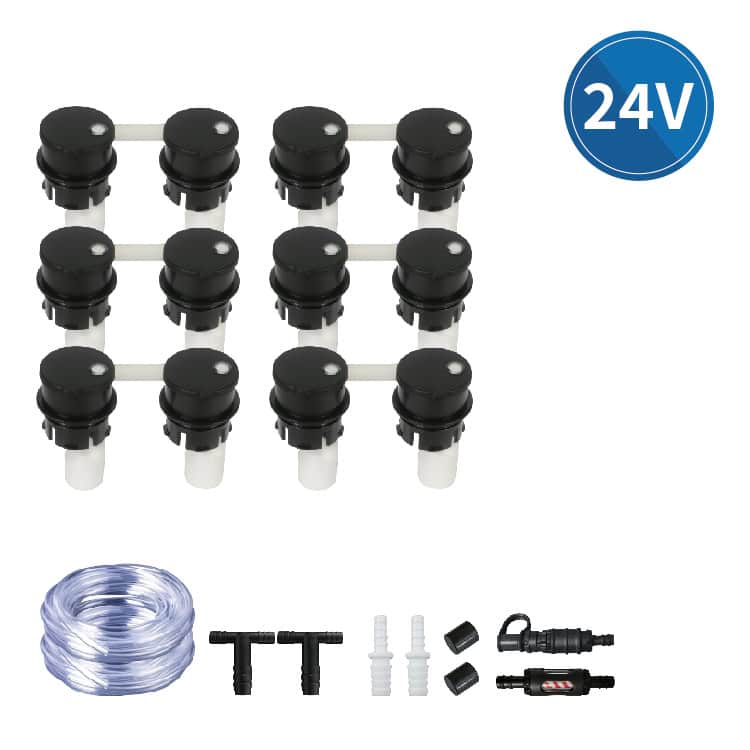
- Internal Air/Electrolyte Purge Tubes: Supports integrated pneumatic circulation systems for flooded lead-acid batteries and nitrogen purging.
Anderson Power Products SB / SBX / SBE Series (North American Standard)
Prevalent across North American and Asian forklift brands (Crown, Hyster-Yale, Toyota, Heli), Anderson connectors leverage genderless polycarbonate housings:
- Genderless Mechanical Interlock: Identical plug halves mate inverted, reducing inventory SKU requirements and eliminating separate plug/receptacle stocking.
- Spring-Loaded Flat-Wiping Contacts: Stainless steel leaf springs apply continuous mechanical force against silver-plated copper contacts. When mated, the sliding action wipes away surface oxides automatically.
- Color Coding Alignment: Housing colors correspond to nominal voltages per UL 1977 (Blue = 48V, Red = 24V, Grey = 36V, Orange = 18V), with mechanical ribs preventing cross-color mating.
- SBX & SBE Enhancements: The SBX/SBE series introduces 2-pole auxiliary contacts for pilot interlock lines and BMS disconnect signaling, bringing parity to DIN safety architectures.
3. Comprehensive Engineering Matrix: REMA DIN vs Anderson SB/SBX
The operational and technical parameters of both connector architectures are evaluated below:
| Engineering Specification | REMA DIN 43589 / EN 1175 | Anderson SBX / SBE Series |
|---|---|---|
| Nominal Current Ratings | 80A, 160A, 320A, 640A | 175A, 350A, 700A (SBX/SBE) |
| Design Architecture | Polarized Male Receptacle & Female Socket | Genderless Housing (Interlocking Halves) |
| Contact Spring Mechanism | Internal multi-finger barrel / leaf spring | External stainless steel flat spring under leaf |
| Contact Surface Plating | High-thickness hard silver plating (>5µm) | Electroplated thick silver over copper |
| Hot-Disconnect Arc Protection | Pilot contact disconnects charger gate 15ms prior | Sacrificial tip contacts on SBX series |
| Auxiliary Signal Pins | Up to 4 signal pins (CAN bus / interlock) | 2 auxiliary contacts (pilot interlock) |
| Voltage Keying Mechanism | Hexagonal rotating mechanical pin (24V–96V) | Molded physical key ribs by housing color |
| Typical Insertion Force | Moderate (lever handles optional on 320A/640A) | High (requires external ergonomic handles) |
| IP Rating Sealed Version | IP65 with sealed cable gland hoods | IP64 with boot covers / environmental seals |
4. Contact Wear Modes & Premature Failure Mechanisms
Failure analysis of high-hour industrial forklift connectors reveals three dominant degradation pathways:
- Hot-Unplug Arcing & Pitting: Operators pulling connectors under active 150A–300A load draw intense plasma arcs reaching 4,000°C. This vaporizes the silver plating, leaving jagged copper craters. Copper oxidizes instantly in air, accelerating contact resistance. Mitigation: BMS-integrated charger pilot contacts that trip the main contactor via CANbus before mechanical pin disengagement.
- Terminal Crimp Creep & Cable Bell Fatigue: Improper hex or indent crimps with excessive wire strands cut or insufficient tonnage loosen under cyclic thermal expansion ($100 ext{ cycles of }20^\circ ext{C}\leftrightarrow 80^\circ ext{C}$). High contact resistance at the cable-to-lug joint overheats the connector from behind.
- Spring Relaxation & Fretting Corrosion: In rough-floor or port applications, microscopic vibration causes 10µm–50µm oscillatory slip between contact surfaces. Stainless leaf springs lose tempering force above 110°C, lowering contact pressure and compounding fretting oxide buildup.
5. Standard Operating Procedures (SOP): Inspection, Maintenance & Crimp Quality
To eliminate connector thermal failures and maintain high electrical efficiency, fleet maintenance teams should adhere to the following maintenance standards:
- Calibrated Hydraulic Hex Crimping: Always use manufacturer-certified dies (e.g., 50mm², 70mm², 95mm², 120mm² cable sizes) ensuring a minimum 12-ton hydraulic crimp. Cross-sectional micro-sectioning must show >95% compaction with zero wire voids.
- Infrared Thermographic Audits: During 1.0C peak opportunity charging, scan connector housings using calibrated thermal imaging. Any connector displaying a $\Delta T > 20^\circ ext{C}$ over ambient cable temperature must be decommissioned immediately.
- Micro-Ohmmeter Contact Resistance Validation: Measure terminal-to-terminal voltage drop using a 4-wire Kelvin micro-ohmmeter at 10A test current. Re-crimp or replace any connector assembly exceeding 0.4 mΩ total loop resistance.
- Silicone Handle & Latch Lock Deployment: Equip high-amperage connectors (DIN 320A / Anderson SBX350) with heavy-duty ergonomic handles and mechanical latch locks to prevent loose mating caused by chassis shock.
For more technical details on high-power forklift electrical subsystems, explore our engineering guides on BMS Current Shunt Calibration, Pre-Charge Resistors & Inrush Suppression, and Industrial Battery Chargers.
Upgrade Your Fleet with Heavy-Duty Connector Assemblies
Eliminate connector burn-out and voltage drop with Zospower OEM-grade REMA DIN and Anderson connector assemblies. Featuring precision hydraulic crimping, heavy silver plating, IP65/IP67 sealed housings, and integrated BMS pilot interlocks, our power delivery solutions ensure maximum uptime.