Modernización de las baterías de litio de las carretillas elevadoras: guía sobre el coste total de propiedad (TCO) y el retorno de la inversión (ROI) de las baterías de plomo-ácido frente a las de LiFePO4
Dado que los centros de distribución y las plantas de fabricación modernos se enfrentan a unos costes laborales cada vez mayores y a exigentes plazos de entrega las 24 horas del día, los 7 días de la semana, los responsables de flotas están acelerando la transición de las baterías tradicionales de plomo-ácido para vehículos de manutención a Fosfato de hierro y litio (LiFePO₄) sistemas.
Aunque una batería de litio para carretillas elevadoras supone un coste inicial de adquisición más elevado, su eficiencia energética superior, su diseño que no requiere mantenimiento y su capacidad de recarga ocasional permiten un periodo de amortización que suele situarse entre De 12 a 18 meses.
Esta completa guía técnica desglosa la verdadera Coste total de propiedad (TCO) a 5 años comparación y describe los pasos técnicos necesarios para llevar a cabo con éxito la sustitución de la batería de una carretilla elevadora.
1. Desglose del coste total de propiedad (TCO) a 5 años (por carretilla elevadora de 48 V)
El siguiente modelo financiero compara un modelo estándar Carretilla elevadora eléctrica de clase I / clase II en dos turnos (16 horas al día, 300 días al año) a lo largo de un ciclo de vida operativo de 5 años:
| Componente de coste | Baterías tradicionales de plomo-ácido (se necesitan 2 paquetes) | ZOSPOWER Litio LiFePO4 (1 paquete) | Ahorro neto a 5 años |
|---|---|---|---|
| Inversión inicial en baterías | $8,000 (2 paquetes para el relevo de 2 turnos) | $10,500 (Una batería de carga rápida) | -$2,500 |
| Sustitución de la batería (años 3-4) | $4,000 (Sustituido tras 1.400 ciclos) | $0 (Capacidad nominal de entre 3.500 y 5.000+ ciclos) | +$4,000 |
| Dedicated Charger & Swap Crane | $4,500 (2 cargadores + extractor de baterías) | $2,800 (1 cargador inteligente de alta frecuencia) | +$1,700 |
| Coste de la electricidad (75% frente a 95% (efectivo)) | $14,400 (referencia: 1 TP4T0,12/kWh) | $10,800 (25%: mayor eficiencia de carga) | +$3,600 |
| Watering, Cleaning & Labor | $6,000 (1 hora semanal de trabajo del técnico) | $0 (100% sin mantenimiento) | +$6,000 |
| Tiempo de inactividad por cambio de batería y mano de obra | $7,500 (15 minutos por turno del operario) | $0 (Aprovecha para hacer publicidad durante los descansos) | +$7,500 |
| Coste inmobiliario de la sala de baterías | $3,000 (Zona de carga ventilada) | $0 (Carga oportunista descentralizada) | +$3,000 |
| Coste operativo total a 5 años | $47,400 | $24,100 | +$23 300 (49% de ahorro) |
2. Principales ventajas operativas de la conversión a LiFePO4
A. Carga en cualquier momento (sin cambio de batería)
B. Constant Voltage & Peak Productivity
A medida que las baterías de plomo-ácido se descargan, su tensión de salida desciende considerablemente por debajo de los niveles nominales, lo que provoca que la velocidad de elevación y la aceleración de desplazamiento se reduzcan durante la segunda mitad del turno.
Por el contrario, La composición química del LiFePO₄ mantiene curvas de tensión de descarga planas, lo que garantiza una potencia hidráulica, un par y una velocidad idénticos desde un estado de carga de 100% hasta 5%.
C. Resistencia superior a temperaturas extremas (almacenamiento en frío)
Lead-acid batteries lose up to 35%–50% capacity in sub-zero cold storage facilities (-20°C to -30°C). ZOSPOWER custom cold-storage lithium packs integrate tecnología de láminas de calefacción interna automática, precalentando las celdas durante la carga y la descarga para garantizar una autonomía total durante el turno.
3. Lista de comprobación técnica para la adaptación de una carretilla elevadora sin modificaciones
La conversión de una carretilla elevadora eléctrica ya existente de plomo-ácido a litio es un procedimiento sencillo y directo si se planifica correctamente:
`sirena
gráfico TD
Step1[“1. Dimensional & Compartment Sizing (L x W x H mm)”] –> Step2[“2. Minimum Counterweight Verification (Steel Ballast)”]
Step2 –> Step3[“3. Voltage & Connector Matching (24V/48V/80V REMA/Anderson)”]
Step3 –> Step4[“4. Charger & High-Voltage Infrastructure Setup”]
Step4 –> Step5[“5. Telematics & External SOC Display Mounting”]
`
1. Compartment Dimensions & Tray Customization:
Mide las dimensiones internas de la caja de la batería (longitud × anchura × altura). ZOSPOWER fabrica bandejas de acero grueso cortadas con precisión que se ajustan exactamente a las tolerancias de los compartimentos originales de Toyota, Linde, Jungheinrich, Hyster, Crown y HELI.
2. Adecuación del contrapeso mínimo de la carretilla:
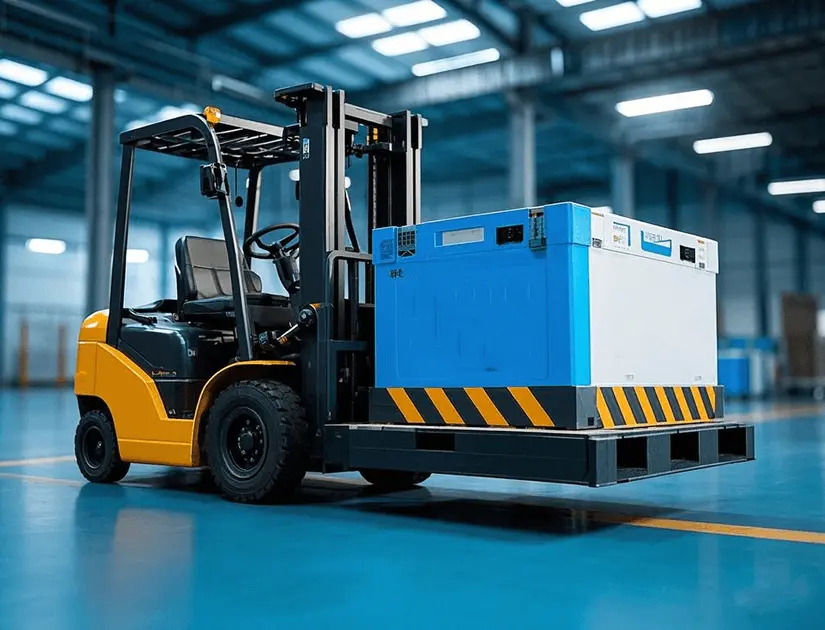
Lithium batteries are up to 60% lighter than lead-acid packs. To maintain the forklift’s rated lifting capacity and center-of-gravity stability, Las pesadas placas de lastre de acero están integradas directamente en la bandeja de la batería ZOSPOWER to match the manufacturer’s specified minimum service weight.
3. Connector & Cable Sizing:
Estandarizar los conectores de alimentación con conectores REMA DIN 80/160/320 o Anderson SB/SBX/SBE, garantizando que los cables flexibles de cobre ignífugos soporten las elevadas corrientes de carga ocasionales.
4. BMS & Operator Telematics:
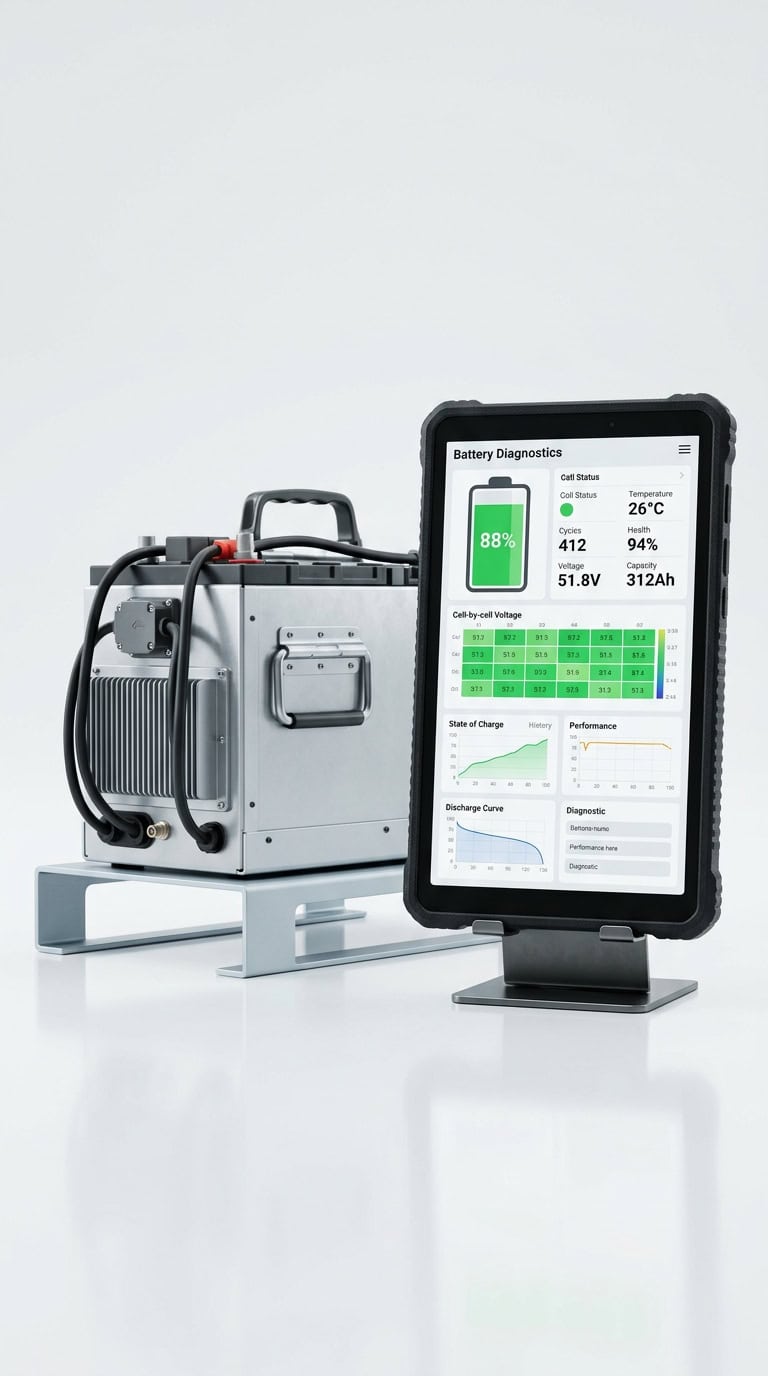
Instala el indicador digital de batería en el salpicadero de la carretilla elevadora, que muestra en tiempo real el estado de carga (SOC), la temperatura de las celdas, el voltaje y los códigos de alerta de error.
4. Preguntas frecuentes (FAQ)
Pregunta 1: ¿Puedo utilizar mi cargador de baterías de plomo-ácido actual para una batería de litio nueva?
No. Los cargadores de baterías de plomo-ácido utilizan perfiles de tensión de reducción gradual y de ecualización (que a menudo superan los 2,45 V por celda), lo que activará el corte de seguridad por sobretensión del BMS de litio. Se requiere un cargador específico de litio de alta frecuencia CC/CV (corriente constante/tensión constante). Obtén más información en nuestro Guía para la selección de cargadores de carretillas elevadoras.
Pregunta 2: ¿Es segura la composición química del LiFePO4 para las operaciones en almacenes interiores?
Sí. Lithium Iron Phosphate (LiFePO4) is the most chemically stable lithium formulation. It does not produce combustible hydrogen gassing during charging, eliminates corrosive sulfuric acid spills, and possesses high thermal runaway thresholds (>270°C).
Pregunta 3: ¿Cuánto tiempo lleva una adaptación a litio sin necesidad de desmontaje?
En los modelos estándar de carretillas elevadoras, sustituir la antigua batería de plomo-ácido e instalar una batería de litio ZOSPOWER con peso personalizado lleva menos de 30 minutos.
5. Calculate Your Fleet’s Retrofit ROI with ZOSPOWER
Tanto si gestionas una flota de 5 transpaletas como de 100 carretillas elevadoras contrapesadas, la transición a la tecnología de propulsión LiFePO4 de ZOSPOWER elimina los problemas de mantenimiento y reduce el gasto energético a lo largo de toda la vida útil.
Ponte en contacto con nuestros ingenieros de aplicaciones e indícales la marca de tu camión, las dimensiones de los compartimentos y los patrones de cambio de marchas para recibir una propuesta personalizada sobre el tamaño adecuado y el retorno de la inversión:
Ready to Calculate Your Warehouse Fleet’s Lithium Conversion ROI?
ZOSPOWER diseña bandejas de litio a medida, con contrapeso adaptado, que se pueden instalar directamente en carretillas elevadoras de las marcas Linde, Jungheinrich, Hyster, Toyota y HELI. Echa un vistazo a nuestra directrices de mantenimiento o póngase en contacto con nuestro equipo técnico para obtener un cálculo exacto del coste total de propiedad (TCO) a 5 años.