Forklift Battery Safety & Compliance Guide: UL 2580, UN 38.3 & Fire Protection
As global distribution centers, manufacturing facilities, and third-party logistics (3PL) warehouses transition from legacy Blei-Säure-Antriebsbatterien toward high-rate Lithium Iron Phosphate (LiFePO4) electrification, safety and regulatory compliance have become top priorities for corporate risk officers, safety directors, and facility engineers.
Operating high-capacity industrial motive batteries involves massive electrochemical energy storage—frequently exceeding 50 kWh to 80 kWh per forklift. Ensuring uncompromised operational safety requires a thorough understanding of international testing standards, certified battery chemistries, transport regulations, and warehouse fire safety codes.
This authoritative technical guide examines key international certification frameworks (UL 2580, UN 38.3, CE, IEC 62619), compares thermal runaway dynamics between battery chemistries, outlines multi-tier Batteriemanagementsystem (BMS) safeguards, and details compliance with NFPA fire codes.
1. International Safety Standards & Testing Frameworks
Industrial motive batteries deployed in material handling equipment must satisfy stringent testing regimens to guarantee safety under extreme mechanical, electrical, and thermal stress:
| Standard / Certification | Governing Scope & Geographic Authority | Key Testing Requirements | ZOSPOWER Compliance Status |
|---|---|---|---|
| UL 2580 | Batteries for Use in Electric Vehicles & Industrial Trucks (North America) | Crush testing, drop impact, immersion, overcharge tolerance, and short-circuit withstand. | Fully engineered to meet UL 2580 structural and thermal propagation criteria. |
| UN 38.3 | United Nations Recommendations on the Transport of Dangerous Goods (Global) | T1–T8 testing: altitude simulation, thermal shock (-40°C to +72°C), vibration, impact, and forced discharge. | 100% Certified; certified test reports provided for all sea, air, and rail container shipments. |
| IEC 62619 / CE | Secondary Lithium Cells and Batteries for Industrial Applications (Europe & International) | Thermal runaway propagation resistance, internal short-circuit testing, and drop tests. | CE & RoHS Certified; compliant with European Machinery & Low Voltage Directives. |
| ISO 9001:2015 | Quality Management System for Manufacturing Excellence | Traceability from raw cell batch incoming inspection through automated End-of-Line (EOL) burn-in. | Certified manufacturing facility with MES automated cell QR-code tracking. |
2. Chemistry Matters: Why LiFePO4 Outperforms NMC in Forklift Safety
Not all lithium-ion chemistries are created equal. While consumer electronics and high-performance passenger vehicles often utilize Nickel Manganese Cobalt (NMC) cells for maximum volumetric energy density, material handling equipment has distinctly different priorities: extreme safety, high cycle life, and thermal resilience.
ZOSPOWER exclusively utilizes Lithium-Eisenphosphat (LiFePO₄) chemistry for all industrial motive power batteries. The technical reasons are decisive:
- Thermal Runaway Onset Temperature: LiFePO4 cells exhibit thermal stability up to 270°C (518°F), compared to NMC cells which can enter self-sustaining thermal runaway as low as 150°C (302°F).
- Chemical Bond Strength: The covalent Phosphorus-Oxygen (P-O) bond in the olivine LiFePO4 crystal lattice is exceptionally strong. Under severe overcharging or physical penetration, it does not release free oxygen, eliminating the oxidizer required to sustain an internal thermal event.
- Non-Flammable, Non-Explosive Behavior: In standard nail-penetration and crush testing, LiFePO4 cells produce moderate venting and steam without explosive deflagration or open flames.
3. Multi-Tier Active & Passive BMS Protection Architecture
Physical cell chemistry safety is backed by a robust electronic defense system. Every ZOSPOWER forklift battery incorporates an industrial-grade Battery Management System (BMS) with multi-layered protective hardware and firmware:
A. Pre-Charge Circuitry & Inrush Limiting
When a high-voltage battery (48V to 80V) is connected to a forklift motor controller, large internal filter capacitors draw an enormous surge of inrush current that can weld contactor tips or damage inverter electronics. ZOSPOWER incorporates an automated pre-charge resistor circuit that gently charges the vehicle’s capacitors within 500 milliseconds before closing the primary high-current DC contactors.
B. Dual-Stage Temperature & Voltage Cutoffs
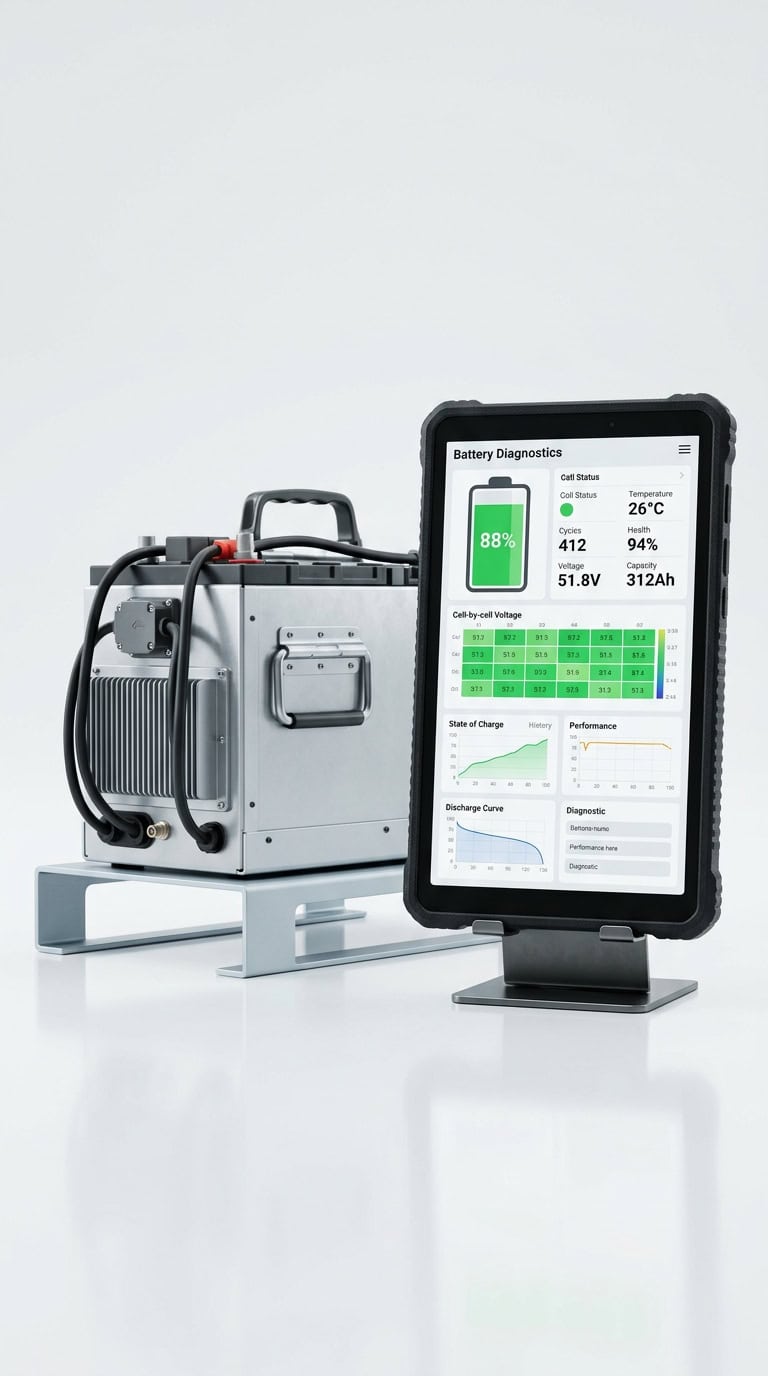
The BMS monitors voltage across every individual cell series and reads multi-point thermistor sensors placed throughout the pack. If any cell exceeds 3.65V during charging or drops below 2.50V during heavy lifting, the system issues an audible operator alert and safely disconnects charging or motive power. Similarly, if temperatures exceed 55°C (131°F), thermal limiting automatically protects the cell pack.
C. Cold-Storage Pre-Heat Protection
As detailed in our Technischer Leitfaden für Gabelstaplerbatterien in Kühlhäusern, charging lithium cells below 0°C poses dangerous lithium plating risks. Our BMS automatically locks out incoming charging current until closed-loop internal thermal pads warm the cell matrix to a safe +5°C operating temperature.
4. NFPA 855 & Warehouse Fire Safety Standards
Facility safety directors must adhere to building and fire protection codes, such as NFPA 855 (Standard for the Installation of Stationary Energy Storage Systems) and local International Fire Code (IFC) regulations.
Comparing Lithium vs. Lead-Acid Fire Risks:
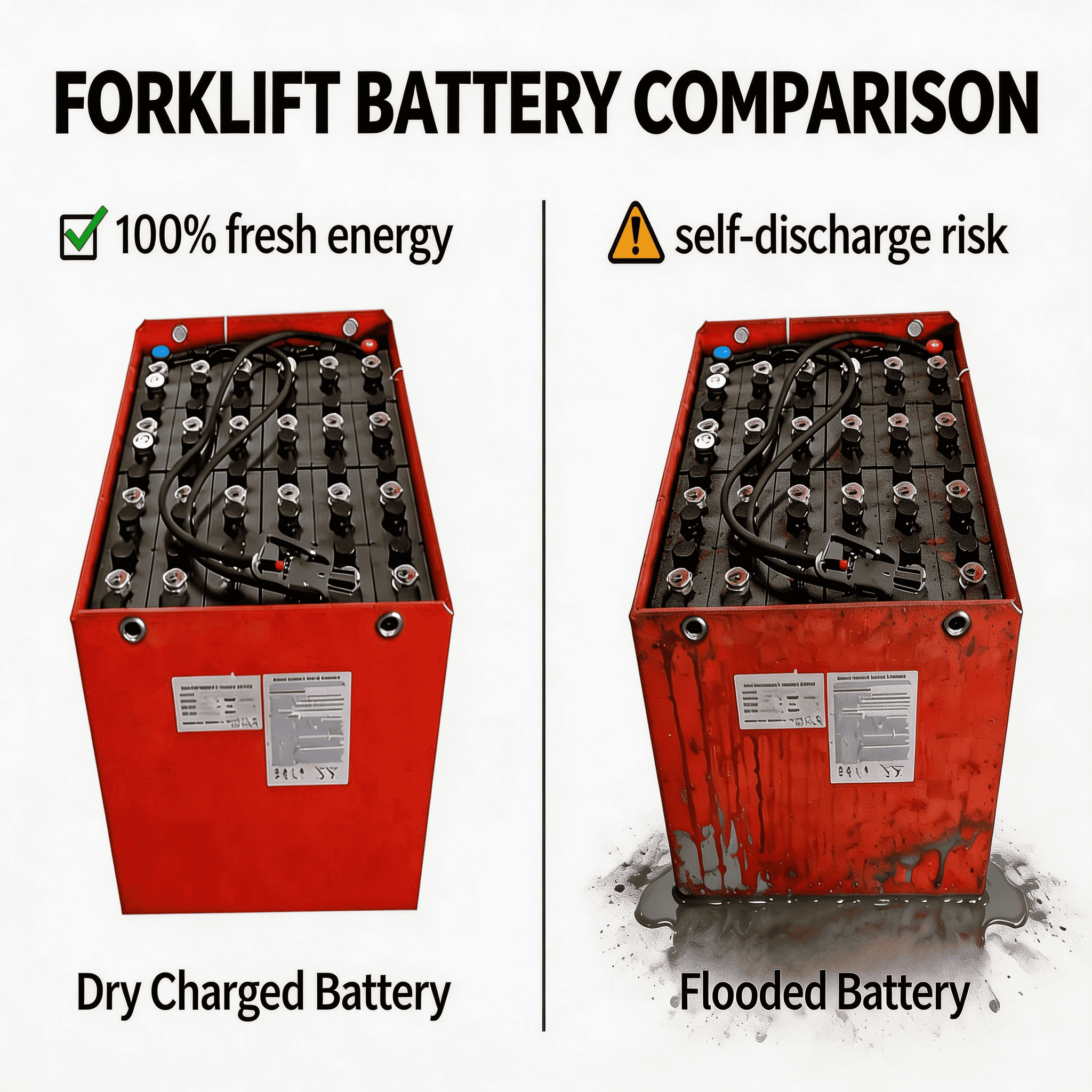
- Lead-Acid Hazards: Conventional flooded lead-acid batteries continuously emit highly volatile hydrogen gas (H2) during charging, mandating specialized explosion-proof ventilation, hydrogen detection sensors, and acid neutralizing wash stations. Furthermore, toxic sulfuric acid leaks present severe skin burn and floor corrosion risks.
- LiFePO4 Mitigation: Sealed LiFePO4 battery packs produce keine Wasserstoffgasemissionen and zero acid fumes during normal operation. As a result, facilities can safely decommission centralized battery charging rooms, deploying distributed opportunity chargers directly adjacent to shipping docks or breakrooms without violating ventilation codes.
5. Complete Motive Power Technical Library
Explore our engineering retrofit and operational guides across leading global forklift platforms:
- Toyota Conversions: Anleitung zur Umrüstung von Toyota-Gabelstaplern auf Lithium-Batterien: SAS-Stabilität und technische Daten
- Crown Conversions: Crown Forklift Lithium Battery Retrofit Guide: Access 1 2 3 System
- Linde Conversions: Anleitung zur Nachrüstung von Lithium-Batterien für Linde-Gabelstapler: 24-V-, 48-V- und 80-V-Batteriefächer
- Hyster Conversions: Hyster Forklift Lithium Battery Retrofit Guide: Heavy Duty Specs
- Heli & Hangcha: Anleitung zur Nachrüstung von Lithium-Batterien für Gabelstapler der Marken Heli und Hangcha
- Japanese Fleets: Komatsu, Mitsubishi & Nichiyu Forklift Lithium Retrofit Guide
- Manufacturing Process: Inside ZOSPOWER Manufacturing: Laser Welding & EOL Testing
- Market Insights: Global Forklift Battery Market Trends 2026: Electrification Review
6. Request Safety Documentation & Certification Packages
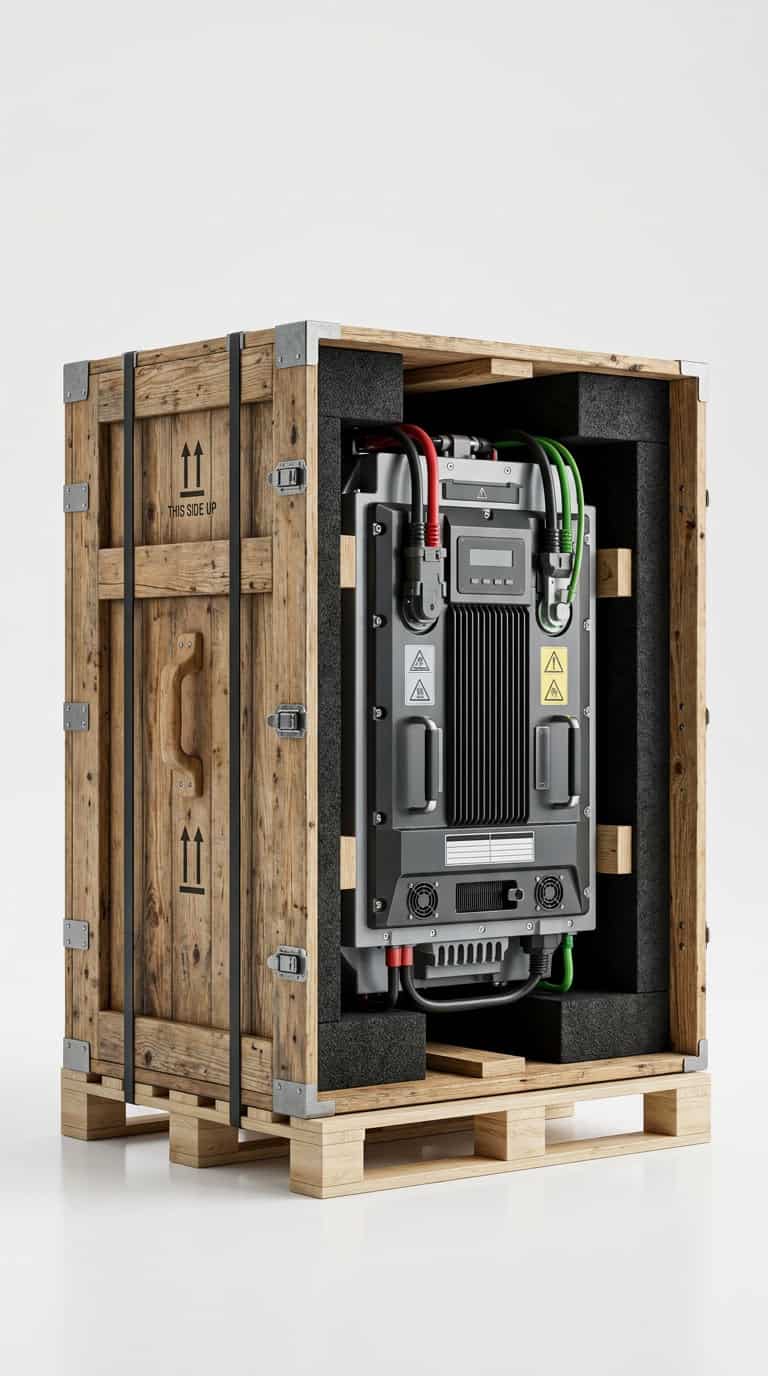
ZOSPOWER provides complete compliance documentation packages—including UN 38.3 test summaries, Material Safety Data Sheets (MSDS), CE declarations of conformity, and transport certificates—for all global shipments.
Need Compliance Documentation or Safety Verification for Your Fleet?
Contact the ZOSPOWER compliance engineering team to obtain UN 38.3 test certificates, MSDS sheets, and insurance compliance documentation for facility safety reviews.