Multi-Shift Logistics Power Strategy: Eliminating Forklift Battery Swap Rooms
In the fiercely competitive third-party logistics (3PL), e-commerce fulfillment, and retail distribution sectors, facility throughput is measured in minutes and seconds. Operating two or three shifts around the clock (16 to 24 hours per day) places intense demands on material handling fleets, where forklift utilization must exceed 90% to sustain profitability.
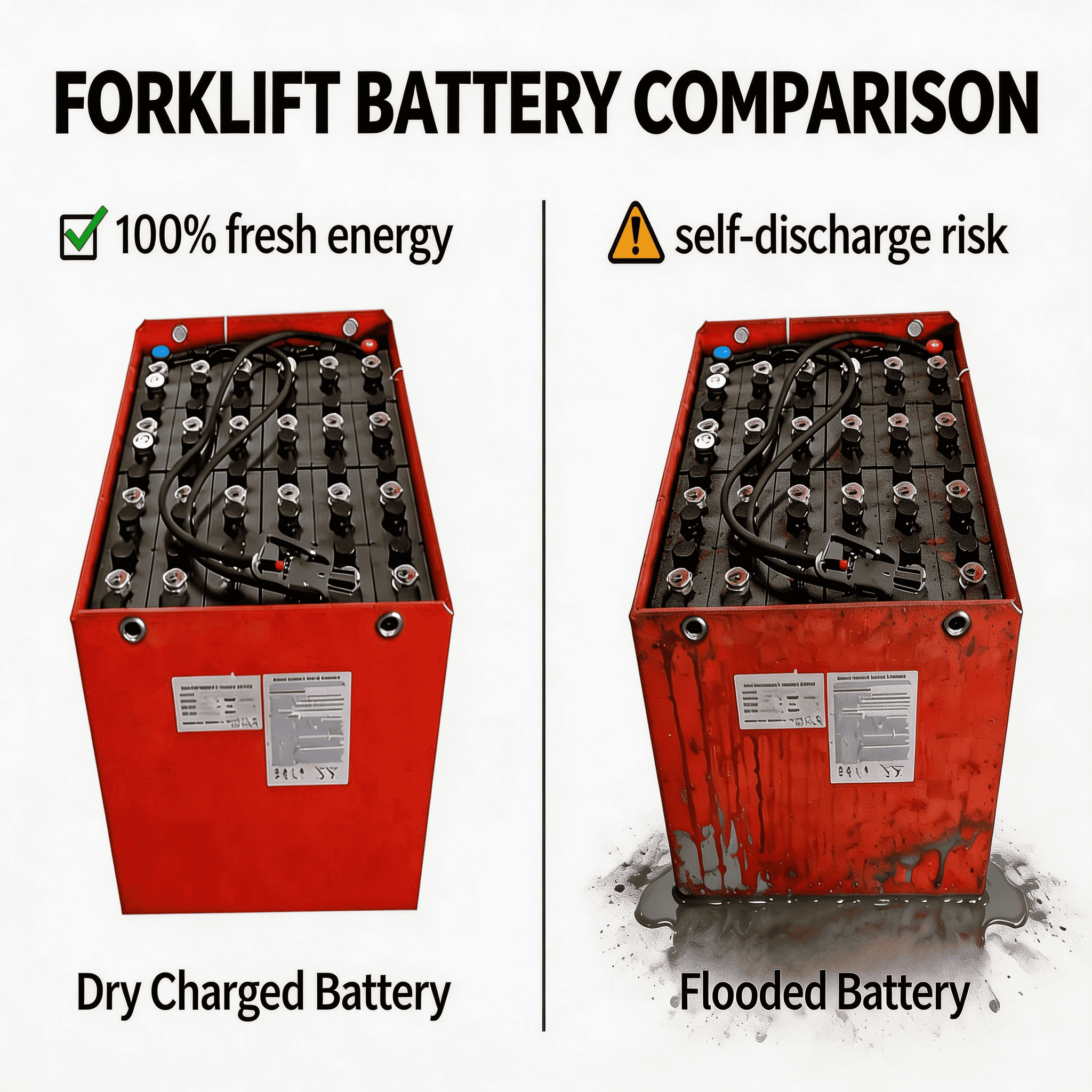
For decades, multi-shift warehouse power was dominated by flooded Blei-Säure-Antriebsbatterien. To keep trucks running across three shifts, operations relied on the traditional “1-1-1 Rule”: one battery in the truck working, one on the charger, and one cooling down. This demanded two to three battery packs per forklift, enormous centralized changing rooms, overhead bridge cranes, and teams of maintenance technicians.
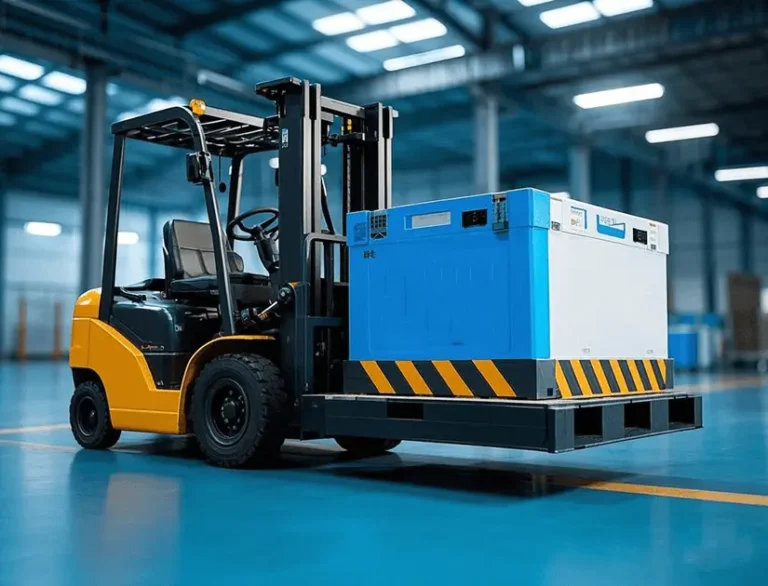
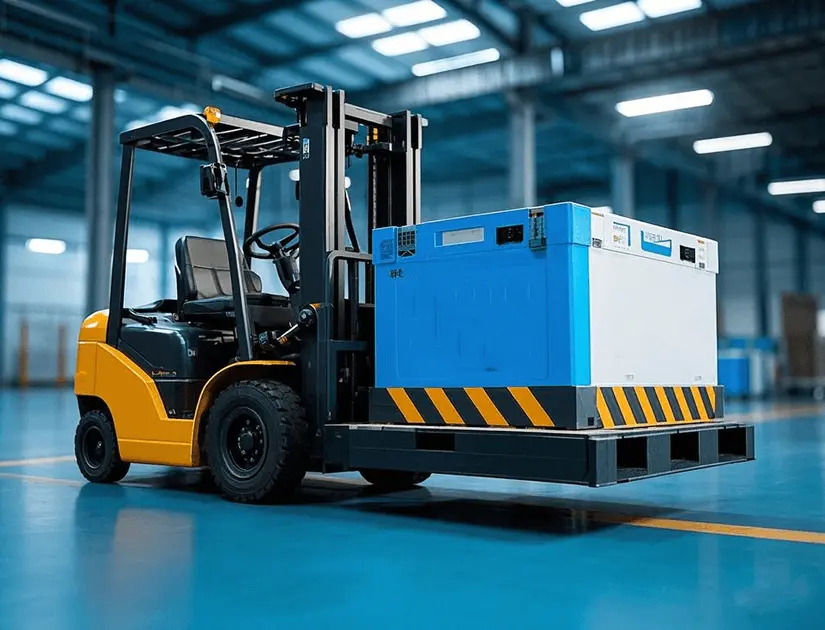
Today, tier-1 3PL operators are fundamentally redesigning facility power architecture by shifting to Lithium Iron Phosphate (LiFePO4) 1-Truck-to-1-Battery configurations. By integrating decentralized high-frequency opportunity charging directly into warehouse workflows, logistics leaders are reclaiming valuable floor space and cutting operational costs.
This industry analysis reviews the operational mechanics of multi-shift battery management, utility peak demand management, warehouse square footage reclamation, and strategic labor reallocation.
1. The True Total Cost of Lead-Acid Swap Rooms in 3PL Facilities
While initial acquisition costs for lead-acid batteries appear lower on procurement spreadsheets, operating them in continuous multi-shift distribution centers accumulates massive hidden overhead:
- Massive Capital Duplication: Operating a 60-forklift warehouse on lead-acid requires purchasing between 120 and 180 battery packs, doubling or tripling initial motive capital expenditure.
- Operator Travel & Changeover Waste: Each battery extraction swap takes between 15 and 25 minutes. Multiplied across three shifts and 60 trucks, facilities lose 45 to 75 productive operator hours every single day to non-value-added transit and swapping.
- Lost Storage Revenue: Centralized battery rooms consume 2,500 to 5,000 square feet of conditioned warehouse space that could otherwise store 300 to 600 high-density pallet positions.
- Utility Demand Charge Spikes: Charging 50+ lead-acid batteries simultaneously at the end of shifts triggers enormous utility peak electrical demand penalties.
2. The “1-Truck-to-1-Battery” LiFePO4 Operational Blueprint
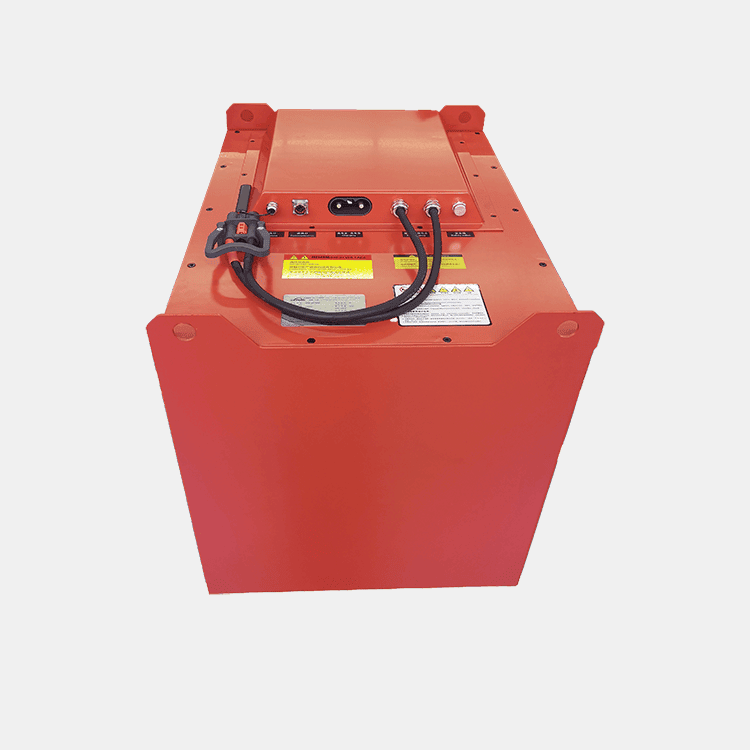
Modern LiFePO4-Batterien für industrielle Anwendungen eliminate the need for spare battery rotations entirely. Because LiFePO4 accepts high-current charging without thermal breakdown or “memory effect”, operators adopt an opportunity charging rhythm:
| Operational Window | Duration | LiFePO4 Energy Replenishment | Operational Impact |
|---|---|---|---|
| Morning Coffee Break | 15 Minutes | +12% to +18% SOC | Restores energy consumed during morning peak pallet put-away. |
| Lunch / Meal Shift | 30 – 45 Minutes | +30% to +45% SOC | Brings battery back to 85%–95% state of charge for afternoon cross-docking. |
| Afternoon Break | 15 Minutes | +12% to +18% SOC | Powers the fleet through evening staging and outbound dispatch. |
| Shift Handover Lull | 20 – 30 Minutes | +25% to +35% SOC | Ensures the incoming night shift operator starts with a full battery. |
Under this strategy, the battery remains inside the forklift chassis permanently for its entire 8-to-10-year service life. As detailed in our Forklift Lithium vs Lead-Acid TCO & ROI Guide, multi-shift 3PL operations typically achieve full capital payback within 12 to 14 months.
3. Smart Power Distribution & Peak Demand Shaving
A critical consideration when switching to high-power fast charging is managing electrical utility demand charges. Connecting multiple high-output chargers—such as our Intelligentes Ladegerät, 80 V, 100 A–200 A—can create utility grid spikes if unmanaged.
Modern logistics facilities solve this using Dynamic Load Balancing (DLB):
- Staggered High-Rate Windows: Chargers communicate over Ethernet or local mesh networks to distribute available facility amperage across plugged-in forklifts.
- Peak Shaving Integration: If facility air handlers or sorting conveyors ramp up electrical draw, chargers automatically throttle charging currents from 200A down to 100A for 10 minutes, avoiding costly utility tariff penalties.
- Zero Hydrogen Ventilation Compliance: Review our Charging Station Design & Ventilation Guide to learn how decentralized lithium opportunity charging eliminates OSHA and NFPA explosion-proof room requirements.
4. Complete Fleet Retrofit & Engineering Library
Learn how top international operations convert their core material handling equipment to LiFePO4 power:
- Port & Heavy Duty: Heavy-Duty Port & Terminal Forklift Battery Engineering Guide: 80V-96V Specs
- Sub-Zero Freezers: Cold Storage Forklift Battery Engineering Guide: Operating Down to -30°C
- Safety & Fire Compliance: Forklift Battery Safety & Compliance Guide: UL 2580, UN 38.3 & NFPA Codes
- Automated Warehousing: AGV & AMR Forklift Electrification: Powering Next-Gen Robotics
- Brand Retrofit Specs: Krone | Toyota | Linde | Jungheinrich | Hyster
5. Request a 3PL Multi-Shift Fleet Power Audit
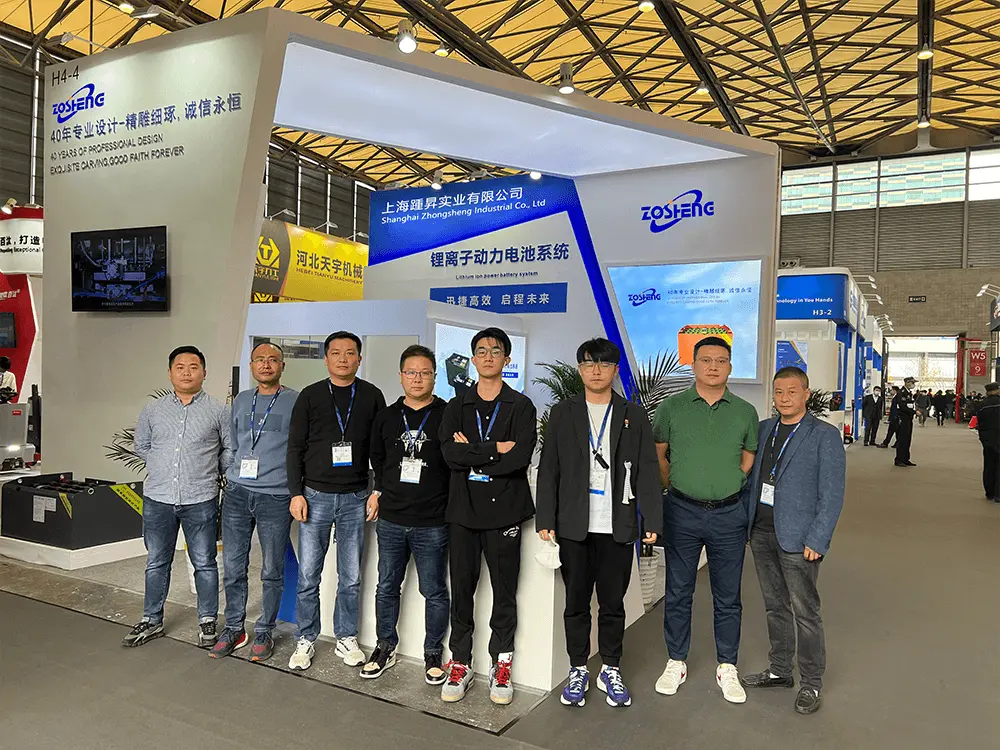
ZOSPOWER works directly with third-party logistics providers, large retailers, and warehouse operators to conduct comprehensive fleet power audits. We model shift patterns, calculate energy consumption, and deliver turnkey drop-in battery and charger solutions.
Ready to Eliminate Battery Swap Overhead in Your 3PL Facility?
Contact the ZOSPOWER motive engineering team to analyze your fleet duty cycle, review CAD dimensional drawings for your forklifts, and receive a customized TCO financial payback model.