
Across international commercial aviation hubs, the transition to net-zero airside operations is accelerating at an unprecedented pace. Driven by the International Air Transport Association (IATA) Net-Zero 2050 resolution, Airport Carbon Accreditation (ACA) mandates, and strict municipal air quality standards, aviation authorities and global ground handling agencies (such as Swissport, Dnata, and Menzies) are phasing out diesel and LPG ramp vehicles. Within this green apron transition, baggage tow tractors (tugs), belt loaders, and cargo container loaders represent the core electrification frontier. However, harsh airport apron conditions—ranging from 60°C summer tarmac heat to sub-zero winter blizzards—make traditional flooded lead-acid batteries unviable. Custom-engineered Lithium Iron Phosphate (LiFePO4) systems have emerged as the definitive powertrain standard for high-tempo airside operations in 2026.
1. Airside Operational Pressures & Aviation Decarbonization Mandates
Modern commercial aviation aprons operate on unforgiving flight turnaround schedules. A standard narrow-body aircraft (e.g., Airbus A320 or Boeing 737) requires complete deplaning, baggage offloading, reloading, and pushback within a tight 35 to 45-minute gate window. Any equipment breakdown or power starvation on a baggage tug directly translates into costly flight departure delays.
Simultaneously, international aviation bodies are enforcing aggressive decarbonization criteria:
- Airport Carbon Accreditation (ACA Level 4/4+): Major European and North American hubs require ground handlers to achieve absolute Scope 1 emission reductions by replacing fossil-fueled tugs with zero-emission electric GSE (eGSE).
- EU Alternative Fuels Infrastructure Regulation (AFIR): Mandates dedicated airside charging infrastructure and zero tailpipe emissions at all Trans-European Transport Network (TEN-T) core airports by 2030.
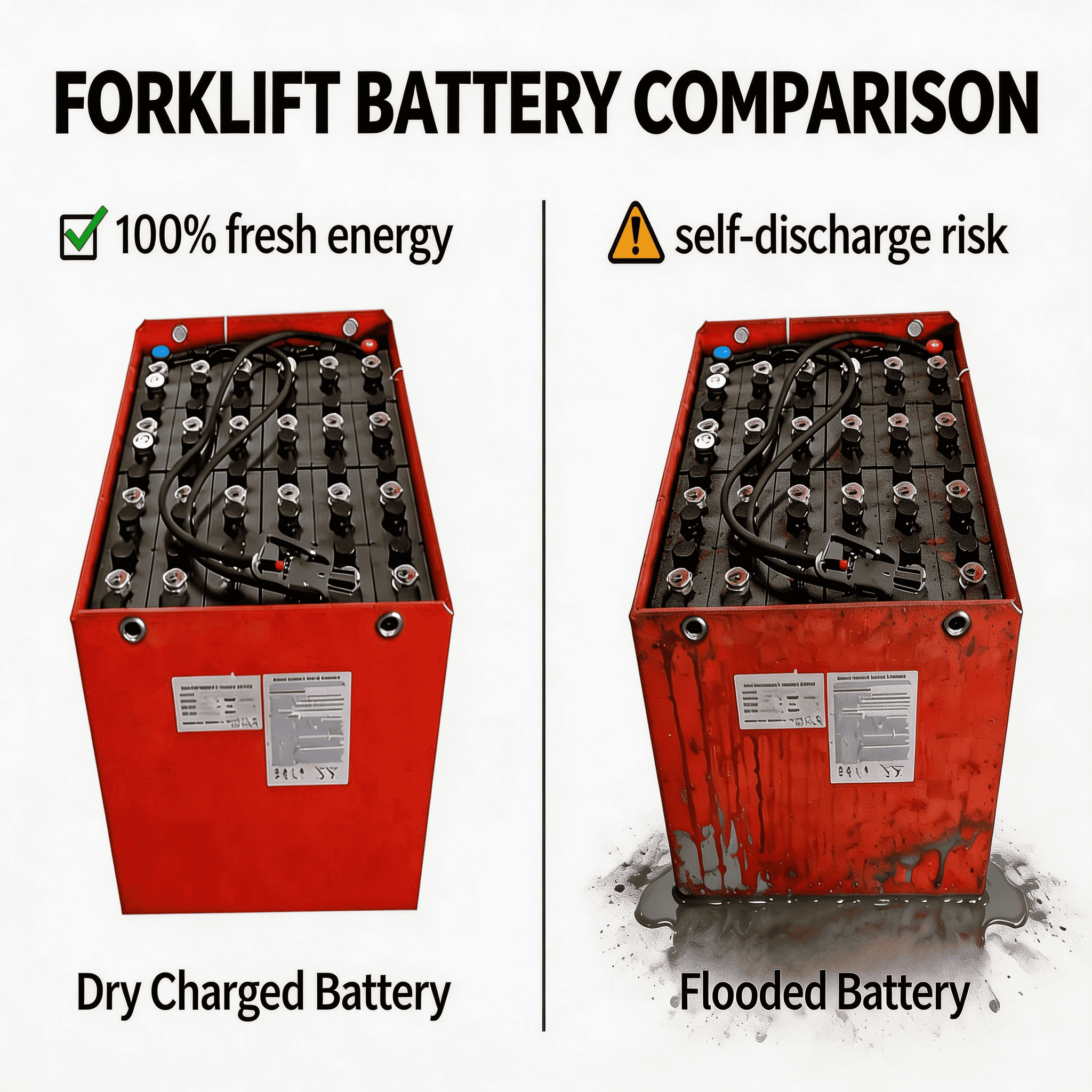
- Eliminating Apron Acid Hazards: Conventional flooded lead-acid batteries emit corrosive sulfuric acid aerosol and volatile hydrogen gas during charging—a major violation near sensitive aircraft fuselage structures, aluminum cargo containers, and apron fuel hydrants.
| Performance Parameter | Airside Flooded Lead-Acid (80V) | Zospower Aviation-Grade LiFePO4 (80V) | Airport Ground Handling Impact |
|---|---|---|---|
| Apron Temperature Envelope | Severe degradation (<0°C or >45°C tarmac) | -30°C to +55°C (Built-in PTC & thermal buffer) | Unbroken operational readiness across all seasons |
| Charging Protocol | 8h charge + 8h cool down (Requires swap shed) | Fast opportunity charge (1C–2C between flights) | 100% eliminates off-apron battery change rooms |
| Drawbar Pull Stability | Drawbar pull drops 25% as battery discharges | Constant high torque across 100% to 15% SOC | Pulls 4 to 6 fully laden baggage carts reliably |
| Acid & Hydrogen Off-Gassing | Severe outgassing; hazardous near fueling pits | Zero emissions (Hermetically sealed IP67) | Safe near underground aviation fuel hydrant points |
| Vibration & Tarmac Shock Resistance | Prone to plate shedding over tarmac joints | Structural steel frame with silicone cell potting | Withstands relentless expansion joint impacts |
2. The Apron Tarmac Reality: Why Lead-Acid Fails in Aviation
The operating environment of an airport ramp is among the most punishing on earth. Unlike indoor warehouses with smooth epoxy flooring, airport tarmac consists of grooved concrete with expansion joints, severe elevation transitions, and exterior weather extremes.
Under these conditions, legacy flooded lead-acid batteries suffer rapid mechanical and electrical failure:
- Severe Voltage Collapse Under Tow Load: Pulling a train of four cargo dollies weighing 15 to 20 metric tons up a ramp tunnel requires continuous 300A–500A discharge. As detailed in our engineering analysis on Industrial Vehicle Voltage Sag Optimization, lead-acid internal resistance causes severe voltage collapse, causing tug speed to drop to a crawl.
- Mechanical Plate Shedding: Constant pounding across high-speed runway and taxiway joints vibrates active lead paste out of grid plates, leading to internal cell short circuits in less than 18 months of service.
- The Battery Swap Nightmare: Swapping a 1.8-ton lead-acid battery requires hauling the tug several kilometers away to an isolated, explosion-proof battery room—as documented in our guide on Eliminating Battery Swap Rooms. This wastes valuable ground handler labor and ties up expensive spare batteries.
3. Zospower LiFePO4 Engineering for Heavy Tugs & Cargo Loaders
Zospower manufactures heavy-duty 80V and 96V LiFePO4 traction packs engineered specifically to drop directly into OEM chassis compartments of premier GSE brands including Charlatte, TLD, Harlan, Textron (Douglas/Tug), and Mulag:
- Integrated Solid Cast Counterweight: Electric tow tractors rely on exact ballast weight (often 3,500 kg to 5,500 kg total vehicle curb weight) to achieve the ground tire friction required for drawbar pull ratings up to 25 kN. Zospower incorporates laser-cut solid structural steel ballast plates directly into the battery enclosure, matching OEM center-of-gravity specifications.
- Dual-Action Thermal Conditioning: Equipped with automated PTC heating blankets for arctic operations down to -30°C (derived from our proven Cold Chain Sub-Zero Battery Technology) and high-conductivity aluminum heatsinks to dissipate heat during 60°C summer tarmac baking.
- Heavy-Duty IP67 Hermetic Sealing: Waterproof automotive-grade Deutsch and REMA DIN connectors seal against jet wash, heavy rain, anti-icing fluid overspray, and de-icer chemicals (potassium formate / glycols).
- Active CAN Fleet Telematics: Integrated 4G LTE IoT modules continuously transmit battery state-of-charge, internal cell temperatures, and GPS geo-fencing coordinates to airport ground operations dispatchers via our BMS Telematics & Fleet Monitoring Platform.
4. Apron Opportunity Charging: Synchronizing Power with Flight Turns
The true operational breakthrough of aviation LiFePO4 lies in opportunity fast charging. Instead of taking vehicles out of service for 8-hour charging shifts, ground handlers install high-power, weather-sealed DC fast chargers directly at apron staging bays and baggage sorting make-up areas.
During the natural 15 to 20-minute gap between incoming baggage offload and outgoing baggage load, operators plug the tractor into a 150A–200A fast charger. At a 1C charge rate, a 15-minute opportunity charge injects 25% to 30% state-of-charge. This allows a single baggage tractor equipped with a single Zospower battery to operate continuously 24 hours a day, 365 days a year—completely eliminating the need for spare battery fleets.
To prevent localized airport sub-station overloads when multiple tugs charge simultaneously, ground operations deploy dynamic power allocation as detailed in our guide on industrial fast charging.
5. Total Cost of Ownership (TCO): Diesel vs Lead-Acid vs LiFePO4
For ground handling finance directors, transitioning from diesel or lead-acid to high-capacity LiFePO4 delivers substantial economic payback over a 5-year operational window for an active fleet of 15 baggage tow tractors:
| 5-Year Financial Category (15 Tractors) | Diesel Tugs (High Idling) | Lead-Acid Electric (2 Packs/Tug) | Zospower LiFePO4 (1 Pack/Tug) |
|---|---|---|---|
| Equipment & Battery Procurement | $525,000 | $615,000 (30 packs + 15 chargers) | $645,000 (15 packs + 8 fast chargers) |
| Energy / Fuel Consumption | $480,000 (Jet-A/Diesel @ airport rates) | $168,000 (Low 68% charging efficiency) | $98,000 (95% high efficiency) |
| Scheduled Maintenance & Engine Overhauls | $270,000 (Oil, filters, injectors, DPF) | $135,000 (Watering, cable corrosion) | $18,000 (Virtually zero maintenance) |
| Labor Cost for Battery Swapping / Fueling | $45,000 (Fuel bowser runs) | $164,250 (30 min/day/tug swapping labor) | $0 (Zero swapping required) |
| Total 5-Year Fleet Operating Cost | $1,320,000 | $1,082,250 | $761,000 |
| Net 5-Year Savings vs Diesel | Baseline | +$237,750 | +$559,000 Net Savings |
The financial audit proves that while initial CapEx for lithium systems is slightly higher, the radical savings in fuel costs, zero engine maintenance, and elimination of battery swapping labor generates over half a million dollars in net savings for a modest 15-tractor fleet, achieving full capital payback in under 16 months.
6. Aviation Safety Compliance: UL 2580, UN 38.3 & CE Marking
Operating lithium batteries within proximity of commercial airliners carrying thousands of passengers requires absolute adherence to the world’s most stringent fire and electrical safety standards:
- UN 38.3 Transportation Certification: Guarantees the battery pack has successfully passed severe altitude decompression, mechanical shock, vibration, and external short-circuit testing without fire or leakage.
- UL 2580 Electric Vehicle Safety Standard: Validates multi-layer BMS protection against overcharge, over-discharge, and cell temperature anomalies as detailed in our Industrial Battery Safety & UL 2580 Guide.
- Intrinsic Chemistry Advantage: Unlike volatile ternary lithium (NMC) chemistries that risk explosive thermal runaway, Zospower’s LiFePO4 chemistry will not ignite or release oxygen even if mechanically crushed or pierced by airport ramp debris.
Electrify Your Airport GSE Fleet with Zospower Aviation-Grade Lithium
Are diesel fuel costs, engine maintenance, or sluggish lead-acid baggage tugs delaying your airside flight turns? Zospower manufactures custom-engineered, all-weather LiFePO4 battery systems tailored specifically for heavy-duty baggage tractors, belt loaders, and cargo equipment.
Contact our aviation GSE engineering team today for custom counterweight CAD integration, tarmac opportunity charging layouts, and complete fleet TCO audits.